
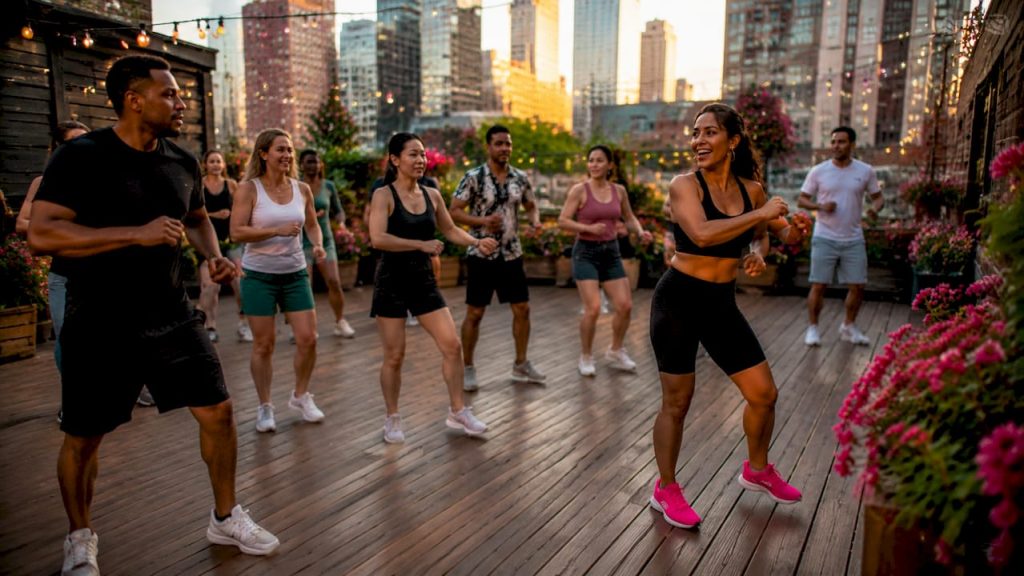
Adult beginner dance evening classes are structured programs that teach fundamental Latin dance moves, including Salsa and Bachata, in a social, fitness-friendly setting designed for working adults with no prior experience. Chicago’s Latin dance scene has grown significantly, and studios like Dennis pasamba now offer beginner-friendly evening courses that combine real instruction with social dance practice. You do not need a partner, a dance background, or any special athletic ability to start. These classes exist specifically for people like you.
What to expect in adult beginner dance evening classes
Adult beginner dance courses typically span 4 to 8 weeks, with individual sessions running between 45 and 90 minutes. That structure gives you enough time to absorb new material each week without feeling overwhelmed between sessions. Most programs divide students into clear levels, starting from absolute beginner, so you are always in a room with people at the same stage as you.
Here is what a standard evening class format looks like:
| Class element | What happens |
|---|---|
| Warm-up (10 min) | Light movement to prepare your body and introduce the night’s rhythm |
| Instruction block (30-40 min) | Instructor breaks down new footwork, timing, and partner technique |
| Guided practice (15-20 min) | Students repeat moves with instructor feedback |
| Social dance (20-30 min) | Open floor practice with rotating partners in a relaxed setting |
A few things that consistently surprise first-timers:
- No partner required. Partner rotation is standard in most beginner Latin classes, meaning you will dance with multiple people each night. This is a feature, not a workaround.
- Absolute novices are the norm. Most adults in beginner dance courses have never formally danced before. The “beginner” label is not relative. It means zero experience is expected and welcomed.
- Social dance parties follow class. Many studios, including Dennis pasamba, bundle a social dance party after evening classes so you can immediately apply what you learned in a low-pressure, fun environment.
- Pricing is accessible. Multi-week courses in 2026 commonly range from $60 to $155, while drop-in sessions average $20 to $35. That makes evening dance courses one of the more affordable fitness and social activities in Chicago.
The evening format works especially well for adults aged 21 to 45 because it fits around a full workday. You show up, move your body, meet people, and leave feeling genuinely good.
How to prepare for your first beginner dance class
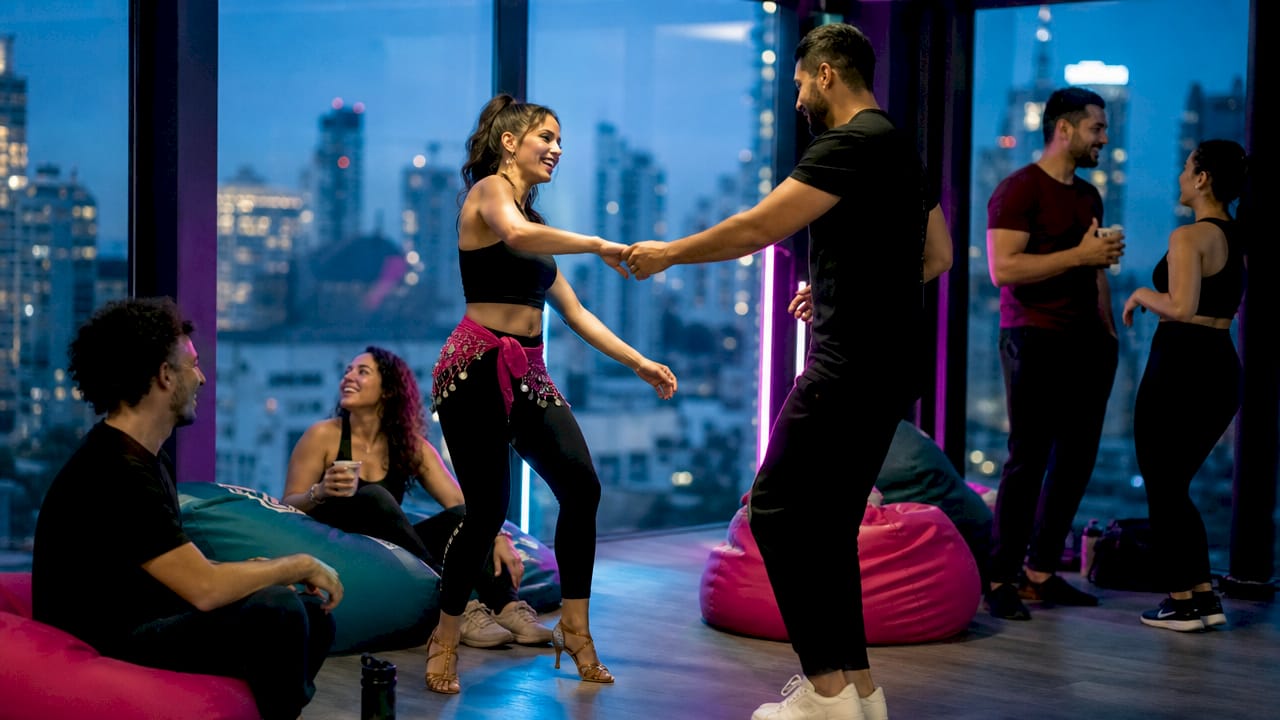
Preparation is simple, but a few specific steps will make your first night much smoother.
Before you arrive:
- Wear comfortable, form-fitting clothing that allows free leg movement. Loose jeans restrict your stride and make footwork harder to feel.
- Choose shoes with a smooth sole. Rubber-soled sneakers grip the floor too hard and can strain your knees when you try to turn. A leather or suede sole slides correctly.
- Dedicated dance shoes are recommended by Level 3, but casual clothes and smooth-soled shoes work perfectly for your first few weeks.
- Drink water before class. Latin dance is cardiovascular exercise, and you will work up a sweat faster than you expect.
When you get there:
Arriving 10 to 15 minutes early gives you time to complete any intake paperwork, introduce yourself to the instructor, and settle your nerves before the music starts. That small buffer makes a real difference in how comfortable you feel when class begins.
Mindset matters most:
Understand basic partner dance etiquette before you walk in. Ask before grabbing someone’s hand. Say thank you after each rotation. Smile when you mess up, because everyone does. The culture in beginner Latin classes is genuinely welcoming. No one is judging your footwork.
Pro Tip: Bring a small towel and a water bottle. Latin dance classes move fast, and staying hydrated keeps your energy up through the social dance portion at the end.
Use the dance studio questions checklist from Dennis pasamba to confirm class times, dress code, and what to bring before your first session.
Step-by-step guide to learning Salsa and Bachata basics
Salsa and Bachata share Latin roots but feel completely different on the dance floor. Salsa is faster, sharper, and built on an 8-count rhythm. Bachata is slower, more grounded, and emphasizes hip movement and close partner connection. Both are taught in beginner evening courses at Dennis pasamba, and both start with the same foundational approach.
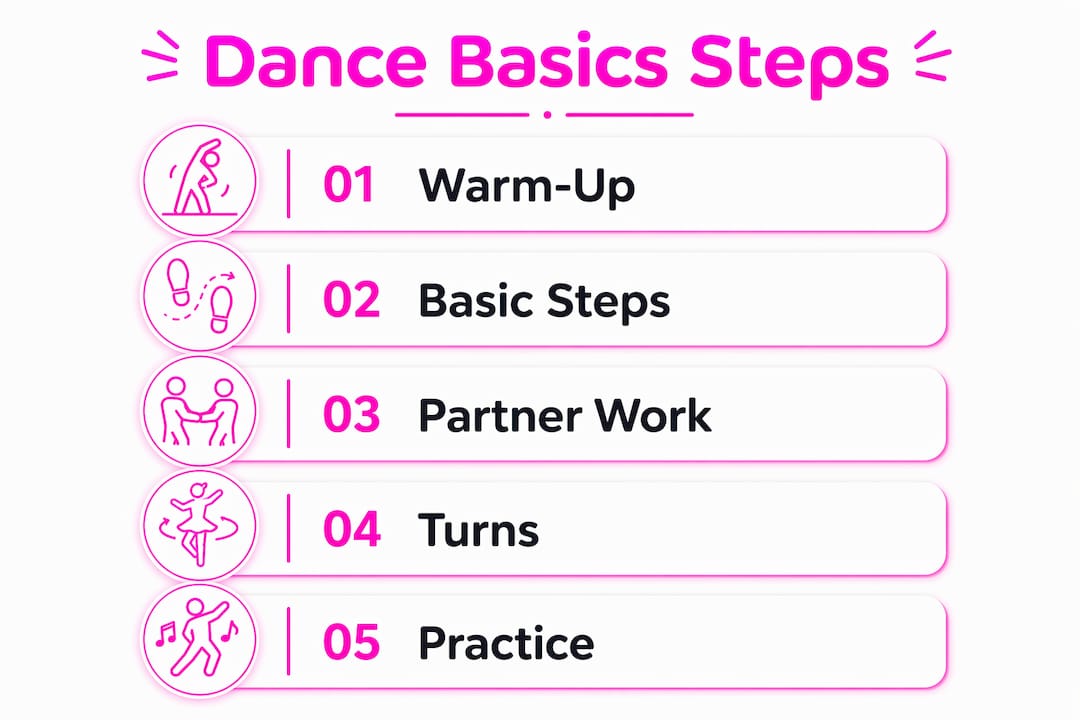
Here is how the learning progression typically works in a beginner class:
- Rhythm recognition. Your instructor will play the music and help you identify the beat before you move a single foot. Salsa counts in 8s with a pause on beats 4 and 8. Bachata counts in 4s with a tap or hip accent on beat 4. Once you hear it, you cannot unhear it.
- Basic step pattern. For Salsa, this is a forward-back rock step. For Bachata, it is a side-to-side step with a tap. You practice this alone first, without a partner, until the movement feels natural.
- Lead and follow introduction. Lead and follow training is a major focus in beginner Latin classes. The lead (traditionally the person guiding) uses light hand pressure and body positioning to signal direction. The follow responds to those signals rather than anticipating them. This is a skill, and it takes a few weeks to feel intuitive.
- Partner rotation. Once the basic step is in your body, you practice with rotating partners. Dancing with different people teaches you to adapt your timing and connection rather than relying on one person’s style. It also builds social confidence fast.
- Simple turn patterns. By weeks 3 to 4, most beginner classes introduce a basic right-hand turn for Salsa and a simple side-by-side variation for Bachata. These are taught slowly, broken into parts, and repeated until they feel comfortable.
The instructor’s job at this level is to slow everything down. You will never be rushed through material. If a move does not click the first night, it will come back the following week.
Common beginner challenges and how to overcome them
The two most common fears adults bring into their first dance class are “I have no rhythm” and “I am too old for this.” Both are myths.
Beginner courses are paced leisurely, treating dance as accessible movement rather than athletic performance. Rhythm is not a fixed trait. It is a skill you develop by listening and moving repeatedly. Most students feel the beat clearly by week 2 or 3. Age is even less of a barrier. Successful adult programs include participants aged 18 to 80, and intergenerational class environments actually reduce pressure because no one is performing for anyone else.
Here are the specific challenges beginners face most often, and how to handle them:
- Stepping out of time. This happens to everyone. The fix is to stop watching your feet and start listening to the music. Your instructor will cue you back to the beat without embarrassment.
- Overthinking the steps. Beginners often freeze because they are processing too much at once. Focus on one element per class: just the footwork, then just the arms, then the connection. Your brain will integrate it over time.
- Partner anxiety. Rotating partners feels awkward at first. It becomes natural within two or three sessions. Everyone in the room is a beginner, and the shared vulnerability creates connection rather than judgment.
- Comparing yourself to others. Some people pick up patterns faster. That has nothing to do with your ceiling. Consistent attendance matters far more than natural aptitude.
Pro Tip: Attend the social dance event after class at least once in your first two weeks. Practicing in a relaxed, music-filled room without instruction pressure accelerates your learning faster than any drill.
Check out the common beginner mistakes guide from Dennis pasamba for a deeper breakdown of what trips up new dancers and how to correct each one quickly.
What makes evening dance classes a great social and fitness activity
Latin dance is a full-body workout. Salsa and Bachata both provide cardiovascular exercise while improving coordination, balance, and core strength. A 60-minute Salsa class burns roughly the same calories as a moderate cycling session, but it does not feel like exercise because you are focused on music and connection.
The social dimension is equally real. Evening dance courses in Chicago attract working adults who want to meet people outside of bars or apps. The partner rotation format means you interact with 8 to 15 different people in a single class. By week 3, you recognize faces. By week 6, you have a community.
Dennis pasamba’s Friday night Salsa and Bachata socials extend that community beyond the classroom. These events welcome all levels, so your beginner skills are immediately useful in a real social dance setting. The transition from student to social dancer happens faster than most beginners expect.
Evening scheduling is the practical advantage that makes all of this possible. Classes run after work hours, typically between 7 and 10 p.m., so you do not have to choose between your job and your new hobby. You show up, dance, connect with people, and still get home at a reasonable hour.
Key takeaways
Adult beginner dance evening classes work best when you commit to the full course, attend social events, and focus on connection over technical perfection.
| Point | Details |
|---|---|
| Class structure is predictable | Courses run 4 to 8 weeks with 45 to 90-minute sessions, making scheduling easy for working adults. |
| No partner or experience needed | Partner rotation is standard; absolute novices are the intended audience in every beginner class. |
| Preparation is simple | Smooth-soled shoes, comfortable clothing, and arriving 10 to 15 minutes early covers 90% of first-night prep. |
| Challenges are universal | Fear of rhythm and age anxiety are the most common barriers, and both are addressed by the class format itself. |
| Social and fitness value is real | Latin dance builds cardiovascular fitness, coordination, and a genuine community of people you see weekly. |
Why I tell every new student to stop waiting
By Dennis pasamba
After 33 years of teaching Latin dance in Chicago, the pattern I see most often is not a lack of talent. It is delayed starts. People spend months thinking about joining a class, convinced they need to be more coordinated, more confident, or less busy before they are ready. None of that is true.
The students who thrive fastest are not the ones with natural rhythm. They are the ones who show up consistently and stay for the social dance afterward. That extra 30 minutes of open-floor practice after class is where the real learning happens. You stop performing steps and start actually dancing.
I also want to push back on the idea that beginner classes are just a stepping stone to something more serious. For a lot of adults, the beginner and intermediate levels are exactly where they want to be. The music is great, the people are warm, and the movement feels good. That is enough. Dance does not have to be a competitive pursuit to be worth your time.
What I have watched happen in this studio over three decades is that people come in nervous and leave connected. Connected to the music, to other people, and to their own bodies in a way that most fitness activities never deliver. That is the real value of showing up on a Tuesday or Friday night and learning to move.
— Dennis pasamba
Start your Latin dance journey at Dennis pasamba
Dennis pasamba is Chicago’s top-rated Latin dance studio with over 850 five-star Google reviews and 33 years of teaching experience. Beginner Salsa and Bachata evening courses run throughout the year, with no partner required and all levels welcome.
New to Latin dance and not sure where to start? The beginner’s studio checklist walks you through every question worth asking before you book your first class. Ready to jump in? Explore new Salsa and Bachata classes starting now in Chicago and reserve your spot. Singles and couples are both welcome, and every class includes access to the Friday night social dance event.
FAQ
What are adult beginner dance evening classes?
Adult beginner dance evening classes are structured group lessons held in the evening, designed to teach fundamental dance styles like Salsa and Bachata to adults with no prior experience. Courses typically run 4 to 8 weeks with sessions between 45 and 90 minutes.
Do I need a partner to join a beginner dance class?
No partner is needed. Partner rotation is a standard feature of beginner Latin dance classes, meaning you will dance with multiple people throughout each session. Solo attendance is common and fully encouraged.
How much do beginner evening dance courses cost in Chicago?
Multi-week beginner courses commonly range from $60 to $155 for a full series, while drop-in classes average $20 to $35 per session. Dennis pasamba offers competitive pricing with social dance events included.
What should I wear to my first Salsa or Bachata class?
Wear comfortable clothing that allows free leg movement and choose shoes with a smooth sole rather than rubber-soled sneakers. Dedicated dance shoes become recommended around Level 3 but are not required for your first few classes.
Is it too late to start dancing as an adult?
No. Beginner programs welcome participants from age 18 to 80, and classes are paced specifically for adults who have never danced before. Rhythm and coordination develop through practice, not prior talent.