
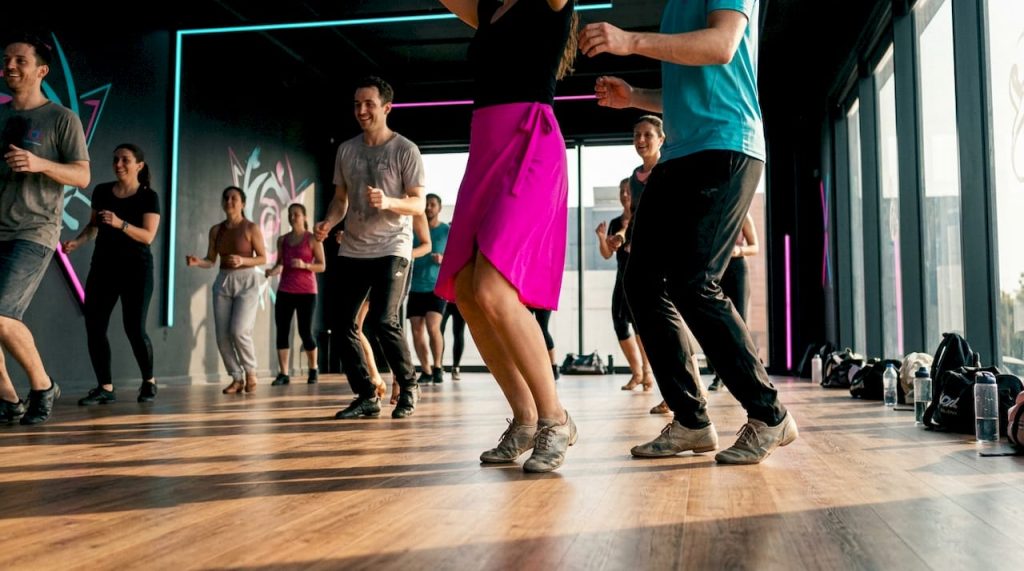
A beginner dance mistake is any recurring flaw in posture, breathing, timing, or movement transitions that prevents a new dancer from moving with control, rhythm, and confidence. In Latin dance styles like Salsa, Bachata, and Cumbia, these errors show up fast and they compound quickly. The good news is that every one of them is fixable once you know what to look for. At Dennis PaSamba, Chicago’s top-rated Latin dance studio with 33+ years of coaching experience, we see the same beginner dance pitfalls walk through the door every week. This guide names them, explains why they happen, and shows you exactly how to correct them.
What is a beginner dance mistake and why does it matter?
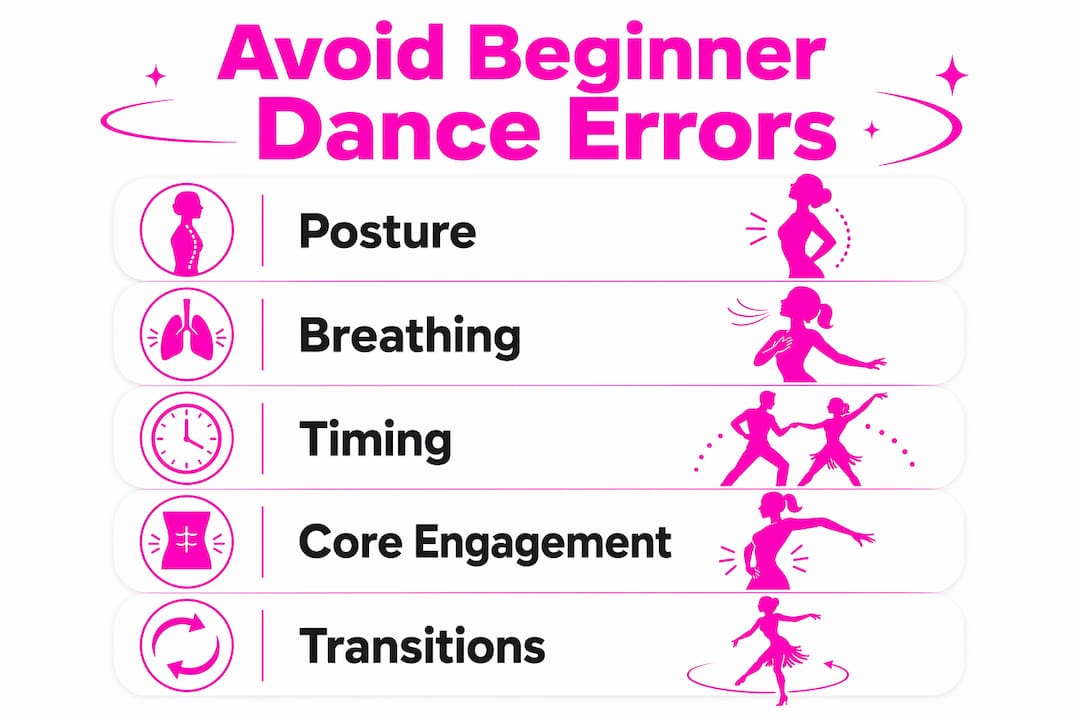
A beginner dance mistake is not just a missed step. It is a pattern of movement that works against your body’s natural balance, rhythm, and stamina. The most common dance errors fall into five categories: poor posture, disengaged core, held breath, rushing the music, and sloppy transitions. Each one creates a chain reaction that makes dancing harder and less enjoyable than it should be.
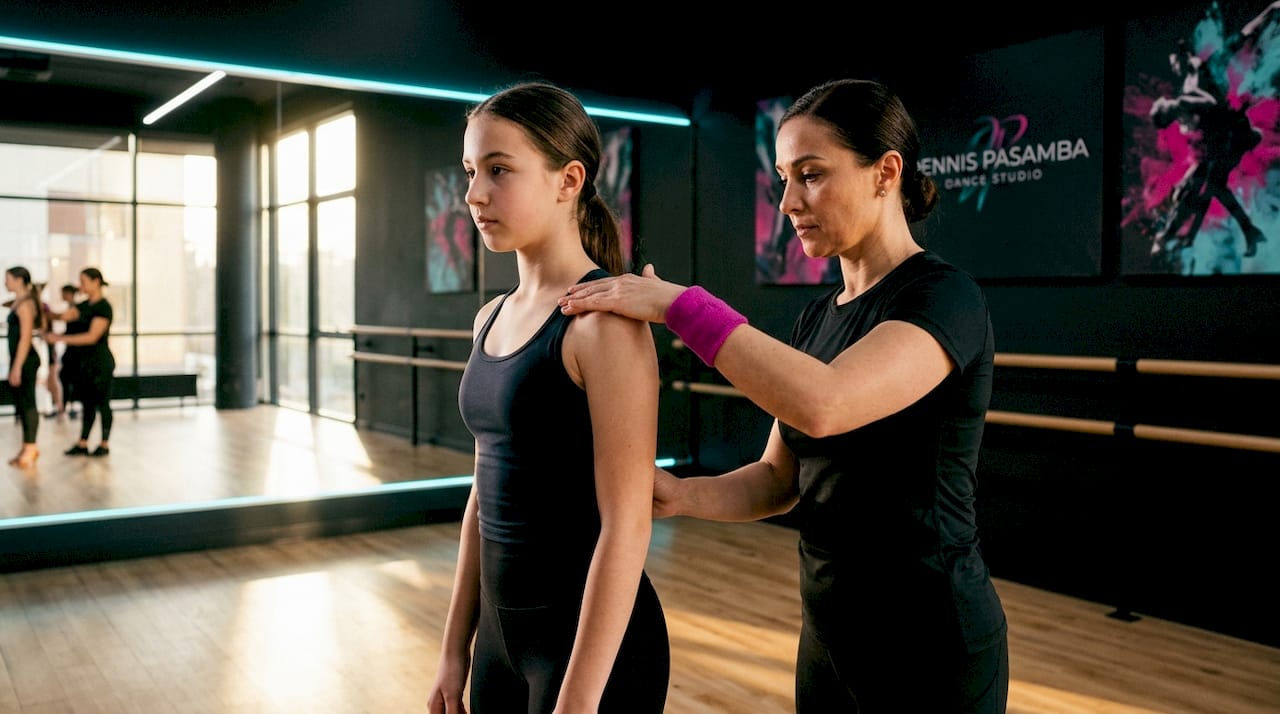
Poor posture, specifically slouching or leaning too far forward, throws off your balance and ruins the clean lines that make Latin dance look sharp. This matters because your partner reads your body position to anticipate your next move. When your posture is off, the entire connection breaks down before a single step is taken.
Not engaging core muscles makes every movement look heavy and unstable. The core is the anchor for every hip roll, turn, and weight shift in Salsa and Bachata. Without it, your arms and legs do all the work and the result looks effortful instead of fluid.
Holding your breath is one of the most overlooked beginner dancer challenges. Tension builds up in the shoulders and neck, stamina drops within minutes, and the body stiffens exactly when it needs to stay loose. Most beginners do not even realize they are doing it.
Rushing the steps, also called dancing ahead of the music, is driven by nerves and excitement. It breaks synchronization with the beat and with your partner. In Cumbia especially, where the rhythm has a distinct rolling quality, rushing flattens the dance into something unrecognizable.
Sloppy transitions between moves drain energy from the dance and disrupt its flow. Beginners often focus so hard on the next big move that they forget the steps connecting them. Those in-between moments are where style lives.
- Poor posture: slouching, leaning, or collapsing the chest
- Disengaged core: heavy, unstable movement through hips and torso
- Held breath: stiffness, early fatigue, tense shoulders
- Rushing the music: losing the beat and breaking partner connection
- Sloppy transitions: choppy, disconnected movement between steps
Pro Tip: Record yourself dancing for 60 seconds on your phone. You will spot posture and breathing issues in the first 10 seconds that you never feel while you are dancing.
How to identify and correct common dance errors
Fixing beginner dance pitfalls starts with honest self-assessment and a structured approach to practice. Here is a step-by-step method that works for Salsa, Bachata, and Cumbia beginners alike.
-
Check your posture before the music starts. Stand tall, roll your shoulders back and down, and lift your chest slightly. Your weight should sit over the balls of your feet, not your heels. Do this every single time before you begin a practice session.
-
Activate your core before you move. Pull your navel gently toward your spine. You are not sucking in your stomach. You are creating a stable center that every hip movement will rotate around. Practice this standing still before adding footwork.
-
Breathe on purpose. Take a full breath in before the music starts and exhale on the first beat. This resets your nervous system and keeps your shoulders from creeping up toward your ears during the dance.
-
Slow the music down. Most music apps and YouTube allow you to reduce playback speed. Drop the tempo to 70% and practice your basic steps until they feel automatic. Speed comes after accuracy, never before.
-
Isolate your transitions. Pick two moves you already know and practice only the connection between them. Repeat that transition 20 times before adding anything else. Controlled transitions require focused repetition, not just more run-throughs of full routines.
-
Warm up before every session. Proper stretching increases flexibility and reduces injury risk. Hip circles, ankle rolls, and spinal rotations take five minutes and protect you from the strains that sideline beginners for weeks.
Pro Tip: Ask your instructor to watch only your posture for one full song. Most teachers watch footwork by default. Posture feedback is rarer and more valuable at the beginner stage.
One insight that applies directly to Latin dance comes from Pilates coaching: beginners prioritize quantity of movements over quality of execution. The result is poor alignment and inefficient patterns that get harder to unlearn over time. Learning five moves with clean posture and solid timing beats learning twenty moves with sloppy form every time.
How mistakes differ across salsa, bachata, and cumbia
Each Latin dance style has its own rhythm and movement vocabulary, which means posture and timing mistakes show up differently depending on what you are learning. Understanding these style-specific differences helps you target your corrections more precisely.
| Dance Style | Most Common Beginner Mistake | Why It Happens | How to Correct It |
|---|---|---|---|
| Salsa | Rushing the clave beat | Excitement causes dancers to anticipate the “1” count | Count out loud and practice with a metronome at 80% tempo |
| Bachata | Stiff upper body during hip movement | Beginners isolate hips but freeze the torso and arms | Practice body rolls slowly to connect upper and lower body |
| Cumbia | Flat footwork with no weight transfer | The rolling step pattern feels unfamiliar to new dancers | Exaggerate the heel-to-toe weight shift in slow practice |
In Salsa, the most common timing error is anticipating the beat. Beginners hear the music and want to move before the count lands. This creates a half-step rush that throws off every turn and cross-body lead. The fix is simple but requires discipline: count out loud during practice until the “1” beat feels like a reflex, not a guess.
Bachata beginners often nail the footwork but freeze everything above the waist. The style demands a fluid connection between the hip sway and the upper body. When the torso locks up, the dance looks mechanical. Slow body roll drills, practiced without music first, teach the spine to move as one connected unit rather than two separate halves.
Cumbia’s rolling step pattern is genuinely unfamiliar to most new dancers. The weight transfer from heel to toe on each step is what gives Cumbia its distinctive bounce. Beginners who skip this transfer end up flat-footed and off-rhythm. Exaggerating the heel-to-toe motion in slow practice builds the muscle memory needed to make it feel natural at full speed. For a deeper look at Salsa and Bachata fundamentals, structured classes that address these style-specific errors make a measurable difference.
The mindset that separates dancers who improve from those who plateau
The biggest non-physical mistake beginners make is treating dance class like a checklist. They want to collect steps. More moves equals more progress, in their minds. This thinking is the single fastest way to plateau and lose motivation.
Overemphasis on steps neglects the control factors that actually make dancing look and feel good: breath, alignment, and weight placement. A dancer who owns three moves with full body control will always outshine a dancer who half-knows fifteen. Quality of execution is the metric that matters.
Patience is not passive. It means returning to the same basic step and finding something new to refine in it. Every time you practice a Salsa basic with better posture than last week, you are making real progress even if the step looks identical from the outside.
- Focus on one correction per practice session, not five
- Use a mirror or phone camera to get honest visual feedback
- Accept that awkward phases are part of the learning process, not signs of failure
- Celebrate small wins: a cleaner transition, a steadier balance, a more relaxed shoulder
- Ask for feedback after class, not just during it
Managing performance anxiety is also part of avoiding dance mistakes to watch for. Nervousness causes breath-holding, rushing, and posture collapse simultaneously. The antidote is not confidence. It is preparation. When your basics are solid, anxiety has less to grab onto. For new salsa social dancers, building that foundation before hitting the social floor makes the experience far more enjoyable.
Key takeaways
Correcting beginner dance mistakes requires fixing posture, core engagement, breathing, timing, and transitions before adding new steps or complexity.
| Point | Details |
|---|---|
| Posture is the foundation | Slouching and leaning break balance and partner connection before a step is taken. |
| Core engagement is non-negotiable | Without an active core, hip movements in Salsa and Bachata look heavy and unstable. |
| Breathing controls stamina | Held breath creates stiffness and early fatigue; exhale on beat one to reset. |
| Style-specific corrections matter | Salsa, Bachata, and Cumbia each have distinct timing and movement errors requiring targeted fixes. |
| Quality beats quantity | Mastering three moves with clean technique produces better results than rushing through twenty. |
What 33 years of teaching Latin dance has taught me about beginner mistakes
After more than three decades on the floor, I can tell you that the most common beginner dance mistake is not a physical one. It is the belief that mistakes mean you are bad at dancing. Every single person who walks into Dennis PaSamba has made every error on this list. Every one of them improved once they stopped fighting their mistakes and started getting curious about them.
The students who grow fastest are not the most naturally talented. They are the ones who slow down when something feels wrong instead of pushing through it. They ask questions. They practice the boring parts. They let themselves look awkward in front of a mirror because they know that is where the real work happens.
I have seen people come in with no rhythm, no coordination, and genuine fear of the dance floor. Within a few months of focused, patient practice, they are leading Salsa turns and feeling the Bachata connection. The technique is teachable. The mindset is the only thing that can hold you back.
My honest advice: pick one mistake from this list and work on nothing else for two full weeks. You will be amazed at how much that single correction changes the way your entire body moves on the floor.
— Dennis PaSamba
Start strong with Dennis PaSamba’s beginner Latin dance classes

Dennis PaSamba’s beginner classes in Chicago are built around exactly the corrections covered in this article. Every session starts with posture checks, breathing cues, and targeted warm-ups that prepare your body before a single step is taught. Instructors give personalized feedback on core engagement, timing, and transitions so errors get fixed in real time rather than reinforced through repetition. Before your first class, check out the Latin dance warm-up guide to arrive ready to move. When you are ready to take the next step, new beginner classes in Salsa, Bachata, and Cumbia are starting now. No partner needed. All ages welcome.
FAQ
What is the most common beginner dance mistake?
Poor posture is the most frequently cited beginner dance mistake, causing balance problems and breaking partner connection before the music even starts. Slouching and leaning forward are the two most common forms.
Why do beginners rush the music in Latin dance?
Rushing is caused by nerves and excitement, which push dancers to anticipate the beat rather than wait for it. Practicing at reduced tempo with a metronome or slowed playback trains the body to land on the correct count.
How do I stop holding my breath while dancing?
Take a deliberate breath before the music starts and exhale on the first beat of each phrase. This resets tension in the shoulders and keeps the body loose throughout the song.
Are beginner dance mistakes different in Salsa versus Bachata?
Yes. Salsa beginners most often rush the clave beat, while Bachata beginners tend to freeze the upper body during hip movements. Each style requires style-specific corrections rather than a one-size-fits-all approach.
How many moves should a beginner learn at once?
Focus on three to five moves practiced with clean posture, active core, and steady timing before adding anything new. Prioritizing quality over quantity produces faster and more lasting improvement than collecting steps.