

A dance studio questions checklist is a curated set of targeted inquiries adults should ask before enrolling in any Latin dance program to confirm instructor fit, class structure, policy transparency, and social dynamics. Choosing a studio without this kind of structured evaluation is the single most common reason adult beginners end up in the wrong class, with the wrong teacher, on a schedule that doesn’t work. Whether you’re drawn to Salsa, Bachata, Cumbia, or Kizomba, the right questions reveal everything a studio website won’t tell you upfront. This guide gives you the full dance studio evaluation checklist, built specifically for adults aged 21 to 45 who are serious about starting Latin dance.
1. Ask about instructor credentials and Latin dance specialization
The instructor is the most important variable in your experience. Ask directly: does this teacher specialize in the Latin styles you want to learn, and how many years have they taught adult beginners specifically? A general dance background is not the same as deep expertise in partner-based social Latin styles like Salsa or Bachata. Studios like Dennis PaSamba, where lead instructor Dennis PaSamba brings 33 years of focused Latin dance experience, set a clear benchmark for what specialization looks like. Instructor fit and style are among the first questions any adult should ask before scheduling a visit.
2. Confirm how the studio places new adult students into levels
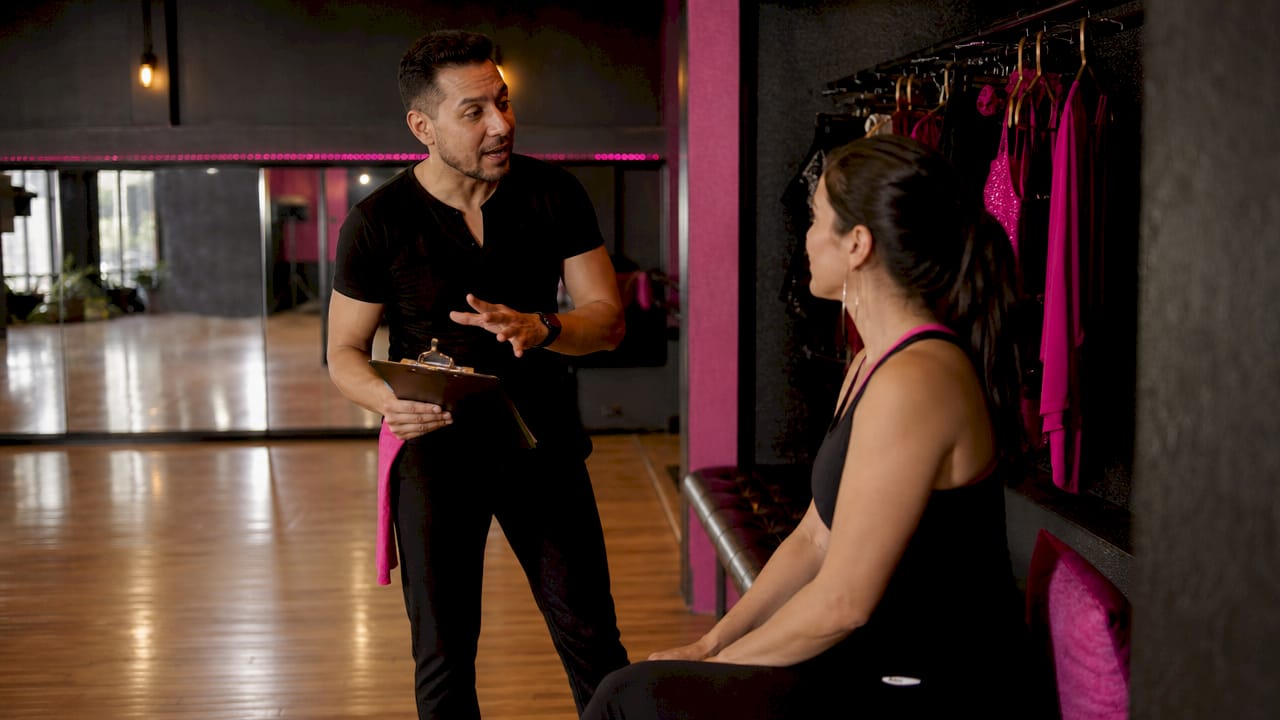
Level placement is where most adult beginners get frustrated early. Ask the studio: what is your placement process, and what are the measurable outcomes for each level? Studios that can’t answer this clearly tend to lump beginners with students who have months of experience, which kills confidence fast. Clear, structured progression helps adults select the proper class from the start, rather than guessing based on vague labels like “beginner” or “intermediate.” Rather than asking “what level am I,” ask what you should be able to do by the end of each level. That question alone tells you whether the studio has a real curriculum or just a loose collection of classes.
Pro Tip: Ask the studio to describe one specific skill a student masters at the end of their beginner level. If they can’t answer concisely, the curriculum probably isn’t well-defined.
3. Evaluate schedule flexibility and makeup class policies
Life gets in the way. Before you enroll, ask whether the studio offers makeup classes, class swaps, or flexible scheduling for adults with work and family commitments. A studio that offers only fixed weekly slots with no makeup options will cost you money every time you travel or work late. Also ask whether classes run on a rolling enrollment model or a fixed session start. Rolling enrollment lets you join any week, which is far more practical for most adults. Trial and intro offers with clear booking rules help adults test a studio without full financial commitment upfront.
4. Understand the enrollment model and total cost
Pricing transparency is non-negotiable. Ask for a full breakdown: monthly fees, per-session costs, registration fees, and any extras like recital costumes or required shoes. Fee transparency and clear next steps are signals of a well-run studio that respects adult students’ time and budgets. A studio that buries costs in fine print or mentions “additional fees” only after you’ve signed up is a red flag. Get the full picture in writing before you commit to anything beyond a trial class.
5. Ask about partner policy and how solo dancers are handled
This question matters more for Latin dance than almost any other style. Salsa, Bachata, and Cumbia are partner-based, so ask directly: do I need to bring a partner, and how does the studio handle solo attendees? Partner rotation frequency and solo learner integration are critical for maintaining learning momentum when you come alone. Studios that rotate partners regularly give solo dancers far more practice variety and social confidence than studios that pair you once and leave you there. Dennis PaSamba explicitly welcomes singles and couples, which removes one of the biggest barriers adult beginners face. Check out beginner Latin dance classes to see how a no-partner-needed policy works in practice.
6. Request a trial class or observation session before committing
Any reputable studio will offer a trial class or at minimum allow you to observe a session before you pay for a full month. This is your best evaluation tool. During a trial, you’re not just learning steps. You’re assessing whether the teacher corrects all students or only the advanced ones, whether the pace feels manageable, and whether you’d want to come back next week. A five-step observation checklist covers arrival flow, purposeful waiting, teaching to all skill levels, encouragement of questions after class, and the desire to return. If you leave a trial class feeling confused or ignored, that’s your answer.
7. Clarify attendance, absence, and makeup rules in writing
Unclear policies around attendance and absences are among the most common frustrations for adult students. Missing clarity on attendance, make-ups, and extra costs causes conflicts that could be avoided entirely with upfront written policies. Ask the studio: what happens if I miss a class? Is there a makeup window? Do unused classes roll over? Get the answers in writing, not just verbally. Policies that are acknowledged in writing protect both you and the studio, and they signal that the studio takes adult students seriously as paying customers.
8. Review dress code and behavior expectations
Dress codes in Latin dance studios are more specific than most beginners expect. Studios like N10 Dance and Pacific Northwest Ballet require specific attire, secured hair, and proper footwear, with consequences like restricted class participation for non-compliance. Ask the studio for their dress code requirements before your first class so you’re not caught off guard. Beyond attire, ask about general behavior expectations. A studio with clear community standards tends to attract students who are there to learn and support each other, which directly improves your experience.
9. Assess the studio’s communication methods
How a studio communicates schedule changes, cancellations, and announcements tells you a lot about how it’s run. Ask whether they use email, a dedicated app, text alerts, or social media. A studio that relies solely on a Facebook group for critical updates is not operating with adult professionals in mind. You want a studio that sends timely, direct notifications so you’re never showing up to a canceled class. A studio’s website and communication clarity act as a pre-trial filter. Missing or outdated information about pricing, events, or instructors increases uncertainty for new students before they even walk in the door.
10. Compare social events and practice night opportunities
This is the section of your dance studio inquiry list that most adults skip, and it’s the one that determines whether you actually stick with dancing long-term. 68% of adult social Latin dancers drop out due to inflexible partner matching or lack of social practice nights. That number reflects a real pattern: adults who only attend structured classes without social practice nights plateau faster and lose motivation sooner. Ask the studio: do you host Friday socials, open practice nights, or workshops outside of regular class time?
Here’s a quick comparison to guide your studio evaluation checklist on this point:
| Studio feature | What to ask | Why it matters |
|---|---|---|
| Partner rotation | How often do partners rotate per class? | More rotation builds confidence and adaptability |
| Social practice nights | Are there weekly or monthly socials? | Practice outside class accelerates skill retention |
| Workshops | Are themed workshops available? | Workshops deepen specific skills like footwork or styling |
| Community events | Are there showcases or group outings? | Community events increase motivation and retention |
Dennis PaSamba runs Friday socials, date nights, workshops, and showcase events, which means students get structured class time plus real social practice. Understanding what a dance workshop offers before you enroll helps you pick a studio with the full learning ecosystem, not just weekly classes.
11. Check for recital, performance, and competition involvement
Some studios expect all students to participate in recitals or performances, which can mean costume fees, rehearsal time, and added pressure. For adults who just want to dance socially, this can be a dealbreaker. Ask directly: is performance participation required, optional, or not offered? A studio that separates its social dance track from its performance track gives adult learners the freedom to grow at their own pace without feeling pushed toward the stage before they’re ready.
Key takeaways
Choosing the right Latin dance studio requires asking specific, targeted questions before you ever step into a class. The studios that answer these questions clearly and confidently are the ones worth your time and money.
| Point | Details |
|---|---|
| Ask before you visit | Confirm instructor credentials, level placement, and partner policy by phone or email first. |
| Observe during trial class | Watch how the teacher corrects all skill levels, not just advanced students. |
| Get policies in writing | Attendance, makeup, and fee policies should be documented before you enroll. |
| Prioritize social events | Studios with practice nights and socials produce more confident, motivated adult dancers. |
| Confirm total cost upfront | Ask for a full fee breakdown including any extras to avoid surprises after enrollment. |
What 33 years of teaching adults has shown me about studio selection
Most adults walk into a studio evaluation thinking about the dance style. I’ve seen it hundreds of times. They want Salsa or Bachata, they find a studio that offers it, and they sign up. Then three weeks later they’re frustrated because the class level was wrong, the teacher never corrected them, or they had no one to practice with between sessions.
The real issue is that adults don’t ask enough questions upfront. They feel awkward interrogating a studio before committing, like they’re being difficult. You’re not being difficult. You’re being smart. A studio that gets defensive when you ask about makeup policies or partner rotation is telling you exactly what your experience will look like once you’ve paid.
The adults who succeed in Latin dance long-term share one trait: they found a studio where the social ecosystem matched their goals. Class is where you learn the technique. Social nights, workshops, and practice sessions are where you actually become a dancer. If a studio only offers the former, your progress will stall. Adult dance education works best when structured learning and social practice reinforce each other week after week.
One more thing: don’t underestimate the trial class. It’s not just about whether you like the music or the vibe. Watch whether the teacher notices the student in the back who’s struggling. Watch whether students ask questions after class without hesitation. Those two signals tell you more about a studio’s culture than any website or sales pitch ever will.
— Dennis pasamba
Start your Latin dance journey at Dennis PaSamba
Dennis PaSamba is Chicago’s top-rated Latin dance studio with 850 plus five-star Google reviews and 33 years of experience teaching adults at every level. Whether you’re brand new or looking to sharpen your Salsa and Bachata, the studio offers flexible enrollment, transparent pricing, and a welcoming community where no partner is needed.
Explore Salsa, Bachata, and Cumbia classes starting at $95, with beginner-friendly options, Friday socials, private lessons, and workshops all under one roof. Ready to level up? Check out intermediate and advanced classes once you’re ready to push further. Before your first class, review common beginner mistakes so you walk in prepared and confident.
FAQ
What questions should I ask a dance studio before enrolling?
Ask about instructor credentials, class level placement, partner policy, makeup class options, total fees, and social event availability. Starting with direct questions about these eight areas before visiting gives you the clearest picture of studio fit.
Do I need a partner to join Latin dance classes?
No. Most quality Latin dance studios, including Dennis PaSamba, welcome solo dancers and rotate partners during class. Ask specifically how the studio integrates solo learners to confirm you’ll have consistent practice opportunities.
How do I know if I’m in the right class level?
Ask the studio what measurable skills a student should have at the end of each level. Studios with structured progression criteria make it easy to self-assess and choose the right starting point.
Why do so many adults quit Latin dance classes?
Adult dropout in Latin social dance is largely driven by inflexible partner matching and the absence of social practice nights, not a dislike of dancing itself. Choosing a studio with regular socials and partner rotation significantly reduces this risk.
What should I look for during a trial class?
Watch whether the teacher corrects students at all skill levels, whether questions are welcomed after class, and whether you feel the urge to come back next week. Those three signals are the most reliable indicators of a studio worth joining.