
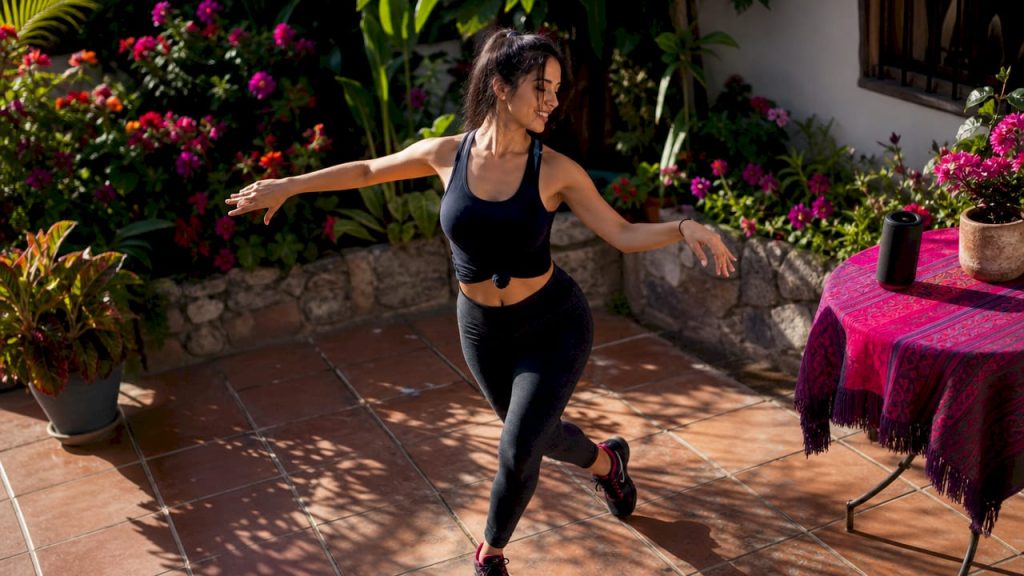
Solo bachata practice at home is defined as structured, self-directed training that builds your timing, footwork, posture, and musicality without a partner. You can absolutely practice bachata solo at home and see real progress, whether you are a complete beginner or someone who dances socially and wants to sharpen your technique. The key is knowing what to work on, how long to practice, and which tools to use. This guide gives you a clear, expert-backed framework to learn bachata at home with confidence and purpose.
What you need to practice bachata solo at home
Before you take a single step, your environment determines how much you actually improve. A cluttered living room with no mirror and bad shoes will slow your progress more than any skill gap.
Here is what you need to set up an effective solo practice space:
- Open floor space: At minimum, 6 feet by 6 feet of clear, flat surface. Hardwood or tile floors are ideal for footwork feedback.
- Mirror: A full-length mirror lets you check posture, arm placement, and hip action in real time.
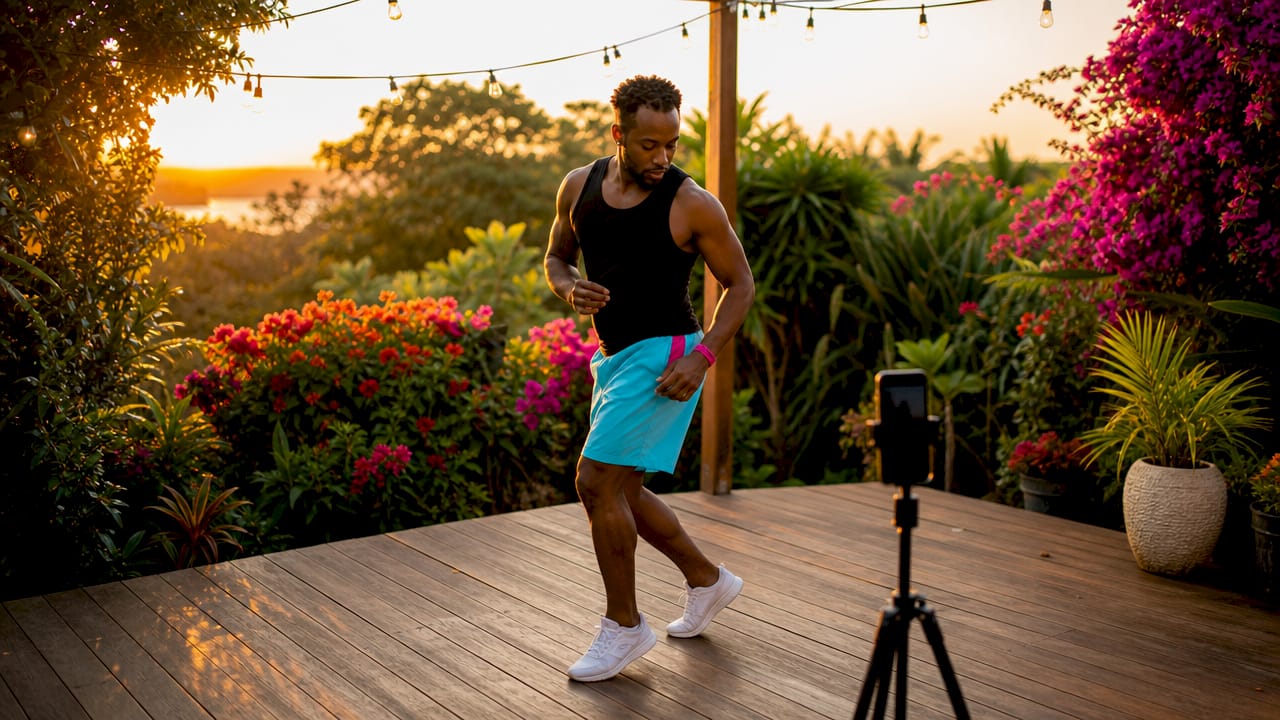
- Recording device: Your phone camera works perfectly. Set it up on a stack of books or a tripod to capture front and side angles.
- Proper footwear: Dance sneakers or smooth-soled shoes reduce friction and protect your knees. Socks on hardwood also work for beginners.
- Comfortable clothing: Anything that lets your hips move freely. Tight jeans restrict the hip pop that defines bachata’s character.
- Music source: A Bluetooth speaker or headphones. Streaming playlists labeled “bachata practice” on Spotify or YouTube work well.
For digital guidance, the Be Moves app offers short daily sessions with structured levels and weekly content updates, making it one of the most practical tools for solo bachata dance practice at home.
Pro Tip: Recording from two angles reveals timing drift and posture issues that a mirror simply cannot show. Watch your footage at half speed to catch what your body is actually doing versus what you think it is doing.
| Tool | Purpose | Budget Option |
|---|---|---|
| Full-length mirror | Real-time posture and hip check | Closet door mirror |
| Phone camera on stand | Self-assessment recordings | Stack of books as tripod |
| Dance sneakers | Smooth footwork, knee protection | Socks on hardwood floor |
| Be Moves app | Guided daily sessions, all levels | Free tier available |
| Bachata playlist | Rhythm training and musicality | Spotify free playlists |
How to structure a solo bachata practice routine
A focused 15-minute routine covering basics, turns, posture, and free movement builds skills faster than 45 minutes of unfocused dancing. That is the core principle behind every effective home bachata dance routine.
Here is how to break down your session:
-
Minutes 1 to 3: Basic footwork. Practice the 8-count side-to-side pattern at slow tempo. Count out loud. The bachata basic step goes: step left, right meets left, step left, tap right with a hip pop on count 4. Repeat mirrored to the right, with the hip pop landing on count 8. Counting aloud forces your brain to connect the number to the movement, which locks in timing faster than just feeling it.
-
Minutes 4 to 7: Turn technique. Do not try to spin fast. Slow turn preparation and controlled balance are the entire goal here. Practice the prep step, spot your focal point, and rotate only as far as your balance allows. One clean half-turn beats three sloppy full turns every time.
-
Minutes 8 to 11: Posture and movement quality. Stand tall, relax your shoulders, and let your arms hang naturally at your sides. Walk through the basic step while focusing entirely on your upper body. Are your shoulders level? Is your chest open? This segment trains the frame that makes you look like a dancer instead of someone counting steps.
-
Minutes 12 to 15: Free dancing with music. Put on a full bachata track and dance without thinking about technique. This is where your body integrates what you just drilled. Let the music lead.
Pro Tip: Vary your focus by day. Monday is basics day, Wednesday is turns day, Friday is styling and musicality day. This rotation prevents plateaus and keeps practice sessions feeling fresh.
| Segment | Duration | Primary Goal |
|---|---|---|
| Basic footwork | 3 minutes | Lock in 8-count timing and hip pop |
| Turn technique | 4 minutes | Build balance and controlled rotation |
| Posture and frame | 4 minutes | Develop clean upper body and arm placement |
| Free dancing | 4 minutes | Integrate technique with musical expression |
Which bachata techniques are best for solo practice
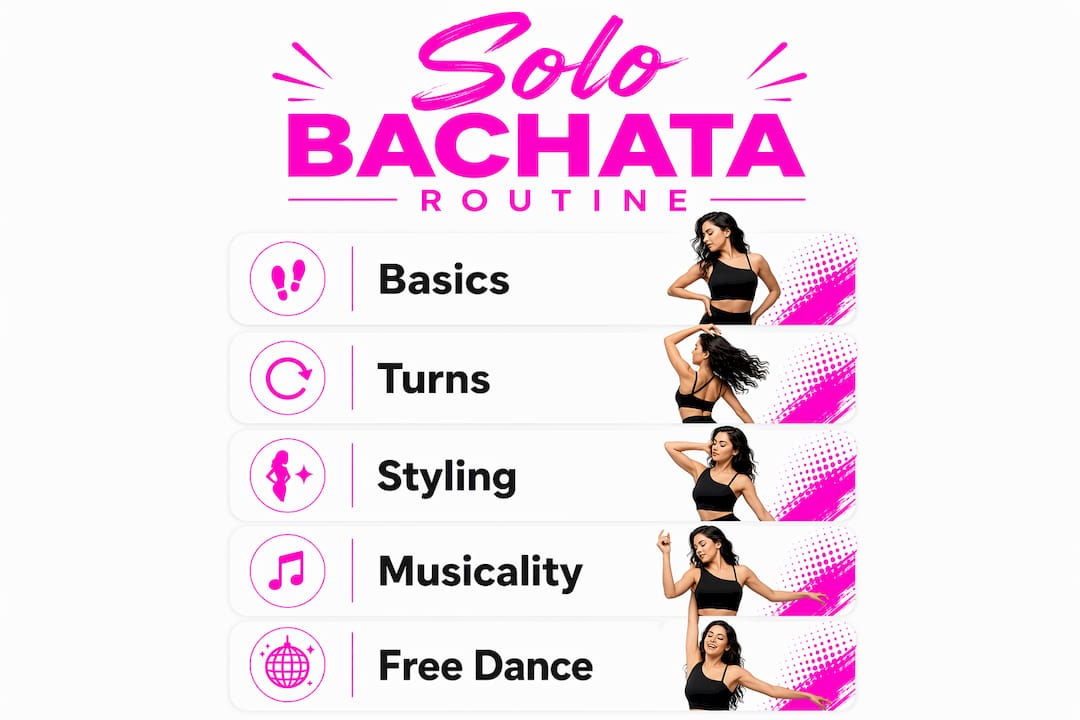
Home practice works best when you focus on timing, weight transfer, turns, posture, and music listening. These five categories cover everything you can genuinely improve without a partner, and they form the foundation of every strong social dancer.
Here is what to prioritize in your solo bachata dance practice:
- Timing and basic footwork: The 8-count side-to-side pattern is the non-negotiable foundation. Hip pops aligned with counts 4 and 8 create the natural, musical quality that separates bachata from generic stepping. Master this before adding any styling.
- Weight transfer: Each step requires a full, committed weight shift. Incomplete weight transfers create hesitation and make you look uncertain on the floor. Practice stepping slowly and feeling your full body weight move from foot to foot.
- Turn preparation and balance: Turns in bachata are not about speed. They are about preparation. Drill the prep step and the spot separately before combining them into a full rotation.
- Posture and frame: Relaxed shoulders, open chest, and natural arm placement are what make bachata look effortless. These habits are built in solo practice, not on the social dance floor.
- Music listening: Put on bachata tracks and do nothing but listen. Identify the beat, the phrasing, and where the music swells. Dancers who understand the music they move to look ten times more connected than those who just count.
What to avoid in solo practice is equally important. Skip complex partner patterns, fast multi-turn combinations, and anything that requires real-time feedback from another body. Those skills belong in a class or social setting. Trying to practice them alone builds bad habits that are hard to unlearn.
“Quality over quantity is the defining principle of effective solo bachata practice. Slow, controlled repetitions of specific technique categories produce more progress than lengthy, unfocused sessions.” — MySocialDancing
Avoid the most common beginner mistakes in Latin dance, such as looking down at your feet or tensing your shoulders, since these habits are far easier to prevent than to fix later.
Which online platforms and apps support solo bachata learning
The best digital tools for improving bachata skills at home combine structured progression with visual feedback. Not all bachata training videos online are created equal, and knowing which resources to trust saves you weeks of practicing the wrong things.
- Be Moves app: Available on Google Play, this app delivers structured daily sessions with levels for all abilities and weekly content updates. The short session format makes it realistic for busy schedules.
- Motion Arts Center: Their solo basics program focuses on footwork, body mechanics, and isolations. Instructors recommend four to six consecutive weeks of solo-focused classes before moving into partner or social dancing. That timeline gives your muscle memory time to stabilize.
- YouTube tutorials: Search for “bachata basics footwork” or “bachata body movement solo” to find free, high-quality instruction. Channels from established studios in New York, Los Angeles, and Chicago consistently produce reliable content.
- Vectra Audio blog: The beginner’s bachata guide at Vectra.audio breaks down the 8-count pattern with clear written and visual explanations, making it a strong reference for self-directed learners.
The honest limitation of online-only learning is that no app or video can watch you back. Combining instructor feedback with self-directed practice improves movement accuracy significantly over self-guided methods alone. Use digital tools to build your foundation, then bring that foundation into a class or workshop to get eyes on your technique.
Pro Tip: Build a dedicated bachata practice playlist at 120 to 130 BPM for beginner work. Slower tempos let you hear the beat clearly and execute clean steps without rushing.
Key takeaways
Effective solo bachata practice at home requires a structured 15-minute routine, the right tools, and deliberate focus on timing, footwork, posture, and turn preparation rather than unfocused repetition.
| Point | Details |
|---|---|
| Structure your sessions | Use a 15-minute routine split across basics, turns, posture, and free dancing. |
| Record yourself | Front and side angle recordings reveal timing and posture errors mirrors cannot catch. |
| Master the 8-count first | Hip pops on counts 4 and 8 are the rhythmic foundation of all bachata movement. |
| Slow down turn practice | Prioritize balance and preparation over speed to build clean, controlled rotation. |
| Use digital tools wisely | Apps like Be Moves and solo courses work best when paired with periodic instructor feedback. |
Why solo practice changed how I teach bachata
After 33 years of teaching bachata, salsa, and cumbia at Dennis PaSamba in Chicago, I have watched hundreds of students make the same mistake: they wait for class to practice. The dancers who improve fastest are the ones who go home and drill the basics for 15 minutes, three times a week, before they ever set foot on a social dance floor.
The single most underused tool in solo practice is your phone camera. Most students think they are doing the hip pop correctly until they watch the footage. The camera does not lie. I tell every student: record yourself from the front and the side, watch it at half speed, and you will immediately see what needs work. That honest feedback loop is worth more than an hour of unfocused dancing.
Here is the part most guides skip: do not practice what you are good at. Practice what feels awkward. If your turns feel shaky, spend the entire session on turn preparation. If your timing drifts, slow the music down and count out loud until it feels automatic. Comfort is not progress. Discomfort in practice is exactly where improvement lives.
Solo practice also builds something that classes alone cannot: your internal rhythm. When you practice at home without a partner to lean on, you develop a stable, personal sense of the beat. That internal clock is what makes you a reliable, musical dancer in any social setting. Build it at home, then bring it to the floor.
— Dennis pasamba
Take your bachata further with Dennis PaSamba
Solo practice builds your foundation. Professional instruction builds your confidence.
At Dennis PaSamba, Chicago’s top-rated Latin dance studio with 850+ five-star reviews, you get structured bachata and salsa classes for every level, from total beginners to advanced social dancers. Before any session, start with our 8 dynamic warm-up moves designed specifically for Latin dance styles to prepare your body and prevent injury. Ready to move beyond solo work? Our intermediate and advanced classes in Chicago take everything you have built at home and sharpen it with real partner feedback, live music, and expert coaching from Dennis PaSamba himself. No partner needed. All levels welcome.
FAQ
How long should I practice bachata solo each day?
A focused 15-minute session covering basics, turns, posture, and free dancing is more effective than longer unfocused practice. Three to four sessions per week produces consistent, measurable improvement.
What is the bachata basic step pattern?
The bachata basic is an 8-count side-to-side pattern: step, together, step, tap with a hip pop on count 4, then repeat mirrored with the hip pop on count 8. Counting out loud while practicing locks in the timing faster than moving by feel alone.
Can I learn bachata at home without a partner?
Yes. Timing, footwork, weight transfer, posture, turn preparation, and music listening are all skills you can build through solo bachata dance practice at home. Partner-specific patterns and connection techniques are best saved for class or social settings.
Which app is best for solo bachata practice?
The Be Moves app offers structured levels, short daily sessions, and weekly content updates, making it one of the most practical digital tools for home bachata training. Pairing it with periodic instructor feedback produces the best results.
How do I avoid building bad habits when practicing alone?
Focus on specific technique categories rather than dancing randomly, slow down your practice tempo, and record yourself regularly to catch errors early. Avoid attempting complex partner patterns or fast multi-turn combinations without instructor guidance.