
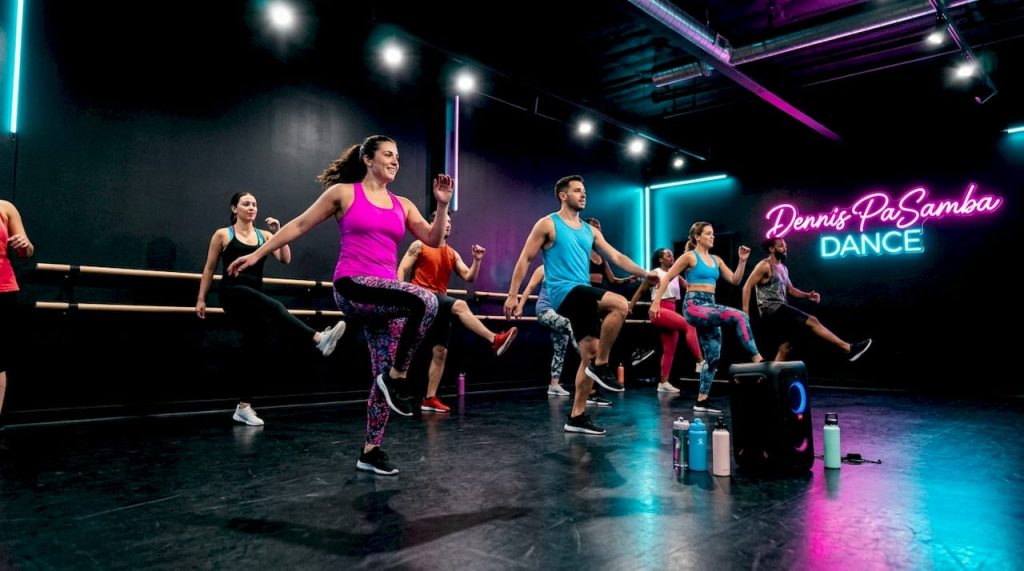
Latin dance warm up exercises are dynamic movements designed to raise your core temperature, loosen your joints, and activate the specific muscles you rely on for Salsa, Bachata, and Cumbia before you ever take a step on the floor. Skipping this prep is the fastest way to pull a hip flexor or lose your timing in the first song. Dynamic warm-ups activate the nervous system and rehearse movement patterns, which means your body arrives at the music ready to respond, not catching up. At Dennispasamba, every class starts with this principle built in.
1. What makes a great Latin dance warm-up routine
The best warm up routines for Latin dance follow a clear progression: light cardio first, then dynamic stretches, then dance-specific activation. A 5 to 10 minute warm-up is the proven sweet spot. Long enough to prime your muscles, short enough to avoid fatigue before the real work begins.
Your warm-up should move through three stages:
- Light cardio (1-2 minutes): March in place, side step, or do low-intensity footwork to raise your heart rate.
- Dynamic stretches (3-5 minutes): Controlled, repetitive movements through full ranges of motion. No holding positions. Keep moving.
- Dance-specific activation (1-2 minutes): Hip isolations, shoulder rolls, and basic rhythm steps that mirror what you will actually do in class.
The goal is to prime your nervous system, not tire your body. A progression from light cardio to dynamic stretches then specific activation optimizes your readiness without leaving you winded before the music starts.
Pro Tip: Set a timer for 8 minutes and run your warm-up to a Latin playlist at around 100 BPM. It keeps your pace honest and gets your brain into dance mode before class begins.
2. Leg swings forward and back
Leg swings are the single most direct way to open your hip flexors and hamstrings before Latin dance. Stand next to a wall, hold it lightly for balance, and swing one leg forward and back in a controlled arc. Do 10 to 15 reps per leg.
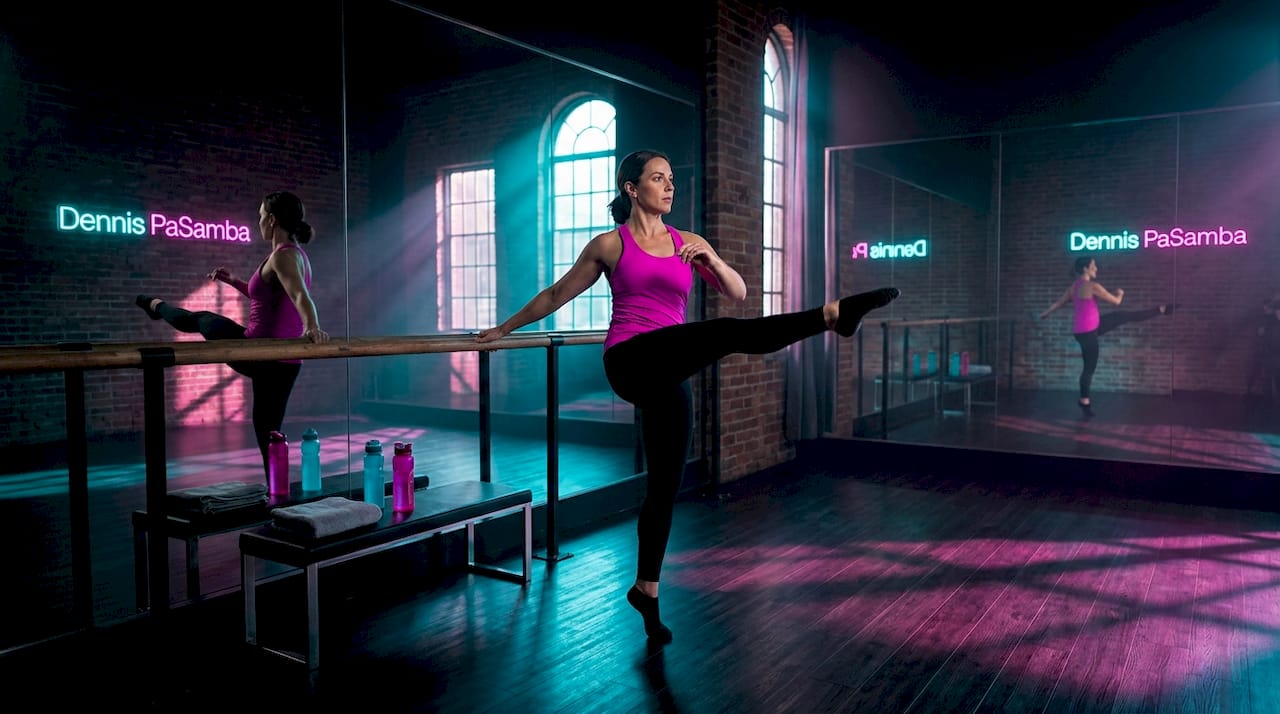
Leg swings increase hip mobility in a way that static stretching cannot match before activity. The movement warms the hip joint capsule and lengthens the hamstrings dynamically, which is exactly what Salsa and Bachata footwork demands. Keep your core engaged and let the swing reach its natural end range without forcing it.
Progress to side-to-side leg swings after the forward-back set. This version targets your hip abductors and adductors, the muscles responsible for the lateral weight shifts in Cumbia and Salsa cross-body leads.
3. Arm circles and shoulder rolls
Latin dance uses your upper body constantly. Shoulder rolls and arm circles are the fastest way to warm up the shoulder girdle, upper back, and neck before you start leading or following.
Start with small forward circles, gradually widening to full arm rotations over 10 reps. Then reverse direction. Follow with shoulder rolls: lift both shoulders toward your ears, roll them back, and drop. Repeat 8 times. Arm circles and shoulder rolls are a standard component of Latin fitness warm-ups because they loosen the joints that carry tension from sitting at a desk all day.
This matters more than most beginners realize. Tight shoulders create stiff leads and wooden upper body movement. Two minutes here pays off in every turn pattern you attempt.
4. Walking lunges with torso twists
Walking lunges with a torso twist are one of the most efficient Latin dance prep exercises available. Each step forward into a lunge opens your hip flexor while the twist mobilizes your thoracic spine, the section of your back responsible for the rotation in Bachata body movement.
Take a long step forward into a lunge, lower your back knee toward the floor, then rotate your torso toward your front leg. Hold the rotated position for one second, return to center, and step through to the next lunge. Do 8 to 10 reps per side. This is a multi-joint movement that covers hip mobility, spinal rotation, and balance in a single drill.
Pro Tip: Add a reach overhead with the arm on the same side as your front leg during the twist. This deepens the hip flexor stretch and adds a shoulder warm-up component at the same time.
5. Hip circles and lateral squats
Hip circles are non-negotiable for Latin dance. Stand with feet shoulder-width apart and draw large, slow circles with your hips. Do 8 circles in each direction. This movement directly rehearses the hip isolation technique used in Salsa, Bachata, and Cumbia styling.
Lateral squats follow naturally. Step wide to one side, sit your hips back into a squat on that leg while keeping the other leg straight, then push back to center and repeat on the other side. This opens the inner thighs and activates the glutes, both of which drive the power in your Latin dance footwork. Do 10 reps per side.
Together, hip circles and lateral squats form the core of any Latin dance fitness warm-up because they target the exact movement planes your dance style lives in.
6. Spiderman walks for full-body mobility
The Spiderman walk is one of the most effective pre-dance warm-up exercises for dancers who need multi-joint mobility fast. Start in a push-up position. Step your right foot outside your right hand, lower your hips, and hold for one second. Return to push-up position and repeat on the left side. Walk forward 8 to 10 reps.
This single movement opens your hip flexors, groin, thoracic spine, and ankles simultaneously. For Latin dancers, that combination is directly relevant. Salsa requires deep hip flexor flexibility for long stride patterns. Bachata body rolls need thoracic mobility. Cumbia footwork demands ankle range of motion.
The Spiderman walk covers all three in under two minutes. That efficiency makes it one of the best warm-up moves for Latin dancing regardless of your experience level.
7. High knees and butt kicks
High knees and butt kicks are cardiovascular activation drills that also rehearse the fast footwork rhythm of Latin dance. High knees: drive your knees up toward your chest alternately while pumping your arms. Do 20 reps. Butt kicks: kick your heels toward your glutes alternately while jogging lightly in place. Do 20 reps.
Music tempo in Latin fitness workouts typically sits between 128 and 134 BPM. Running high knees and butt kicks at that tempo trains your feet to move at dance speed before the music demands it. This is the neuromuscular rehearsal that separates a good warm-up from a generic one.
These two drills also raise your heart rate quickly, which is the primary goal of the cardio phase in your warm-up sequence.
8. The world’s greatest stretch (dynamic version)
The world’s greatest stretch earns its name. It combines a lunge, thoracic rotation, and hamstring stretch into one flowing movement that covers more ground than almost any other single exercise.
Step forward into a deep lunge with your right foot. Place your left hand on the floor inside your right foot. Rotate your right arm up toward the ceiling, following it with your eyes. Hold one second, return, and repeat. Then straighten your front leg to stretch the hamstring. Return to lunge and step through. Do 5 reps per side.
For Latin dancers, this drill is especially valuable because it rehearses the body rotation used in Bachata and the hip hinge used in Salsa dips. Dynamic stretching involves controlled, repetitive movements through full ranges of motion, and this exercise is the clearest example of that principle applied to dance preparation.
How to modify warm-ups for different levels and settings
Not every dancer starts from the same place. Your warm-up should match your body, your space, and your experience level.
- Beginners: Cut the routine to 5 minutes. Focus on leg swings, arm circles, and hip circles only. Skip the Spiderman walk until your hip flexibility improves.
- Limited mobility or older adults: Chair-based Latin rhythms classes prove that seated arm circles, shoulder rolls, and seated hip shifts are fully effective for warming up safely. All eight exercises above have a seated or low-impact version.
- Experienced dancers: Add resistance bands to leg swings and lateral squats. Increase the pace of high knees to match your target dance tempo. Add a second round of the world’s greatest stretch.
- Small spaces: Leg swings, arm circles, hip circles, and the world’s greatest stretch all work in a 4×4 foot area. You do not need a studio floor to warm up properly.
- Using music: Match your warm-up tempo to the music. Start at 90 to 100 BPM for the cardio phase and increase to 120 BPM for the activation phase.
Why consistent warm-ups improve your dancing over time
“Dancers who warm up consistently before every session develop better joint range of motion, sharper coordination, and significantly lower injury rates than those who skip preparation. The warm-up is not optional. It is the foundation of long-term dance health.”
A regular pre-dance warm-up routine does more than prevent injury. It trains your body to recognize the transition from everyday movement to dance movement. Over weeks, your hips become more mobile, your footwork becomes more precise, and your upper body styling becomes more fluid. These are not accidental gains. They are the direct result of priming your nervous system with the same movement patterns before every session.
Coordination and rhythmic timing also improve because your warm-up rehearses the exact motor patterns your dance style requires. A walking lunge with a torso twist is not just stretching. It is practicing rotation. Hip circles are not just loosening up. They are training the isolation technique that defines Latin dance styling. The 5-minute gentle movement warm-up used in beginner Latin fitness classes demonstrates that even minimal consistent preparation produces measurable improvements in body awareness and confidence.
Key takeaways
A complete Latin dance warm-up combines light cardio, dynamic stretches, and dance-specific activation in 5 to 10 minutes to maximize performance and minimize injury risk.
| Point | Details |
|---|---|
| Optimal warm-up duration | Spend 5 to 10 minutes warming up to prime muscles without causing fatigue. |
| Progression matters | Move from light cardio to dynamic stretches to dance-specific activation in sequence. |
| Hip and spine focus | Prioritize hip circles, leg swings, and torso twists since Latin dance lives in these joints. |
| Modify for your level | Beginners shorten the routine; advanced dancers add resistance or speed to the same exercises. |
| Consistency builds skill | Regular warm-ups improve flexibility, coordination, and body awareness over time, not just on the day. |
Why I stopped skipping warm-ups (and what changed)
Early in my teaching career, I treated warm-ups as a formality. I would do a few shoulder rolls, maybe some hip circles, and jump straight into footwork. Then I pulled my hip flexor during a Salsa demo in front of a full class. That was the last time I skipped a proper warm-up.
What I discovered after committing to a full dynamic warm-up before every session was not just fewer injuries. My movement quality improved. My hip isolations became sharper because I was rehearsing them before the music even started. My students noticed the difference too. When I started leading warm-ups properly at the beginning of every class, the whole room moved better within the first 10 minutes.
The advice I give every dancer at Dennispasamba is this: treat your warm-up as the first five minutes of your actual dance practice, not a delay before it starts. The exercises that activate your nervous system are the same movements that build your technique. You are not just getting ready to dance. You are already dancing.
— Dennis
Ready to put your warm-up to work in a real class?
You have the exercises. Now you need the music, the floor, and the community to make them count. Dennispasamba runs Salsa, Bachata, and Cumbia classes in Chicago for all levels, and every session opens with a structured warm-up so your body is ready from the first beat.

If you want to test your warm-up in a social setting, join one of the Chicago social dance events where you can practice everything from hip circles to full Salsa footwork with real partners and real music. No partner needed to join. Just show up ready to move.
FAQ
How long should a Latin dance warm-up be?
A Latin dance warm-up should last 5 to 10 minutes. This duration raises your heart rate and loosens your joints without creating fatigue before your dance session begins.
Should I stretch before or after Latin dance?
Dynamic stretching belongs before dance. Static stretching, where you hold a position for 20 to 30 seconds, is best saved for your cool-down after dancing when your muscles are fully warm.
Can beginners do the same warm-up as advanced dancers?
Yes, with modifications. Beginners should focus on leg swings, arm circles, and hip circles for about 5 minutes. Advanced dancers can add resistance, increase speed, or extend the routine to the full 10-minute range.
What muscles do Latin dance warm-ups target?
Latin dance warm-up exercises primarily target the hip flexors, glutes, inner thighs, thoracic spine, and shoulders. These are the muscle groups that drive footwork, hip isolations, and upper body styling in Salsa, Bachata, and Cumbia.
Can I warm up for Latin dance in a small space?
Yes. Leg swings, arm circles, hip circles, shoulder rolls, and the world’s greatest stretch all fit in a 4×4 foot area. You do not need a full studio floor to prepare your body effectively.