

Merengue and Bachata are the latin dances easiest to learn for absolute beginners, thanks to their simple 4-beat rhythms and natural step patterns. Both styles use small, grounded movements that feel intuitive from the first class. Bachata’s slower tempo and side-to-side basic step give you time to feel the music before worrying about footwork precision. Merengue’s steady march-like rhythm teaches weight transfer and hip movement at the same time. If you are aged 18–40 and want a social, fun entry point into Latin dance, these two styles are your fastest path to the dance floor.
What makes a Latin dance easy to learn?
The easiest beginner Latin dance styles share four clear traits: a steady rhythm, small steps, a forgiving tempo, and low partner-connection demands at the start. When all four line up, you spend less time counting and more time actually dancing.
Here is what to look for when evaluating any style:
- Rhythm simplicity. Dances built on a straight 4-beat count, like Merengue, are easier to follow than those with syncopated or off-beat timing.
- Step size and complexity. Small, natural steps that mirror normal walking reduce the learning curve significantly.
- Tempo. Slower dances give beginners time to process weight shifts and balance before the next beat arrives.
- Partner connection demands. Styles that work well solo or with light frame contact let you build confidence before tackling close-hold technique.
- Class format. Most beginner classes start with solo footwork drills before introducing a partner, so you build a foundation first.
One mistake beginners make is chasing flashy turns before mastering the basics. Beginners who rush turns lose balance and break partner connection. Solid weight transfer and rhythm awareness come first.
Pro Tip: Listen to the music before you step. Latin dance starts in the ears, not the feet. Spend five minutes just nodding to the beat before your first class.
1. Merengue: the easiest starting point
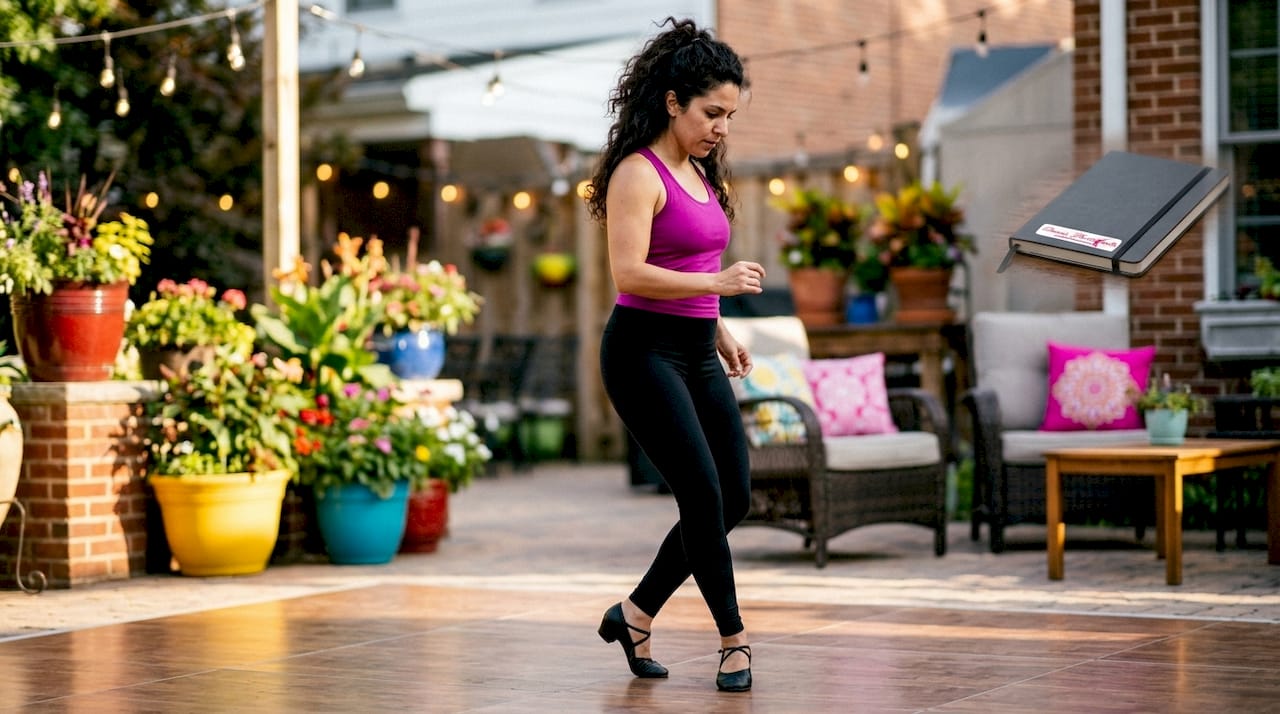
Merengue is the most beginner-friendly Latin dance style because it has the smallest number of rules of any popular Latin style. Every beat gets a step. That one-to-one relationship between music and movement removes the counting anxiety most beginners feel.
The basic step is a simple march: step left, bring feet together, step right, bring feet together. Your hips follow naturally when you keep your knees soft. There are no syncopated pauses, no held beats, and no complex timing patterns to memorize.
Merengue also teaches two skills that carry into every other Latin style: hip movement and grounded weight shifts. Mastering small, grounded weight changes is the true secret to social dance success, not complex turns. You build that skill from your very first Merengue class.
Pros for beginners: Fast to pick up, works at any tempo, great for social dancing.
Cons: Can feel repetitive once you advance; hip styling takes time to refine.
2. Bachata: slow tempo, big social payoff
Bachata is the second easiest style for new dancers because its tempo is slower than Salsa and its basic step is a simple side-to-side pattern with a tap on beat four. That tap gives you a built-in pause to reset your balance and prepare for the next phrase.
The Bachata basic step follows a four-count pattern: side, together, side, tap. You repeat it left and right. The music is slower and more melodic than Salsa, which gives your brain more time to connect what you hear to what your feet do.
Bachata is also one of the most popular social dances in Chicago and across the United States right now. Learning it early means you can join social events and practice with real partners almost immediately. That social reinforcement speeds up your progress faster than solo practice alone.
Pros for beginners: Slow tempo, intuitive rhythm, huge social scene.
Cons: Close-hold styling and body-wave technique take dedicated practice to look natural.
3. Rumba: the slow box step that builds real technique
Rumba uses a “slow, quick, quick” timing pattern built on a predictable box step. That slow tempo gives beginners time to understand weight shifts and control balance between each movement.
The box step moves forward, side, together, then back, side, together. It is symmetrical and logical. Once you internalize it, you have a transferable skill because the box step appears in Foxtrot, Waltz, and several other ballroom styles too.
Rumba is also where instructors focus heavily on posture and hip action. That attention to body mechanics early in your training pays off when you move into faster styles later. Think of Rumba as the technique lab of beginner Latin dance.
Pros for beginners: Slow pace, excellent for building posture and balance.
Cons: Requires more attention to body mechanics than Merengue or Bachata.
4. Cha Cha: playful rhythm with a simple triple step
Cha Cha adds one extra step to the basic four-beat count, creating a “one, two, cha-cha-cha” pattern. That triple step is the signature of the dance and the part beginners find most fun to practice.
The timing is slightly faster than Rumba but slower than Salsa. The footwork stays small and compact. Cha Cha is a great third dance to learn because it builds on the hip action you develop in Merengue and the timing awareness you gain from Bachata.
Cha Cha also has a playful, flirtatious character that makes social dancing feel light and energetic. You do not need to be technically polished to enjoy it at a social event. The basic step alone is enough to have a great time on the floor.
Pros for beginners: Fun rhythm, strong social appeal, builds on earlier skills.
Cons: The triple step can feel rushed at first; timing needs consistent practice.
5. Salsa: the iconic style worth the extra effort
Salsa has a reputation for being complex, but its basic step is actually straightforward once you understand the timing. The step pattern is: step forward on beat one, shift weight on beat two, step back on beat three, pause on beat four. That pause on beat four is where beginners often lose the rhythm.
Salsa moves faster than the other styles on this list. The music is energetic and the social scene is massive. Beginner Salsa classes at Dennis pasamba start with solo footwork and weight transfer before introducing partner work, which removes the pressure of keeping up with a more experienced dancer.
The payoff for learning Salsa is enormous. It is danced at clubs, festivals, and social events worldwide. Once you have Merengue or Bachata as a foundation, Salsa becomes much more accessible because your body already understands Latin rhythm and weight transfer.
Pros for beginners: Huge social scene, transferable skills, deeply rewarding.
Cons: Faster tempo and off-beat timing require more focused practice than Merengue or Bachata.
| Dance | Tempo | Basic step pattern | Best for |
|---|---|---|---|
| Merengue | Moderate | March on every beat | Absolute first-timers |
| Bachata | Slow | Side, together, side, tap | Social dancing fast |
| Rumba | Slow | Box step: slow, quick, quick | Building technique |
| Cha Cha | Moderate | One, two, cha-cha-cha | Adding playfulness |
| Salsa | Fast | Step, shift, step, pause | Social scene access |
Pro Tip: Practice Bachata at home solo between classes. Even ten minutes of side-to-side stepping while listening to Bachata music builds muscle memory faster than you expect.
How beginner Latin dance classes teach these styles
Most beginner classes follow a layered structure that builds confidence week by week. Beginner Latin dance classes do not require a partner and build skills progressively from solo technique to partner work. That structure removes one of the biggest fears new dancers have: showing up alone.
A typical multi-week beginner course looks like this:
- Week 1–2: Solo footwork, weight transfer, and listening to the rhythm.
- Week 3–4: Basic step with a partner using light frame contact.
- Week 5–6: Adding simple turns and directional changes.
- Week 7–8: Traveling patterns and social floor navigation.
Partner rotation systems are standard in quality studios. You rotate through multiple partners during class, which builds your ability to lead or follow with anyone, not just one person. Partner rotation helps build confidence before social dancing. That confidence is what gets you onto the social floor after class.
Many studios also offer beginner-friendly social events right after the lesson. Attending those socials is one of the fastest ways to lock in what you learned. Social dancing opportunities greatly enhance retention and enjoyment for new dancers.
Tips for choosing the right Latin dance style to start with
The right starting style depends on your personality, your music taste, and where you plan to dance socially. Choosing well at the start saves weeks of frustration.
- Match the music first. Listen to Merengue, Bachata, and Salsa playlists for a week. The style whose music you keep returning to is likely your best starting point.
- Start with one style only. Concentrated practice on one dance solidifies rhythm and mechanics. Layering more styles later is easier once your body understands Latin timing.
- Consider your social goals. If you want to dance at clubs and festivals quickly, Bachata or Salsa gives you the biggest social return. If you want to build technique first, Merengue or Rumba is the smarter choice.
- Attend a beginner social before committing. Many studios host free or low-cost intro nights. Watching the energy in the room tells you more than any description can.
- Warm up before every class. Dynamic warm-up exercises prepare your hips, ankles, and core for the demands of Latin footwork and reduce the risk of injury.
The goal is not to pick the “best” dance. The goal is to pick the one that keeps you coming back to class every week.
Key takeaways
Merengue and Bachata are the easiest Latin dances to learn because their simple rhythms, slow tempos, and natural step patterns give beginners a fast, enjoyable path to social dancing.
| Point | Details |
|---|---|
| Start with Merengue or Bachata | Both use simple 4-beat rhythms and small steps that beginners master quickly. |
| Focus on weight transfer first | Solid weight shifts build the foundation for every other Latin style you learn later. |
| No partner needed to start | Quality studios use rotation systems so solo beginners build confidence from day one. |
| Listen before you step | Internalizing the rhythm through your ears makes executing footwork significantly easier. |
| One style at a time | Mastering one dance before adding another accelerates your overall progress. |
What 33 years on the floor taught me about starting simple
After more than three decades of teaching Latin dance in Chicago, I have watched thousands of beginners walk through the door. The ones who progress fastest are never the ones who try to learn everything at once. They are the ones who commit to Merengue or Bachata for the first six to eight weeks and refuse to skip ahead.
The most common mistake I see is treating “easy” as “boring.” Merengue is not boring. It is the dance that teaches your body how to feel rhythm, shift weight, and move your hips without thinking. Every advanced dancer I know still practices Merengue basics. The foundation never stops mattering.
Social dancing is where the real learning happens. You can drill footwork at home all week, but the moment you step onto a social floor with a real partner and real music, your body learns something a mirror cannot teach. That is why I always recommend attending a social event within your first month, even if you only know the basic step.
Be patient with yourself. The goal in your first class is not to look good. The goal is to feel the beat and take one step at a time. Everything else builds from there.
— Dennis pasamba
Ready to take your first class at Dennis pasamba?
Dennis pasamba is Chicago’s top-rated Latin dance studio with over 850 five-star Google reviews and 33-plus years of teaching experience. Beginner Salsa, Bachata, and Cumbia classes are available now, and you do not need a partner to sign up.
Singles and couples are both welcome. Every beginner class starts with solo footwork so you build real confidence before dancing with a partner. Check the dance studio checklist to know exactly what to look for before you commit to a studio. New sessions are forming now, so visit the new classes page to see current schedules and pricing. Friday socials, date nights, and private lessons are also available for when you are ready to level up.
FAQ
What is the easiest Latin dance for a complete beginner?
Merengue is the easiest Latin dance for absolute beginners because every beat gets one step and there are no complex timing patterns to memorize. Bachata is a close second due to its slow tempo and simple side-to-side basic step.
Do I need a partner to start Latin dance classes?
No partner is needed. Most reputable studios use partner rotation systems and solo footwork drills so beginners build connection and confidence before social dancing.
How long does it take to learn basic Bachata or Merengue?
Most beginners can execute a clean basic step in Merengue or Bachata within two to four classes. Consistent weekly practice and attending social events accelerates that timeline noticeably.
Is Salsa harder to learn than Bachata?
Yes. Salsa moves faster and uses an off-beat pause that takes more time to internalize than Bachata’s straightforward four-count pattern. Bachata is the better starting point for most new dancers.
Can I learn Latin dance as an adult with no dance experience?
Absolutely. Beginner Latin dance classes are designed specifically for adults with zero experience. The layered class structure at quality studios builds skills week by week so no prior background is needed.