

Salsa social dancing is a partner Latin dance form where two people connect through rhythm, footwork, and physical cues to improvise together on a shared dance floor. You do not need a partner, prior dance experience, or a perfect body to enjoy it. What you need is a basic understanding of the step pattern, a few unwritten rules, and the courage to show up. This salsa social dancing guide covers exactly that: the core technique, floor etiquette, event discovery, beginner mindset, and how to handle the moments when things go sideways.
What are the essential salsa basics you need before your first social?
The salsa basic step follows a quick, quick, slow pattern, counted as 1, 2, 3 with a pause on 4, then 5, 6, 7 with a pause on 8. Leads step forward on count 1, follows step back, and both reverse on count 5. That six-count pattern is the foundation of every move you will ever learn in salsa.
Hip movement is a byproduct of correct footwork, not a separate skill you force. Beginners often fatigue quickly by trying to shake their hips manually instead of letting proper weight transfers drive the motion naturally. Plant your foot, shift your weight fully, and the hip follows on its own. This one correction saves most beginners weeks of frustration.
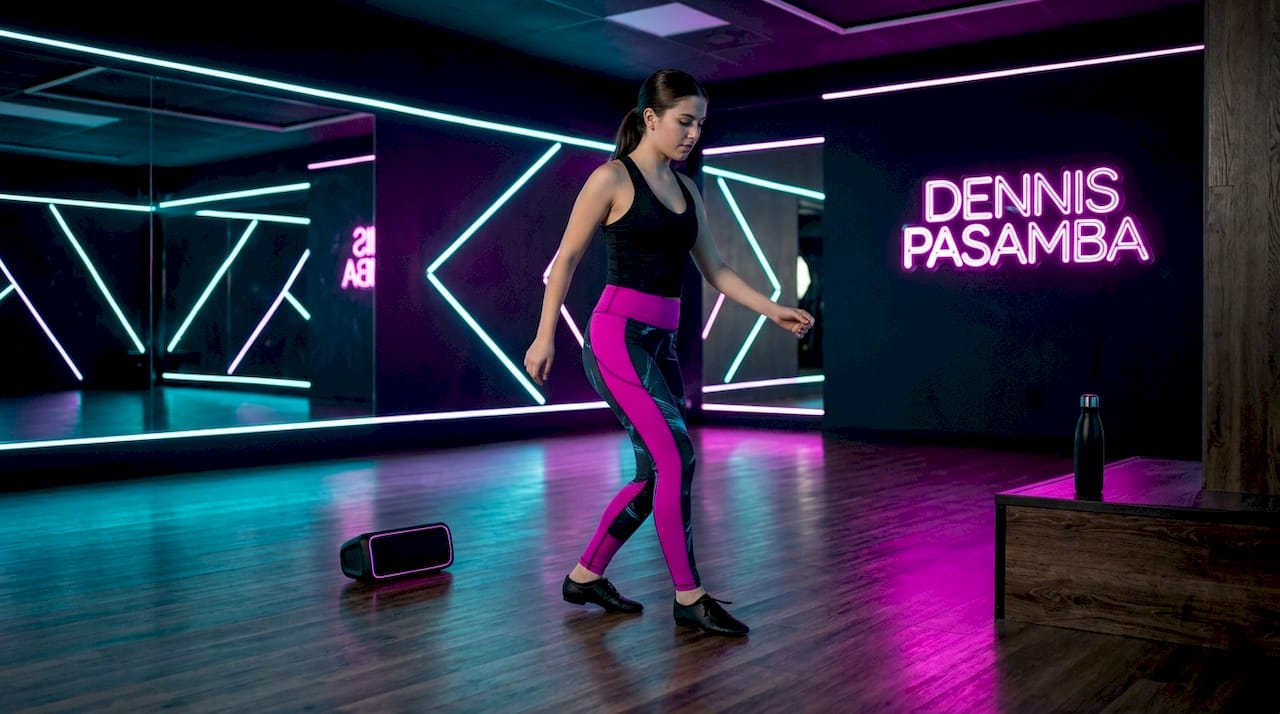
Once you have the basic step, learn one turn pattern before your first social. The cross-body lead is the most common beginner move in On1 salsa (the timing style most popular in Chicago and across the U.S.). It moves your partner from one side to the other in a straight line, giving both of you space and a clear structure to work within.
Here is what to prepare before you walk into your first social:
- Shoes: Wear smooth-soled shoes that allow pivoting. Sneakers with rubber soles grip the floor and can strain your knees. Leather-soled dress shoes or dedicated dance shoes work best.
- Clothing: Choose something you can move freely in. Fitted but not restrictive. Avoid long skirts or baggy pants that hide your footwork from your own view.
- Hygiene: Bring a small towel and deodorant. Salsa is physical. Your partners will thank you.
- Mindset: Know two moves cold before you arrive. The basic step and the cross-body lead are enough for a full night of dancing.
Pro Tip: Bring only one or two moves to your first social and focus on connecting with the music rather than running through a checklist of steps. Dancers who stay relaxed and on beat are far more enjoyable to dance with than those who rush through moves they barely know.
How should you navigate social dance etiquette on the salsa floor?
Asking someone to dance requires only a smile, eye contact, and an extended hand. No elaborate speech needed. A simple “Would you like to dance?” works perfectly. If someone declines, they owe you no explanation. Accept it gracefully, smile, and move on. Rejection is not personal in salsa communities.
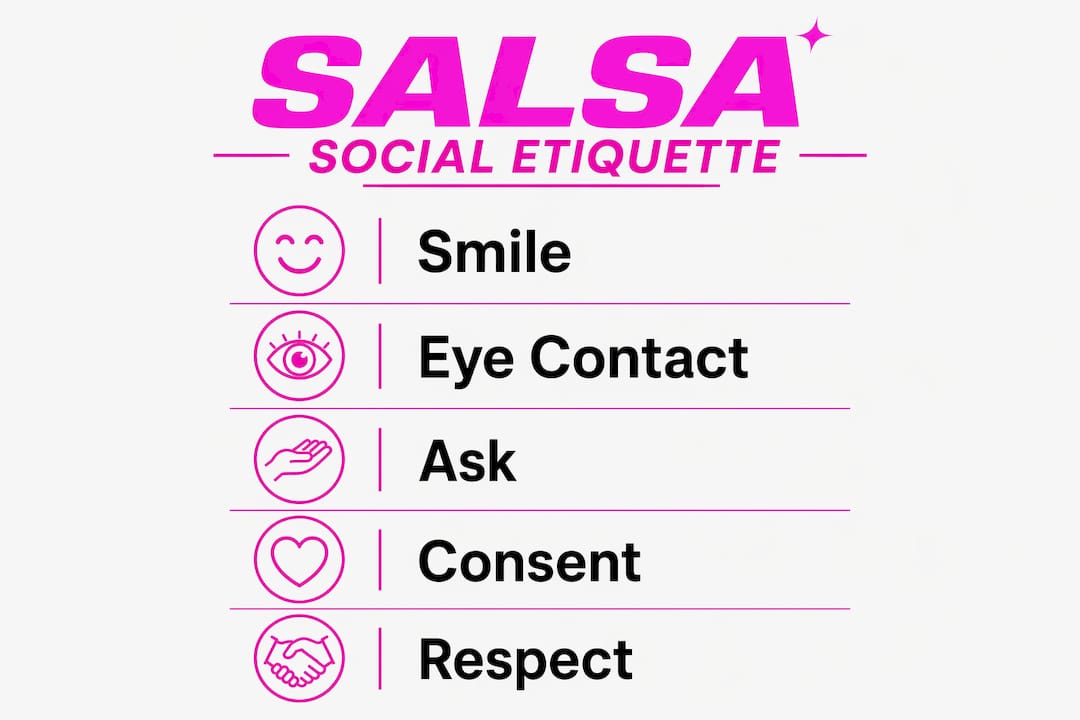
Consent in social dancing is continuous and specific. A yes to dance is not an all-access pass to every move in your repertoire. If you attempt a dip or a fast spin and your partner stiffens or pulls back, that is a clear physical cue to dial it back. Read those signals throughout the dance, not just at the start.
Correcting your partner on the floor is considered a major social offense. Salsa socials are parties, not classrooms. If you want to share feedback, do it off the floor, gently, and only if you have an established relationship with that person. Unsolicited corrections embarrass your partner and signal that you prioritize your ego over their enjoyment.
Key floor navigation rules every beginner should know:
- Move counterclockwise around the floor with the general crowd flow.
- Use small steps in crowded spaces to avoid colliding with other couples.
- If you bump someone, a quick “sorry” and a nod is all that is needed. Do not stop the dance to over-apologize.
- Always thank your partner at the end of a song, regardless of how the dance went.
- Sit out when you are tired. Dancing exhausted leads to sloppy footwork and potential injuries.
Pro Tip: Social dance etiquette protects newcomers most of all. When you follow these norms, you signal to experienced dancers that you are safe and respectful to dance with, which means more invitations coming your way.
Where and how do you find beginner-friendly salsa social events?
Most salsa socials follow a predictable structure that makes them perfect for newcomers. A beginner workshop typically runs from 8 to 9 pm, followed by open social dancing from 9 pm to midnight or later. Attending that workshop is your best first move. You walk in knowing the night’s featured move, and you immediately have something to practice with every partner.
To find events in your city, use these four methods in order:
- Facebook groups: Search “[salsa] + [your city name]” on Facebook and join the top two or three groups. Event announcements, photos, and community feedback all live there.
- Instagram: Follow local dance schools and DJs. They post event flyers regularly, and Stories often include last-minute updates.
- WhatsApp and Telegram groups: Local dancers share real-time updates on these platforms that never make it to public listings. Ask a dancer at your first social to add you.
- Local dance schools: Schools are often the best source for event info beyond what is publicly listed. Call or visit and ask directly which socials they recommend for beginners.
Here is a quick comparison of event types you will encounter:
| Event type | What to expect |
|---|---|
| Studio social | Smaller, structured, beginner-friendly; often includes a lesson |
| Nightclub salsa night | Louder, larger floor, more experienced crowd |
| Outdoor free social | Inclusive, casual, great for first-timers |
| Festival social | High energy, mixed levels, excellent for watching and learning |
Real-world examples show how accessible these events can be. Salsa Knox in Knoxville runs weekly Friday and Saturday parties with free lessons and a $10 cover, no experience required. In Philadelphia, ¡Bailar en FDR! offers a free all-levels lesson from 7 to 8 pm followed by open dancing until 11 pm, outdoors, rain or shine. Events like these exist in nearly every mid-size and large American city.
What mindset and practical tips boost your confidence at salsa socials?
Nervousness before your first social is completely normal. Every experienced dancer you admire felt exactly the same way at their first event. The goal for night one is not to impress anyone. The goal is to stay on beat, connect with your partner, and have fun.
Keep your dancing simple on purpose. Bring only one or two new moves to try during your first social night and focus on music connection rather than complexity. Experienced partners actually prefer dancing with relaxed beginners over tense intermediates who rush through moves they cannot control.
Tell your partner you are a beginner. Most experienced dancers adjust their leading or following immediately when they know your level. This one sentence removes enormous pressure from both of you and sets up a more enjoyable dance.
Here is what actually builds confidence over time:
- Show up consistently. Confidence improves noticeably after 4 to 6 weeks of weekly classes combined with socials. The rhythm starts to feel automatic rather than calculated.
- Focus on connection, not perfection. A dance where you stayed on beat and smiled is a successful dance, regardless of how many moves you completed.
- Celebrate small wins. Finished a cross-body lead cleanly? That counts. Your partner smiled? That counts more.
Pro Tip: If you freeze mid-dance, reset to the basic step immediately. Every experienced dancer knows this move. It resets the connection, buys you time, and signals composure rather than panic. This single habit separates dancers who recover gracefully from those who stop and apologize.
What are common challenges beginners face at salsa socials?
Floor anxiety is the most common beginner experience, and it peaks in the first 20 minutes of your first social. The fix is not to think your way through it. Get on the floor early, during the beginner workshop, when the energy is lower and the crowd is smaller. The longer you sit and watch, the larger the fear grows.
Overthinking moves mid-dance is the second most common issue. When you start mentally narrating every step, your body tightens and your timing collapses. The solution is to anchor your attention to the music, specifically the clave rhythm or the bass line, rather than your feet. Your feet already know the basic step. Trust them.
Here are the most common beginner challenges and how to handle each one:
- Declined dance request: Smile, say “maybe later,” and ask someone else. Do not take it personally or avoid that person for the rest of the night.
- Physical discomfort with a partner: Loosen your frame slightly or create more distance with your arm. You do not need to explain. Your body communicates clearly.
- Running out of moves: Return to the basic step and style in place. Footwork variations, body rolls, and arm styling all count as dancing.
- Fatigue: Sit out every third or fourth song. Tired dancing looks worse than no dancing, and it increases the risk of stepping on someone.
“Observe the experienced dancers around you, not to copy them move for move, but to absorb how they listen to the music and respond to their partners. That awareness is the real skill.”
Pro Tip: Watch two or three experienced couples before you dance your first song. Notice how they handle transitions, how they recover from mistakes, and how relaxed their upper bodies look. You will carry that visual reference onto the floor with you.
Key takeaways
Salsa social dancing rewards consistency, respect, and simplicity far more than technical complexity, especially in your first weeks on the floor.
| Point | Details |
|---|---|
| Master the basic step first | The quick, quick, slow pattern on counts 1-2-3 is the foundation of every salsa move you will learn. |
| Follow floor etiquette strictly | Ask with a smile, accept declines gracefully, and never correct a partner during a social dance. |
| Attend the beginner workshop | Most socials include a free lesson before open dancing, making it the safest entry point for newcomers. |
| Reset to basics when lost | Returning to the basic step mid-dance keeps connection smooth and prevents panic from showing. |
| Consistency builds real confidence | Four to six weeks of weekly classes plus socials produces noticeable improvement in rhythm and comfort. |
What I have learned from years on the salsa floor
I started teaching salsa in Chicago because I remembered exactly how intimidating that first social felt. You walk in, the music is loud, everyone seems to know what they are doing, and you are standing near the wall wondering if you made a mistake coming.
What changed everything for me was not a new move or a better technique. It was deciding to treat every dance as a conversation rather than a performance. When you stop trying to impress and start trying to connect, the whole experience shifts. Your partner feels it. You feel it. The music makes more sense.
The students I have seen grow fastest at Dennispasamba are not the most naturally talented. They are the ones who show up every week, ask experienced dancers to dance, and stay humble enough to keep learning. Kindness on the floor matters more than footwork. Showing up matters more than talent. And the community you build at these events will keep you coming back long after the novelty of learning new moves wears off.
Embrace the imperfection. Every stumble is a data point, not a failure. The floor is forgiving when you are.
— Dennis
Start dancing salsa in Chicago with Dennispasamba
Ready to put this into practice? Dennispasamba offers beginner and intermediate salsa classes in Chicago designed for adults who want real results without the intimidation. No partner needed. No experience required.
Classes cover Salsa, Bachata, and Cumbia with experienced instructors who know how to make beginners feel welcome from day one. After class, join the Chicago salsa socials with live DJs, beginner workshops, and a community that genuinely wants you there. Whether you are taking your first step or ready to level up, check out the salsa and Latin dance classes at Dennispasamba and find the right fit for your schedule and goals.
FAQ
What is the salsa basic step pattern?
The salsa basic step follows a quick, quick, slow rhythm counted as 1, 2, 3, pause, 5, 6, 7, pause. Leads step forward on count 1, follows step back, and both reverse on count 5.
Do I need a partner to attend a salsa social?
No partner is needed. Most salsa socials rotate partners throughout the night, and beginner workshops are specifically designed for solo attendees who want to learn and meet other dancers.
How long does it take to feel confident at salsa socials?
Most dancers notice real confidence gains after 4 to 6 weeks of consistent weekly classes combined with social dancing. Regular attendance builds rhythm and comfort faster than occasional practice alone.
What should I wear to my first salsa social?
Wear smooth-soled shoes that allow pivoting, comfortable fitted clothing you can move freely in, and bring a small towel. Rubber-soled sneakers grip the floor and can strain your knees during turns.
Is it rude to decline a dance invitation at a salsa social?
Declining is completely normal and accepted. A simple “no thank you” or “maybe later” is all that is needed, with no explanation required. The salsa community treats declining as a standard part of social dance etiquette.