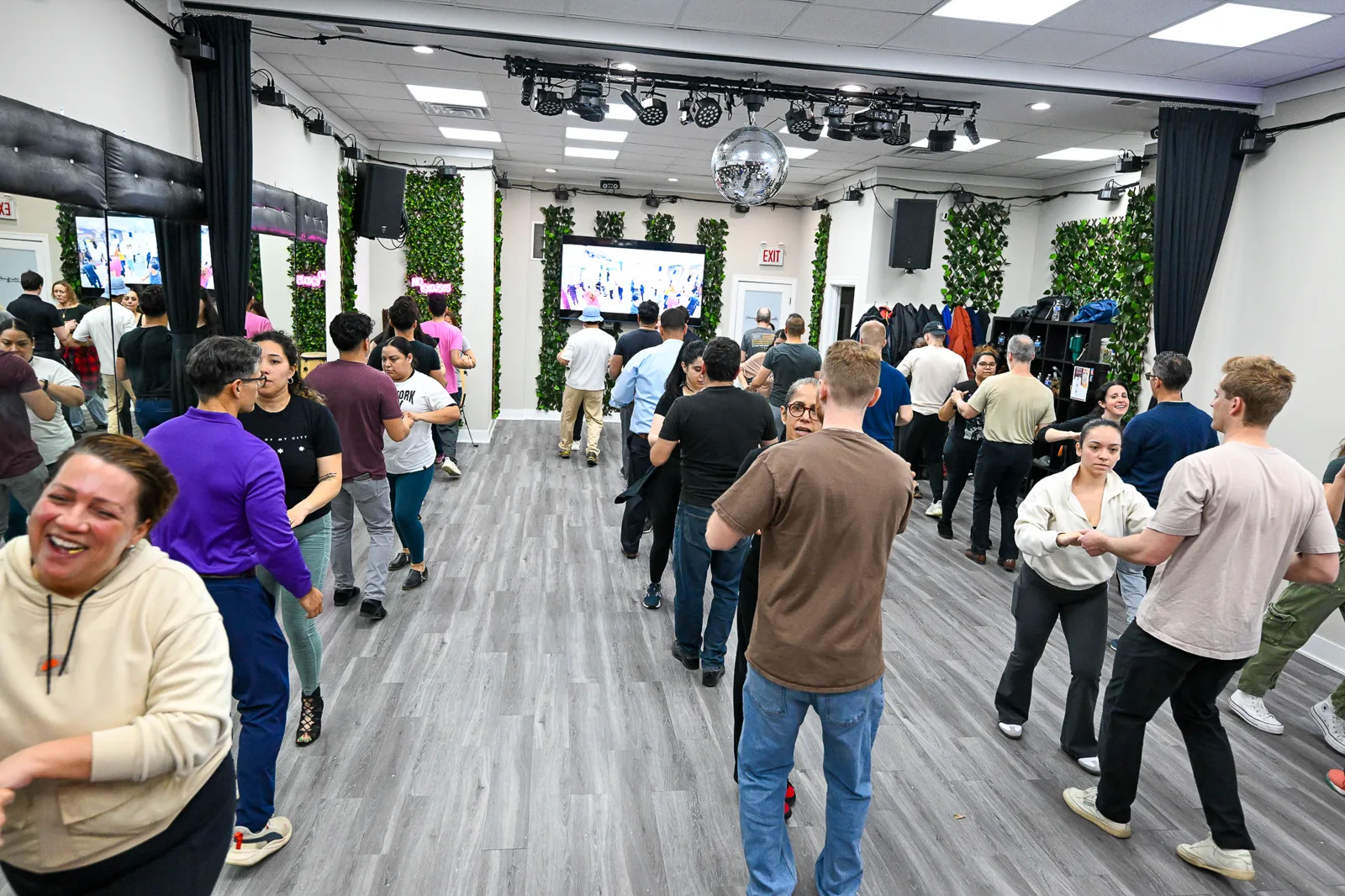
Music is the foundational framework of Latin dance, directing every step, accent, and emotional expression a dancer produces. Without music, Latin dance loses its timing, its energy, and its cultural soul. The role of music in Latin dance goes far beyond background sound. It defines how you move, when you move, and why a particular movement feels right. Whether you are learning Salsa, Bachata, or Cumbia, understanding the music is just as important as learning the footwork. Music directly increases the power and excitement of dancing, and that truth is felt in every Latin dance class and social floor worldwide.
What is the role of music in latin dance?
The role of music in Latin dance is to provide the rhythmic and emotional structure that organizes every movement a dancer makes. Dancers do not simply move to a beat. They interpret musical phrasing, respond to dynamic shifts, and express the emotional content of the song through their bodies. This relationship between music and movement is called musicality, and it is the standard industry term for what most people describe as “dancing with feeling.”
Music coordinates timing among dancers and creates shared excitement on the social floor. That coordination is what makes a room full of strangers feel like one connected community. Latin dance music genres including Salsa, Bachata, Cumbia, Mambo, and Cha-Cha each carry distinct rhythmic signatures that shape the character of the dance style built around them.
How does rhythm structure guide latin dance timing?
Latin dance music is built on layered rhythmic patterns, and the most important of these is the clave. The clave is a two-bar rhythmic pattern that functions as the internal organizing framework of Salsa and many related Afro-Cuban styles. Clave functions as a heartbeat that reduces a dancer’s reliance on constant counting and connects them to the music’s deeper structure.

Understanding clave changes how you experience the music. Instead of counting “1, 2, 3” mechanically, you start to feel where the music breathes and where it pushes forward. That feeling is what separates a dancer who looks stiff from one who looks natural.
Here are the key rhythmic elements that shape Latin dance timing:
- Clave pattern: The two-bar framework underlying Salsa, Mambo, and Rumba. Dancers align their phrasing to this structure, not just the surface beat.
- Tumbao: A bass-driven rhythmic figure in Afro-Cuban music that creates forward momentum. Dancers use it to feel the groove and weight of each step.
- Polyrhythms: Multiple percussion instruments playing interlocking patterns simultaneously. Dancers learn to pick one layer to follow while staying aware of the full texture.
- Conga and bongo accents: These percussion hits mark specific moments in the music. Experienced dancers use them to time body rolls, shines, and turns.
Pro Tip: Listen to a Salsa track with headphones and focus only on the lowest percussion sound. That is usually the clave or tumbao. Once you can hear it clearly, your footwork timing will improve faster than any drill can produce.
Clave provides the underlying musical framework, and dance timing sits inside this structure. That is why two dancers who both know the steps can look completely different. One is counting beats. The other is dancing inside the music.

How do musicians and dancers communicate in real time?
Latin dance is not always a one-way relationship where music plays and dancers follow. In Afro-Cuban and traditional Latin dance traditions, musicians and dancers hold an active conversation. This is especially clear in Cuban Rumba, where the lead drum called the quinto improvises freely while the dancer responds moment to moment.
In Cuban Rumba, the quinto improvises while the dancer answers its calls with matching accents and movement shifts. This is not choreography. It is a live dialogue between two artists sharing the same space.
“Responding in real time to improvisational lead drums challenges dancers to match movement accents with musical calls, raising artistic quality beyond routine steps.” — Sounds and Colours
This call-and-response tradition produces several specific benefits for dancers:
- Heightened listening skills: You cannot respond to a drum you are not hearing. This tradition forces dancers to become active listeners, not passive movers.
- Dynamic movement quality: Matching drum accents with body accents creates visual punctuation that makes dancing look alive and intentional.
- Improvisation confidence: When you practice responding to unpredictable musical cues, social dancing becomes less stressful and more expressive.
- Cultural depth: Understanding this tradition connects you to the African and Caribbean roots of Latin dance, which makes the experience richer and more meaningful.
Dancers answer lead drum calls with dynamic responsiveness, and that quality is what judges and audiences notice in performance. Live music experiences accelerate this skill faster than recorded tracks alone, because live musicians respond to the room and the dancers in ways that recordings cannot.
What does science say about rhythm and dance?
Research confirms what experienced dancers already know: training your body to move with music changes how your brain processes rhythm. A 10-week dancesport intervention showed significant improvements in rhythm perception and sensorimotor processing among college students. That means dance training is not just physical. It rewires how you hear and predict musical timing.
The science of groove explains why some music makes you want to move and other music leaves you flat. Groove is the alignment between body predictions and the music’s temporal structure. When your body anticipates the next beat correctly and the music confirms it, you feel locked in. That feeling is groove, and it is the goal of every Latin dancer.
Here is a practical training loop to build rhythm perception:
- Listen first, move second. Spend two minutes listening to a track before you dance to it. Identify the clave, the bass line, and any percussion accents.
- Move under pressure. Dance in a social setting or with a partner who challenges your timing. Pressure accelerates learning faster than solo practice.
- Check your timing. Record yourself dancing and watch it back with the music. Notice where your movement lands early, late, or exactly on the accent.
- Repeat with new music. Apply the same process to different Latin dance music genres. Each style trains a slightly different rhythmic sensitivity.
Professional dancers show enhanced brain connectivity supporting rhythmic processing. That connectivity is built through consistent practice, not natural talent alone.
Pro Tip: After class, spend 10 minutes listening to the music you just danced to without moving. Your brain will consolidate the rhythmic patterns faster when you give it time to process without physical distraction.
How does music shape salsa, bachata, cumbia, and other styles?
Every Latin dance style is defined by its music. The tempo, instrumentation, and rhythmic feel of each genre directly shape the movement vocabulary of the dance built around it. Musicality transforms choreography from mechanical execution to meaningful expression, and that transformation starts with understanding what makes each style’s music unique.
Dancers who focus only on steps miss the point. The music tells you how heavy or light your steps should feel, how fast or slow your body rolls should travel, and when to hold still for dramatic effect. That is the impact of music on dance movement in practice.
| Dance Style | Music Tempo | Key Rhythmic Feature | Movement Character |
|---|---|---|---|
| Salsa | Fast (160–220 BPM) | Clave and tumbao patterns | Sharp, energetic, syncopated footwork |
| Bachata | Medium (120–145 BPM) | Guitar-driven 4-beat pattern with accent on 4 | Smooth, sensual, hip-driven movement |
| Cumbia | Medium (90–120 BPM) | Gaita flute and caja drum groove | Grounded, circular, relaxed hip sway |
| Mambo | Fast (180–240 BPM) | Layered brass and percussion | Explosive, rhythmically complex, precise |
| Cha-Cha | Medium (110–130 BPM) | Distinctive “cha-cha-cha” triple step | Playful, rhythmically precise, light-footed |
The Latin dance workout comparison across Salsa, Bachata, and Cumbia shows how dramatically music tempo and feel change the physical demands of each style. Choosing a dance style is partly choosing the music you want to live inside.
Key takeaways
Music is the structural and emotional backbone of Latin dance, and dancers who understand its rhythmic layers move with more precision, expression, and confidence than those who only count steps.
| Point | Details |
|---|---|
| Clave organizes timing | Learning the clave pattern gives dancers a deeper rhythmic anchor than counting beats alone. |
| Call-and-response builds artistry | Responding to live drum improvisation in traditions like Cuban Rumba raises movement quality beyond choreography. |
| Training rewires rhythm perception | A 10-week dance intervention produced measurable improvements in sensorimotor processing and timing accuracy. |
| Groove is predictive alignment | The feeling of being “locked in” comes from your body correctly anticipating the music’s next rhythmic event. |
| Musicality beats step execution | Interpreting phrasing, dynamics, and emotion produces more expressive and memorable dancing than technical accuracy alone. |
Music is the language i teach first
After 33 years of teaching Latin dance in Chicago, I can tell you the single biggest mistake most beginners make: they learn the steps and ignore the music. They count “1, 2, 3” and wonder why they still look stiff six months in. The steps are not the dance. The music is the dance.
I have watched students with two left feet transform into confident social dancers the moment they stopped counting and started listening. When you understand that the clave is not a theory concept but a feeling you carry in your body, everything clicks. Your footwork stops being a math problem and starts being a conversation.
The cultural richness of Latin dance music is something I want every student to experience. Salsa is not just fast music. It carries the history of New York, Cuba, Puerto Rico, and Colombia in every bar. Bachata carries the heartbreak and joy of the Dominican Republic. When you learn to hear that history in the music, your dancing stops being a performance and starts being a story. That is what musicality teaching encourages: interpreting texture and emotion to tell that story through movement.
My advice is simple. Before your next class, listen to the music for five minutes without moving. Find the lowest drum. Find the moment where the music feels like it exhales. Dance from that place, and you will never look stiff again.
— Dennis pasamba
Start learning rhythm and musicality at dennis pasamba

At Dennis pasamba, Chicago’s top-rated Latin dance studio with 850+ five-star reviews, every class is built around musical awareness, not just footwork. Whether you are brand new or ready to go deeper, you will learn to hear the clave, feel the groove, and express the music through your body. Check out the intermediate and advanced Latin dance classes to sharpen your musicality in Salsa, Bachata, and Cumbia. Not sure where to start? The beginner dance studio checklist walks you through exactly what to look for and what to expect. No partner needed. All levels welcome. Come feel the music.
FAQ
What is the role of music in latin dance?
Music provides the rhythmic structure and emotional context that organizes every movement in Latin dance. It directs timing, energy, and expression, making it the foundational element of styles like Salsa, Bachata, and Cumbia.
Why is the clave important in salsa?
The clave is the organizing rhythmic framework of Salsa and related Afro-Cuban styles. It functions as an internal heartbeat that helps dancers align their phrasing with the music’s deeper structure rather than just counting surface beats.
How does music influence different latin dance styles?
Each Latin dance style is shaped by its music’s tempo, instrumentation, and rhythmic feel. Salsa’s fast clave-driven music produces sharp footwork, while Bachata’s slower guitar-driven beat creates smooth, hip-focused movement.
Can dance training improve rhythm perception?
Yes. A 10-week dancesport intervention produced significant improvements in rhythm perception and sensorimotor integration. Regular dance training builds the brain connectivity that supports accurate, expressive rhythmic movement.
What is musicality in dance?
Musicality is the ability to interpret rhythm, phrasing, dynamics, and emotion and translate them into movement. It transforms technically correct steps into expressive, meaningful dancing that connects with both partners and audiences.