
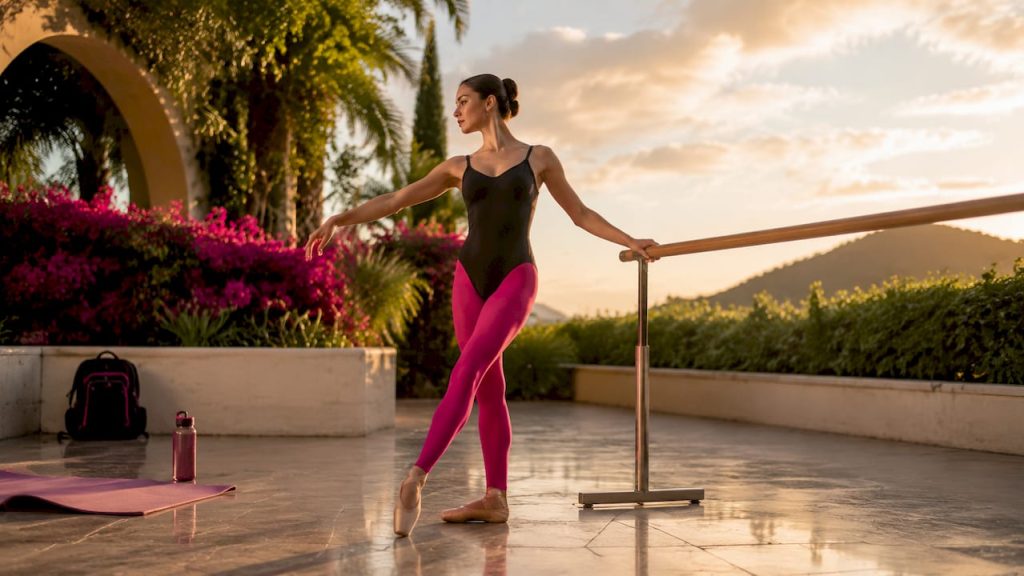
Practice in dance is defined as the structured, purposeful repetition of movement that transforms conscious effort into automatic, expressive performance. The role of practice in dance goes far beyond simply running through steps. It builds muscle memory, sharpens timing, and gives you the confidence to perform without thinking. Whether you are learning Salsa, Bachata, or Cumbia for the first time, the quality of your practice determines how fast you improve. Dennis pasamba has seen this truth play out with thousands of students over 33 years: deliberate, consistent practice is the single biggest factor separating dancers who plateau from those who thrive.
How does deliberate practice improve dance skills?
Deliberate practice and mindless repetition are not the same thing. Deliberate practice targets specific weaknesses, tracks progress, and demands full mental engagement every session. Mindless repetition just burns time and can lock in bad habits.
The first distinction to understand is the difference between skill training and strength training. Skill training focuses on timing and coordination, while strength training builds the muscle and joint stability that supports those skills. Neglecting strength training while only repeating movements leads to compensation habits and raises injury risk. Both types of training belong in every serious practice routine.
A well-structured session follows a clear sequence:
- Warm-up (3–5 minutes): Prepare joints and muscles. Try dynamic warm-up moves specific to Latin dance to activate the hips, ankles, and core before you start.
- Focused skill work (10–15 minutes): Isolate one technique, such as Salsa timing or Bachata body roll, and drill it with full attention.
- Creative application (5 minutes): Apply the skill freely to music without stopping to correct yourself.
- Cool-down (3–5 minutes): Stretch and let the nervous system settle. This phase supports motor learning and safety and reduces next-day soreness.
Effort level matters enormously inside this structure. Marking movements at half intensity fails to program the brain for the full speed and power required on stage or at a social. Practice at full effort, even in a small space, so your body learns the real version of each movement.
Pro Tip: Record yourself from a side angle once a week. Video analysis catches posture and timing errors that mirrors completely miss, especially issues behind your line of sight.
Why does consistent practice build muscle memory and confidence?
Muscle memory is a biological process, not a figure of speech. Repetition thickens the myelin sheath around neural pathways, which speeds up signal transmission and moves complex movements from conscious thought to automatic execution. That is why experienced dancers can focus on their partner and the music instead of counting steps.
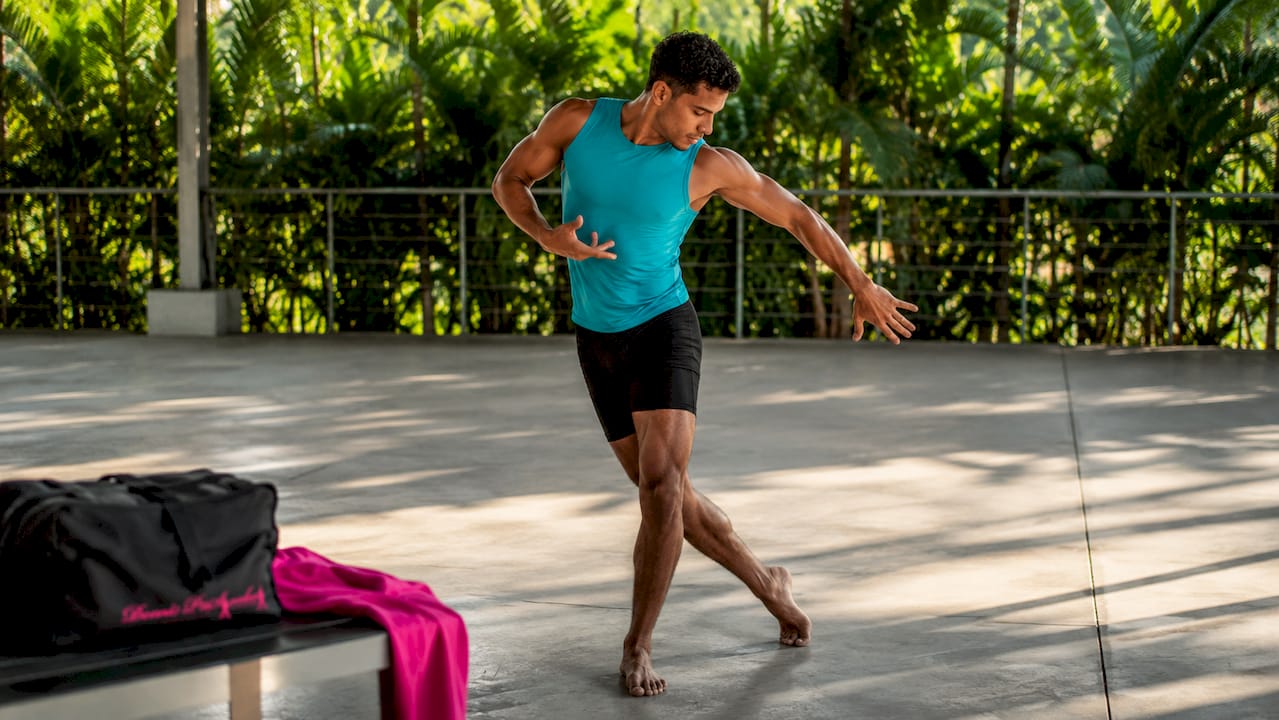
Confidence follows directly from this process. When your body executes a move without deliberate thought, your mind is free to express emotion and connect with the room. That shift from thinking to feeling is what separates a competent dancer from a compelling one.
Consistency also protects you from a common trap called “stage shock.” Consider these realities:
- Practicing in a small living room teaches your brain restricted movement patterns.
- Moving to a full-sized stage without prior full-range practice causes the body to “shrink” and underperform.
- Practicing at full intensity in whatever space you have programs the brain for real performance conditions.
- Consistency ingrained as unconscious technique allows quick adaptation to new styles, which choreographers value highly.
“Bad practice makes mistakes permanent. Every repetition teaches your body something. Make sure it is learning the right thing.”
This is why avoiding beginner mistakes from the start matters so much. Practicing poor technique does not just slow progress. It actively builds the wrong neural pathways, and unlearning them takes far longer than learning correctly the first time.
How does performance practice differ from technical practice?
Technical practice and performance practice serve different purposes, and most beginners only do one. Technical practice refines the mechanics: footwork, timing, frame, and body isolation. Performance practice adds intention, emotion, and musicality to those mechanics. Neglecting performance practice leaves dancers technically competent but emotionally flat on stage or at a social event.
Performance practice requires a different mindset. You are not correcting. You are committing. Every run-through should be treated as if an audience is watching, even if you are alone in your kitchen.
Key elements to include in performance practice:
- Intention: Decide what story or feeling each section of the music conveys before you start.
- Musicality: React to accents, pauses, and phrasing in the music rather than ignoring them.
- Pressure simulation: Invite a friend to watch, set a timer, or record yourself to create low-stakes performance pressure.
- Full commitment: No stopping to fix mistakes mid-run. Finish the piece and note corrections afterward.
Pro Tip: Practice away from mirrors and occasionally with your eyes closed. This builds proprioception, the internal sense of where your body is in space, which is the only feedback system available to you on a dark or unfamiliar stage.
The goal of performance practice is to make your emotional expression as automatic as your footwork. When both are ingrained, you stop performing steps and start performing for people.
What does an effective dance practice routine look like?
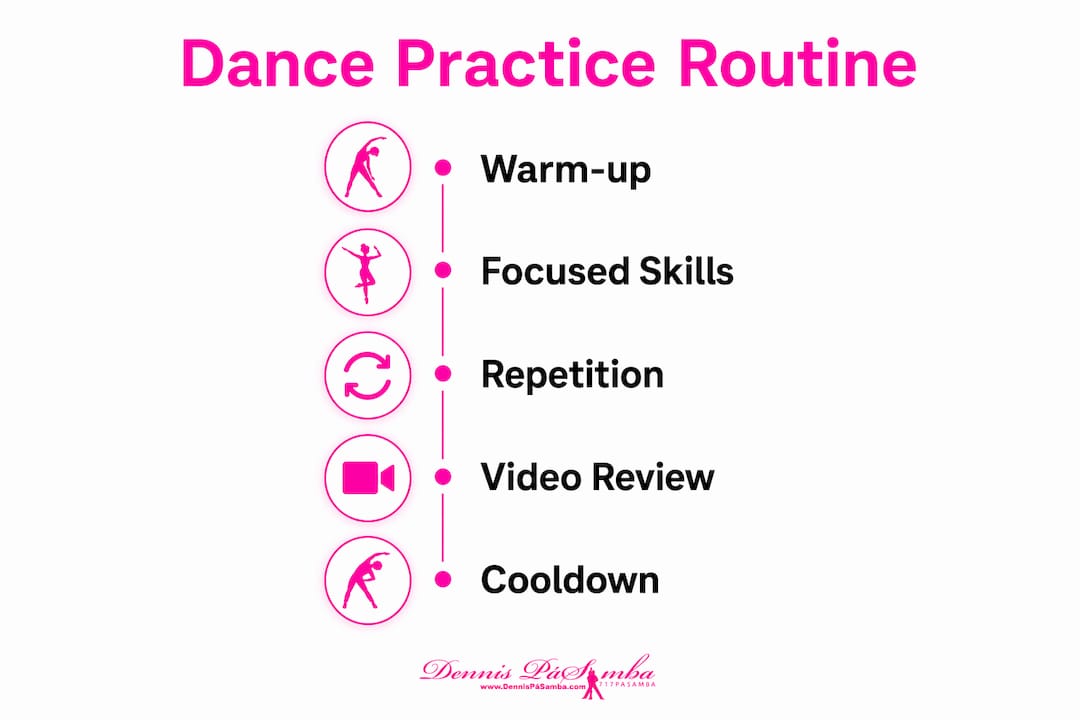
Structure is what separates productive practice from wasted time. The 2026 expert standard for home and studio sessions follows the same four-phase format: warm-up, focused skill work, creative application, and cool-down. Each phase has a specific purpose, and skipping any one of them reduces the session’s overall value.
Beyond individual sessions, two additional habits make a measurable difference over time.
Baseline practice keeps your foundational capacity intact between formal classes. Using scalable movement sequences outside of class prevents regression in movement quality and keeps your technical vocabulary sharp. Think of it as maintenance for your body’s movement library. Even 10 minutes of basic footwork on a rest day preserves what you built in class.
Weekly video review creates objective feedback that mirrors cannot provide. Record one full run-through of your current choreography or combination each week. Watch it with the sound off first to spot body shape and timing, then with music to assess musicality. This habit alone accelerates progress faster than doubling your practice hours without review.
| Practice Element | Purpose | Recommended Duration |
|---|---|---|
| Warm-up | Activate muscles and joints | 3–5 minutes |
| Focused skill work | Drill one specific technique | 10–15 minutes |
| Creative application | Apply skill freely to music | 5 minutes |
| Cool-down | Reduce soreness, aid recovery | 3–5 minutes |
| Weekly video review | Objective self-correction | 1 full run-through |
For home practice, space size matters more than most dancers realize. Practicing in confined spaces programs restricted movement patterns into muscle memory. If your home space is small, focus on upper body, timing, and footwork in place. Reserve full-range movement practice for a studio or open floor. Dennis pasamba offers studio rental options in Chicago for exactly this reason.
For dancers working on Latin styles at home, a focused approach to solo Bachata practice applies these same principles and gives you a concrete framework to follow between classes.
What I’ve learned about practice after 33 years on the floor
After more than three decades of teaching Salsa, Bachata, Cumbia, and a dozen other styles, the biggest mistake I see is dancers treating practice as a performance. They run through their routine hoping it goes well instead of using the session to fix something specific. That mindset produces the same result every time: polished mediocrity.
The dancers who improve fastest walk into every session with one clear goal. Not “practice my routine.” Something specific, like “nail the timing on the Cumbia cross-step” or “keep my shoulders down through every turn.” One goal. Full focus. That is it.
The emotional side of practice is real and rarely discussed. Frustration is not a sign you are failing. It is a sign you are working at the edge of your current ability, which is exactly where growth happens. Dealing with frustration and setbacks is what separates dancers who reach the next level from those who stay comfortable and stagnant.
My advice for beginners is simple: practice is preparation, not perfection. You are not trying to perform flawlessly in your living room. You are building the body and brain patterns that will make performance feel natural later. Trust the process, show up consistently, and let the results take care of themselves.
— Dennis pasamba
Ready to put your practice to work at Dennis pasamba?
Knowing how to practice is only half the equation. The other half is having the right environment, feedback, and community to practice in.
Dennis pasamba’s beginner Latin dance classes in Chicago are built around exactly the structured approach this article describes: warm-up, focused skill work, creative application, and real performance experience. Private one-on-one lessons give you personalized feedback that group classes cannot replicate. Friday socials put your practice to the test in a welcoming, no-pressure environment. No partner needed. All levels welcome. Use our dance studio questions checklist to make sure you find the right fit before your first class.
Key Takeaways
Consistent, deliberate practice is the foundation of every skill, confidence level, and performance quality a dancer develops, and structure determines whether that practice actually works.
| Point | Details |
|---|---|
| Deliberate over mindless | Practice with a specific goal each session to build skill faster and avoid locking in bad habits. |
| Skill and strength together | Combine skill training and strength training to improve performance and reduce injury risk. |
| Full effort always | Practice at full intensity so muscle memory encodes the real version of each movement. |
| Performance practice matters | Add intention, emotion, and musicality to practice runs to become compelling, not just competent. |
| Structure every session | Follow the warm-up, skill work, creative application, and cool-down format for maximum motor learning. |
FAQ
What is the role of practice in dance?
Practice in dance is the structured repetition that builds muscle memory, refines technique, and develops the confidence to perform automatically. Without consistent practice, movements stay in the conscious mind and never become natural.
How many times should you repeat a dance move to learn it?
There is no fixed number. Repetition must be mindful and technically correct, because repeating with poor form makes mistakes permanent rather than building skill.
Does practicing at home actually help?
Home practice helps significantly when it follows a structured format. A session with a 3–5 minute warm-up, focused skill work, and a cool-down optimizes motor learning and keeps progress moving between studio classes.
Why do dancers freeze up on stage even after lots of practice?
Stage shock happens when dancers practice at low intensity or in small spaces. The brain encodes restricted patterns, and a full-sized stage feels unfamiliar. Practicing at full effort and in varied spaces prevents this response.
How does practice build confidence in dance?
Confidence builds as movements become automatic through myelin development around neural pathways. Once your body executes steps without conscious thought, your mind is free to focus on expression and connection with your partner or audience.