
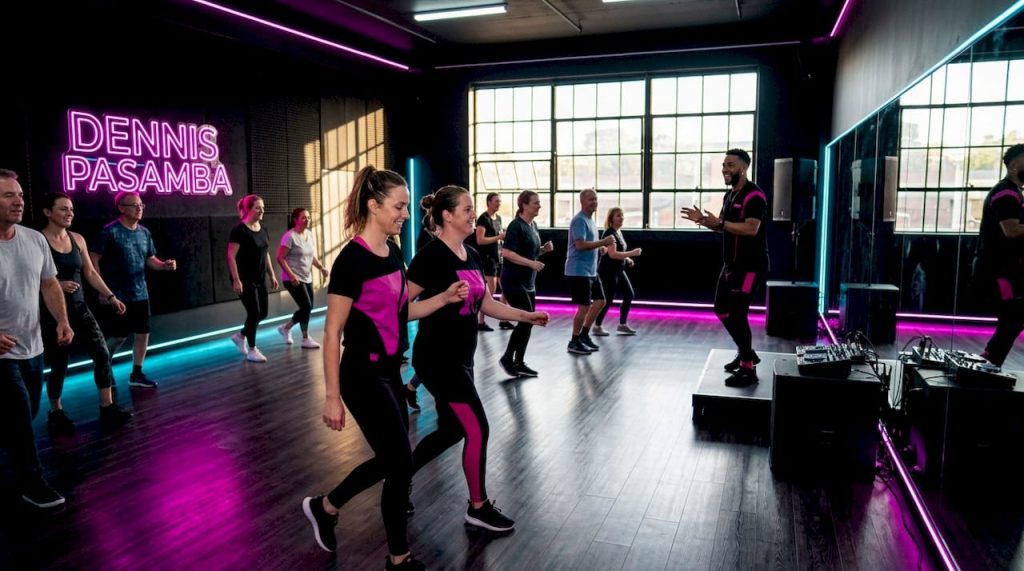
A dance workshop is a structured, intensive learning event where participants focus on a specific dance style or skill set under the guidance of an experienced instructor. Workshops range from a few hours to several days, covering genres like Salsa, Bachata, hip hop, ballet, and contemporary. Unlike a regular weekly class, a workshop compresses focused instruction into a short window, giving you faster results and a deeper understanding of the style you are studying. For adults exploring dance as a creative outlet or social activity, a workshop is one of the most direct ways to build real skill and meet people who share your passion.
What is a dance workshop and how does it work?
A dance workshop is defined as a concentrated learning session designed to develop specific skills, not just repeat familiar steps. Workshops are led by experienced instructors who bring a clear agenda and a defined learning outcome to every session. The format is more structured than a casual drop-in class and more focused than a semester-long course.
Most workshops follow a predictable and effective sequence:
- Warm-up. The session opens with movement exercises that prepare your body and get you mentally present. This typically runs 10 to 20 minutes.
- Technique drills. The instructor breaks down the core mechanics of the style. In a Salsa workshop, this might mean isolating footwork patterns or hip movement before combining them.
- Choreography instruction. You learn a short combination or phrase that applies the technique in a real dance context. This is where the style starts to feel alive.
- Guided practice. Participants repeat the material with partners or in groups while the instructor circulates and gives individual corrections.
- Feedback and cool-down. The session closes with instructor notes, questions, and a brief stretch.
Focus areas include posture, musicality, storytelling, and performance elements, which means you are learning to dance with intention, not just memorizing counts. Multi-day intensives, like those offered by Atlanta Ballet’s Centre for Dance Education, add social components such as evening gatherings and optional showcase performances, turning a learning event into a full community experience.
Pro Tip: Always check whether a workshop is level-specific before you register. Many workshops label themselves “open level” but assume prior training. If you are a beginner, look for workshops that explicitly say “no experience needed” or offer a beginner track.
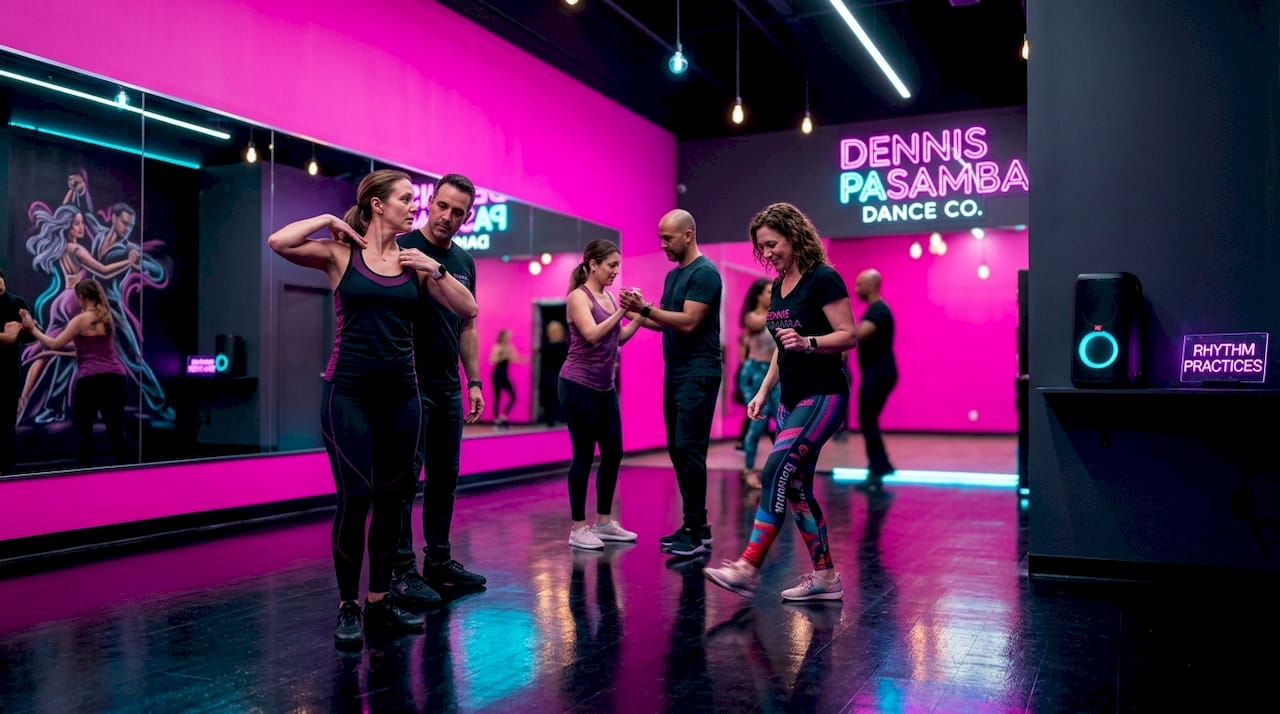
How dance workshops differ from regular dance classes
Workshops are shorter, more intense, and focused on a specific skill or style, which enables faster progression than ongoing weekly classes. Participants benefit from guest instructors and concentrated learning that a standard class schedule simply cannot replicate. The goal of a workshop is depth, not breadth.
Here is how the two formats compare directly:
| Feature | Dance Workshop | Regular Dance Class |
|---|---|---|
| Duration | A few hours to several days | Ongoing, weekly or bi-weekly |
| Focus | One style, skill, or theme | Broad skill development over time |
| Instructor | Often a guest or specialist | Your regular class instructor |
| Intensity | High, concentrated | Moderate, progressive |
| Cost | One-time fee per event | Monthly or per-session rate |
| Social element | Built-in, often structured | Develops organically over time |
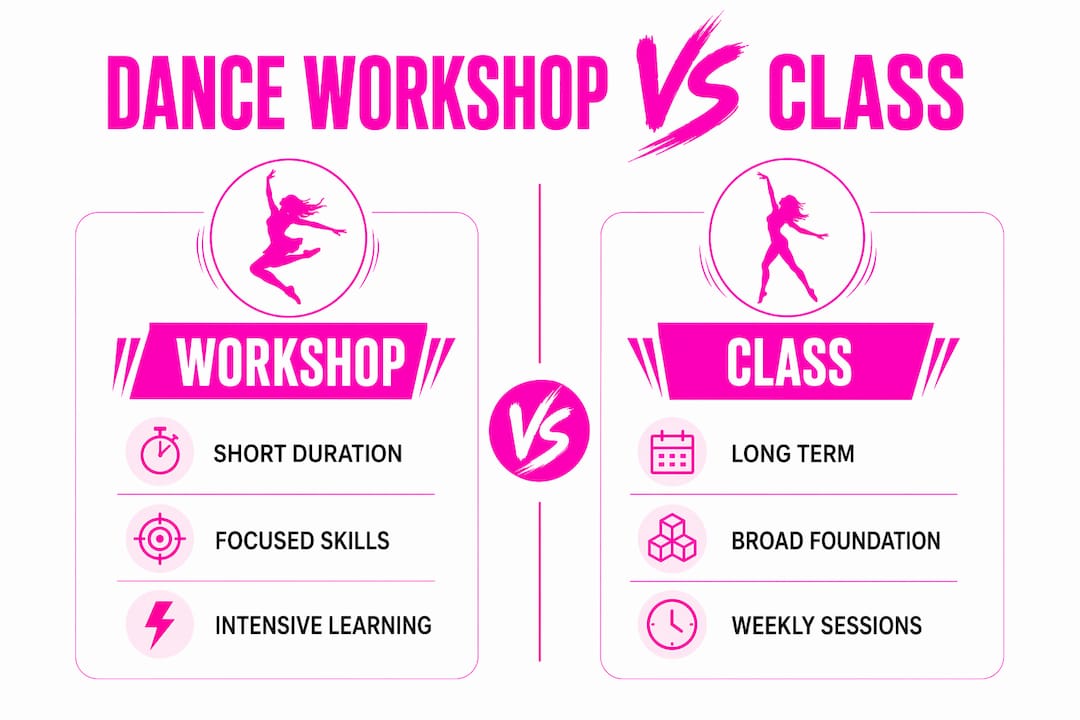
The key distinction is the learning goal. A regular class builds your foundation week by week. A workshop accelerates a specific part of your technique in a single focused block. Many dancers use both: weekly classes for consistency and workshops to break through plateaus or explore a new genre. If you are new to dance entirely, a beginner workshop is a low-commitment way to test whether a style fits you before signing up for a full course.
Pro Tip: If you are deciding between a workshop and a class, ask yourself what you need right now. If you want to try Bachata before committing to lessons, a single workshop is perfect. If you want steady improvement over months, a class is the better investment.
What types of dance workshops are available for adults?
Dance workshops fall into five main types, each with a different learning emphasis and participant experience. Knowing which type fits your goal saves you from signing up for the wrong event.
- Technique workshops. These focus on the mechanics of movement: footwork, posture, timing, and body alignment. They are ideal for dancers who want to clean up their fundamentals in styles like Salsa, ballet, or contemporary.
- Choreography workshops. The instructor teaches a full routine or extended combination. These are popular in hip hop, jazz, and Latin styles, and they are great for dancers who want to perform or just learn something they can show off at a social.
- Genre-specific workshops. These go deep into one style, including its history, cultural context, and signature moves. A Cumbia workshop, for example, might cover regional variations and the story behind the rhythm.
- Performance workshops. Designed for dancers preparing for a showcase, competition, or stage production. These combine technique with stagecraft, expression, and performance confidence.
- Masterclasses. Led by a visiting artist or nationally recognized instructor, masterclasses offer access to expertise you would not find in a local studio. They tend to be higher intensity and assume some prior experience.
Many workshops also teach style history and improvisation methods alongside technical drills, which helps dancers retain skills long after the event ends. Adult-friendly genres you will commonly find in workshop format include Salsa, Bachata, Cumbia, contemporary, ballet, hip hop, and jazz. Programs like the Gulf Coast Dancenter’s adult intensive combine multiple styles across several days, with social hours and breakfast gatherings built into the schedule to create community alongside the learning.
What to expect at a dance workshop and how to prepare
Registration for workshops requires planning. Drop-in spots often open only within specific windows and fill quickly, so do not assume you can show up the day of and get in. Programs like Atlanta Ballet’s adult intensive offer 3-day, 5-day, and 7-day tracks, each with different level requirements and optional performance fees. Read the registration details carefully before you commit.
Here is what to bring and how to prepare:
- Footwear. Wear shoes appropriate for the style. Salsa and Bachata workshops call for dance shoes or smooth-soled sneakers. Ballet workshops require ballet slippers. Never wear rubber-soled running shoes on a dance floor.
- Clothing. Wear fitted, flexible clothing that lets the instructor see your body alignment. Loose layers are fine for warm-up but can hide posture issues during technique work.
- Hydration and snacks. Bring a water bottle and a light snack for longer sessions. Multi-day intensives are physically demanding, and energy management matters.
- An open mindset. You will be corrected. That is the point. Treat every note from the instructor as useful data, not criticism.
- Personal goals. Decide before you arrive what you want to get out of the session. One clear goal, like improving your hip isolation or learning to lead a turn pattern, gives you focus and makes feedback more useful.
Safe floorwork and somatic techniques are emphasized in some contemporary workshops to reduce injury risk, but every good workshop builds in recovery time. Stretching breaks and cool-downs are standard, especially in multi-day formats. The social atmosphere at adult workshops is consistently welcoming. Most participants are there to learn and connect, not to compete, which makes the environment far less intimidating than many beginners expect.
Pro Tip: Introduce yourself to the instructor before the session starts. A 30-second conversation about your experience level means they can give you more targeted feedback during the class.
Key takeaways
A dance workshop delivers faster, deeper skill development than a regular class by concentrating instruction on one style or technique in a structured, time-limited format.
| Point | Details |
|---|---|
| Core definition | A workshop is a structured, intensive event focused on a specific style or skill, led by an experienced instructor. |
| Workshop vs. class | Workshops offer concentrated learning and guest instructors; regular classes build skills gradually over time. |
| Five workshop types | Technique, choreography, genre-specific, performance, and masterclass formats each serve different learning goals. |
| Preparation matters | Register early, wear proper footwear, and set one clear personal goal before you arrive. |
| Social value | Adult workshops build community through shared learning, social hours, and a welcoming, non-competitive atmosphere. |
Why I think workshops changed how I see dance education
I have watched hundreds of adult beginners walk into their first workshop convinced they were going to embarrass themselves. Almost none of them did. What I have seen consistently is that the workshop format removes the pressure that regular classes sometimes create. When everyone in the room is there for the same focused reason, the energy shifts. People help each other. They laugh at the hard parts. They stay after to practice.
The thing most people do not expect is how much context matters. Teaching someone a Salsa pattern is straightforward. Teaching them why the hip movement exists, where the music comes from, and how the style connects to a culture, that is what makes the skill stick. The best workshops I have been part of combine technical drills with that kind of storytelling. You leave knowing more than steps. You leave knowing a language.
My honest advice: do not wait until you feel “ready.” Nobody feels ready before their first workshop. Show up, tell the instructor where you are starting from, and let the structure do its job. The format is designed to meet you where you are and move you forward fast. That is the whole point.
— Dennis
Ready to experience a real dance workshop in Chicago?
Dennispasamba brings that same focused, welcoming workshop energy to Chicago every week. Whether you are brand new to Latin dance or looking to sharpen your Salsa, Bachata, or Cumbia technique, there is a class built for your level. No partner needed. No experience required to get started.
Dennis PaSamba is Chicago’s top-rated Latin dance coach, offering beginner through advanced Salsa, Bachata, and Cumbia classes in a community-first environment. If you want to feel what a great workshop actually does for your dancing, this is where to start. Check the current schedule and grab your spot before it fills up.
FAQ
What is a dance workshop exactly?
A dance workshop is a structured, intensive learning event focused on a specific dance style or skill, led by an experienced instructor. Workshops range from a few hours to several days and are designed to produce faster skill development than regular ongoing classes.
Are dance workshops good for beginners?
Yes. Many workshops are designed specifically for beginners and require no prior experience. Look for events labeled “beginner” or “open level” and confirm the level requirements before registering.
How long does a typical dance workshop last?
Most single-session workshops run two to four hours. Multi-day intensives, like those offered by Atlanta Ballet’s adult program, run three to seven days and include multiple sessions per day alongside social events.
What should I wear to a dance workshop?
Wear fitted, flexible clothing and footwear appropriate for the style. Salsa and Bachata workshops call for smooth-soled shoes or dance heels. Avoid rubber-soled sneakers, which can grip the floor and cause knee strain.
How is a dance workshop different from a dance class?
A workshop is shorter, more intense, and focused on one specific skill or style. A regular class builds skills progressively over weeks or months. Workshops often feature guest instructors and concentrated learning that ongoing classes cannot replicate in the same time frame.