
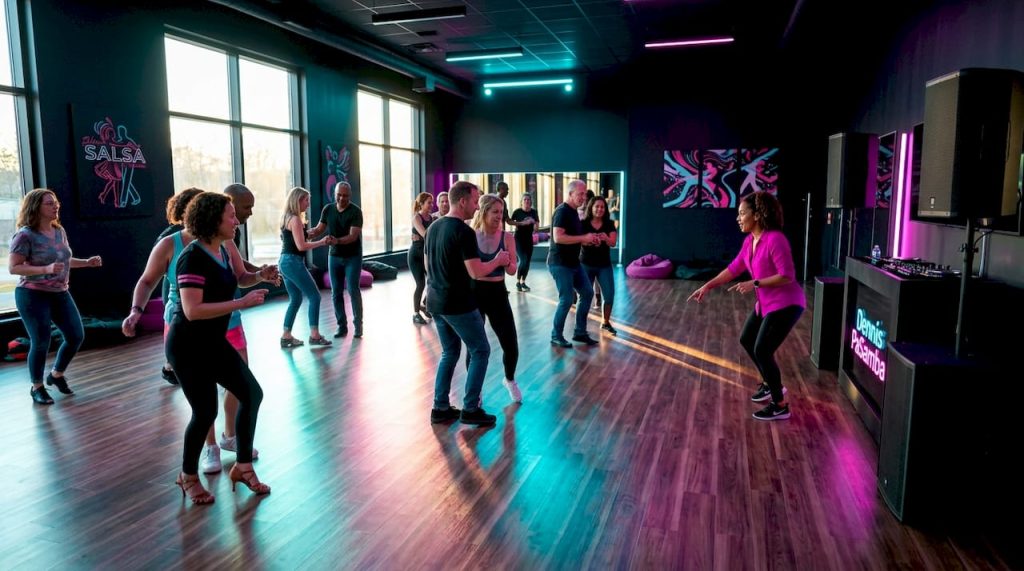
Adult dance education is a structured approach to teaching dance skills to people aged 18 and older, designed around adult learning styles, schedules, and physical needs. Unlike youth programs, it prioritizes personal growth, fitness, and social connection over performance-track competition. Whether you want to learn Salsa, Bachata, ballet, or hip-hop, adult dance programs exist at every skill level and in every format imaginable. The field covers everything from casual drop-in adult dance classes to week-long intensives at institutions like Atlanta Ballet, giving you real options regardless of your schedule or budget.
What is adult dance education and how does it work?
Adult dance education is the organized practice of teaching movement, technique, and style to adult learners through classes, workshops, and private instruction. The industry term used by educators and program directors is continuing dance education, though most studios simply call it adult dance programs or adult classes. CityDance, Atlanta Ballet, and Dennis PaSamba are examples of organizations that have built dedicated adult tracks separate from their youth curricula. The core purpose is not to produce professional dancers. It is to give adults access to the physical, creative, and social benefits of dance on their own terms.
What makes adult dance education distinct is its flexibility. You are not locked into a school year or a recital schedule. Programs adapt to adult lives, which means evening classes, weekend workshops, and online options are all standard. The benefits of adult dance go well beyond learning steps. Research from dance educators confirms that adults bring a unique brain-body integration to the studio, absorbing movement concepts quickly even when physical recovery takes longer than it did at age 20.
What class types and enrollment options are available?
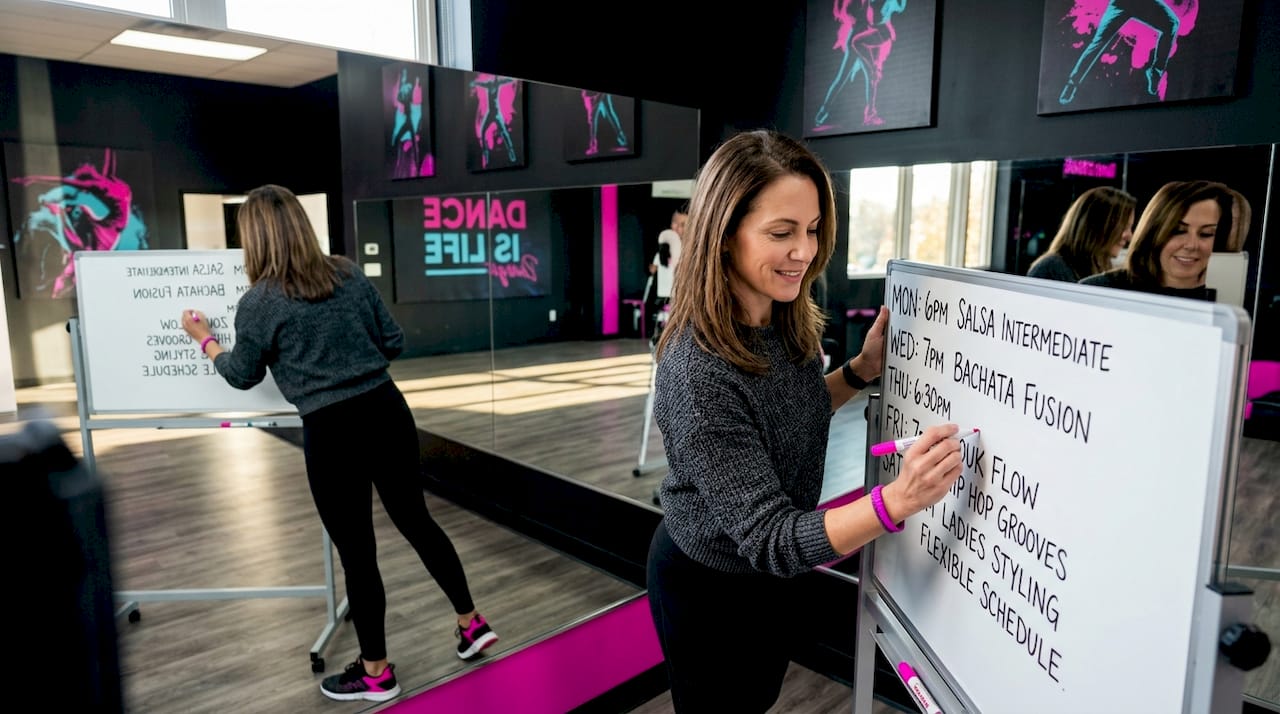
Adult dance classes typically fall into four formats, each serving a different goal and commitment level:
- Drop-in classes give you full flexibility. Show up when you can, pay per class, and try different styles without committing. Pricing typically runs $20 to $45 per session, making this the lowest-risk entry point for new dancers.
- Session-based enrollment means you register for a fixed number of weeks, usually 6 to 10. Studios offer discounted rates compared to drop-in, and the consistency accelerates your progress. Monthly memberships generally run $120 to $167.
- Workshops and adult dance workshops are single-day or weekend events focused on one style or skill. They are ideal for dancers who want depth on a specific topic, like Cumbia footwork or Bachata body movement, without a long-term commitment.
- Intensive programs are the deepest investment. Atlanta Ballet’s adult summer intensive, for example, costs up to $605 for a week-long program that includes expert coaching, performance preparation, and community engagement with other serious adult dancers.
- Private lessons offer one-on-one coaching tailored entirely to your goals. They are the fastest path to skill development and work well alongside group classes.
Pro Tip: If you are new to a studio, ask about a trial class before committing to a session. Most reputable programs offer this, and it tells you everything about the teaching style and community vibe within one hour.
The drop-in versus session decision comes down to your schedule predictability. If your work calendar is unpredictable, start drop-in. If you can commit to a weekly slot, session enrollment pays off faster in both skill and savings.
How are skill levels handled in adult dance classes?
Adult dance programs use four standard experience categories to place students appropriately. Understanding where you fit prevents frustration and reduces injury risk.
- Beginner (0 years of experience): No prior training assumed. Classes focus on basic footwork, rhythm, posture, and foundational technique. This is where most adults start, even those who danced casually years ago.
- Advanced beginner (1 to 4 years): You know the basics and are building consistency. Classes introduce combinations, partnering, and style-specific details.
- Intermediate (5 to 8 years): You move with confidence and can learn complex patterns. Classes focus on musicality, expression, and technical refinement.
- Advanced (9 or more years): You have deep technical knowledge. Classes push performance quality, improvisation, and teaching awareness.
Dance educators consistently advise adults returning after a break to start at beginner level regardless of past experience. The reason is alignment and injury prevention. Muscle memory fades, but bad habits do not. Starting fresh lets you rebuild a clean foundation.
Many studios also offer open or mixed-level classes where instructors modify the same choreography for different skill levels within one room. A beginner learns a simplified version of the pattern while an intermediate student works on styling and timing. This approach keeps classes social and accessible without slowing down experienced dancers.
Pro Tip: Tell your instructor your background before class starts. A good teacher will watch your first few minutes and suggest modifications or a different level if needed. This one conversation saves weeks of frustration.
If you are ready to move past beginner work, intermediate and advanced classes in styles like Salsa, Bachata, and Cumbia offer structured progression with clear skill benchmarks.
What are the key benefits of adult dance education beyond learning to dance?
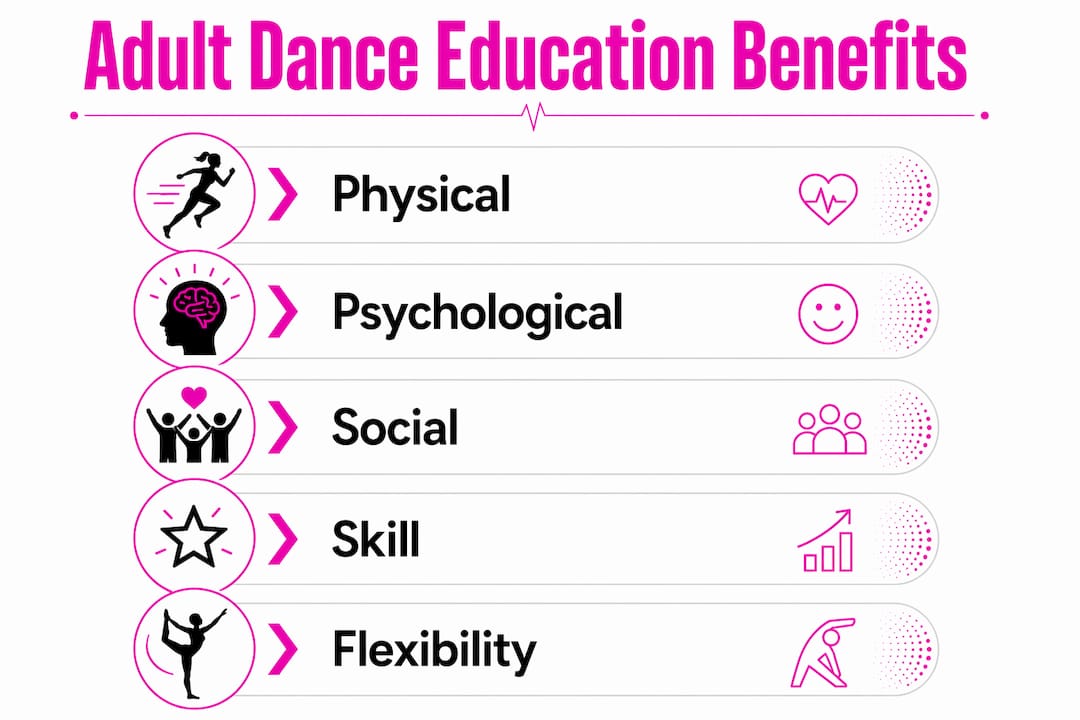
Dance is a full-body workout that strengthens the legs, glutes, arms, and core while improving posture and endurance through controlled, precise movement. That physical output is real and measurable. But the reasons adults stay in dance programs long-term go much deeper than fitness.
“Adult dance education is not only physical but also a form of self-expression and healing that allows adults to reconnect with past creative aspirations.” — Dance education research, 2026
The psychological benefits are significant. Dance requires you to be fully present. You cannot check your phone while learning a Bachata pattern. That forced focus functions as active stress relief, and the creative outlet of movement gives adults a way to express things that words often cannot. For many adults aged 21 to 45, this is the first time since childhood they have engaged in a purely creative physical activity.
The social dimension is one of the most underrated aspects of dance education for adults. Group classes create a shared challenge. You laugh at the same mistakes, celebrate the same breakthroughs, and build real community with people you would never meet otherwise. Friday socials, showcases, and partner rotation in class all accelerate this connection.
| Benefit area | What it delivers |
|---|---|
| Physical fitness | Full-body strength, improved posture, cardiovascular endurance |
| Mental health | Stress relief, focus, creative self-expression |
| Social engagement | Community building, partner connection, shared experiences |
| Transferable skills | Discipline and collaboration applicable in professional settings |
| Personal development | Confidence, body awareness, artistic identity |
Dance education trains transferable skills including collaboration, discipline, time management, and artistic reflection. These are not soft benefits. Program chairs at universities like Kennesaw State University have documented these outcomes across 20 years of adult dance education. The role of your instructor in building these skills is substantial. A great teacher does not just correct footwork. They model how to receive feedback, stay patient, and keep showing up.
How to choose the right adult dance education program
Choosing the right program comes down to four factors: your goals, your schedule, your budget, and the community feel of the studio.
- Define your goal first. Are you dancing for fitness, social connection, personal expression, or all three? A fitness-focused adult wants high-energy classes like Salsa or hip-hop. A socially motivated adult benefits most from partner dance styles like Bachata or Ballroom where connection is built into the format.
- Match the style to your personality. Latin styles like Salsa, Bachata, and Cumbia are social by nature. Ballet and modern dance for adults lean more introspective and technique-focused. Neither is better. They serve different needs.
- Evaluate the studio community. Visit a class before committing. Watch how students interact. A good studio feels welcoming on day one, not cliquish or intimidating.
- Compare enrollment options against your schedule. If you travel frequently, drop-in access matters more than session discounts.
| Factor | What to look for |
|---|---|
| Instructor experience | Years of teaching adults specifically, not just performance background |
| Class size | Smaller classes (under 20 students) allow more individual feedback |
| Style variety | Multiple styles let you explore before specializing |
| Flexible enrollment | Drop-in, session, and private options all available |
| Trial access | A free or low-cost first class signals confidence in the product |
Pro Tip: Search for studios with verified reviews from adult students specifically. A 5-star rating built on 850 or more reviews tells you far more than a polished website.
New Salsa, Bachata, and Cumbia classes starting regularly in Chicago give you a low-commitment way to test the format before deciding on a longer program. If you want to understand what a structured adult dance workshop looks like before enrolling, a beginner workshop guide walks you through exactly what to expect.
Key takeaways
Adult dance education delivers the most value when you match the class format, skill level, and dance style to your specific goals rather than picking the most convenient option.
| Point | Details |
|---|---|
| Definition matters | Adult dance education is structured, adult-specific learning covering fitness, creativity, and social connection. |
| Format flexibility | Drop-in, session, workshop, and intensive options each serve different schedules and commitment levels. |
| Start at the right level | Even experienced dancers benefit from beginner classes when returning, to rebuild alignment safely. |
| Benefits extend beyond fitness | Discipline, collaboration, stress relief, and social community are documented outcomes of adult dance programs. |
| Choose by goal, not convenience | Match your style and enrollment format to your fitness, social, or personal development objective. |
What 33 years of teaching adults has shown me
Most adults walk into their first class carrying two things: excitement and a quiet fear of looking foolish. I have seen this pattern thousands of times at Dennis PaSamba. The fear is real, but it is also almost always gone by the end of the first class.
Here is what I think most articles get wrong about adult dance education. They focus on the physical output, the calories burned, the muscles worked, and the fitness metrics. Those things are real. But the adults who stick with dance long-term are not staying for the workout. They are staying because they found something they did not know they were missing: a room full of people who show up every week to learn something hard together, without judgment.
Adults bring something to the studio that children cannot. They bring intention. When a 35-year-old decides to learn Bachata, they have made a deliberate choice. That intentionality makes them faster learners in many ways than kids who are simply placed in class by their parents. The brain-body connection adults develop is different, more analytical and more emotionally connected to the movement.
My honest observation after three decades is this: the adults who thrive are not the ones with natural talent. They are the ones who stop waiting until they feel ready and just show up. Dance education for adults works because it meets you exactly where you are. You do not need a partner, a background, or a perfect body. You need a good teacher and the willingness to try.
— Dennis PaSamba
Start dancing with Dennis PaSamba in Chicago
Dennis PaSamba is Chicago’s top-rated Latin dance studio with over 850 five-star Google reviews and 33 years of experience teaching adults at every level.
Whether you are a complete beginner or ready to push into intermediate Salsa and Bachata, Dennis PaSamba has a class format that fits your schedule and goals. Drop-in sessions, weekly group classes, private lessons, Friday socials, and workshops are all available. No partner needed. Singles and couples are both welcome. Visit Dennis PaSamba to browse current class schedules, check pricing, and grab a trial class. The community is ready for you.
FAQ
What is adult dance education exactly?
Adult dance education is structured dance instruction designed specifically for adult learners, covering styles from Salsa and Bachata to ballet and hip-hop. It prioritizes fitness, self-expression, and social connection over competitive performance.
How much do adult dance classes cost?
Drop-in adult dance classes typically cost $20 to $45 per session, while monthly memberships run $120 to $167. Specialized week-long intensives at programs like Atlanta Ballet can cost up to $605.
Do I need a partner to join adult dance classes?
No partner is required for most adult dance programs. Studios like Dennis PaSamba explicitly welcome singles and rotate partners during class, so you build connection with the whole community rather than relying on one person.
What dance styles are available for adults?
Adult dance programs offer styles including Salsa, Bachata, Cumbia, Ballroom, Tango, ballet, modern dance, hip-hop, and more. The right style depends on whether your goal is social dancing, fitness, or artistic expression.
Is it too late to start dance education as an adult?
Dance educators confirm that adults absorb movement concepts quickly and bring strong brain-body integration to class. Starting at any age is effective, provided you begin at the appropriate skill level and work with a qualified instructor.