
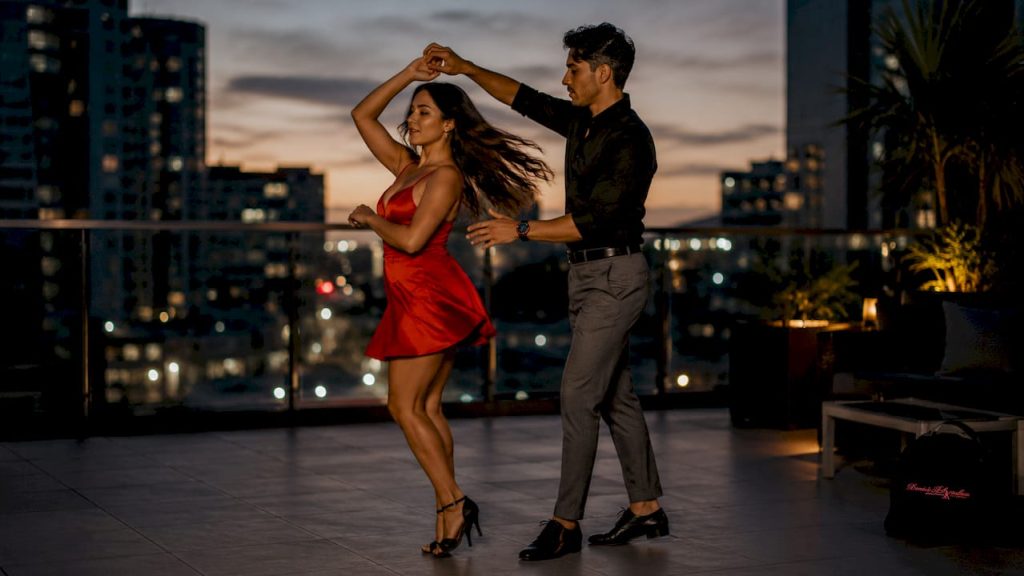
LA style salsa is defined as a linear, slot-based partner dance that breaks on the first beat of the music, known worldwide for its sharp, theatrical moves and high-energy performance quality. Developed in the 1990s by the Vazquez brothers in Los Angeles, it stands as one of the most recognized salsa styles globally. If you’ve been curious about what is salsa dancing and where LA style fits in, you’re in the right place. This guide covers the core techniques, cultural roots, and practical steps you need to get started with confidence.
What is LA style salsa, and how does it differ from other styles?
LA style salsa is a linear slot dance) where the leader and follower move back and forth along a straight line. The leader steps aside to let the follower pass, creating clean visual lines that look sharp from any angle. This structure is the defining feature that separates it from circular styles.
The three major salsa styles each have a distinct timing and floor pattern. LA style breaks on beat 1 (On1). New York style, also called Mambo style, breaks on beat 2 (On2), which sits deeper in the musical phrase and feels smoother but takes longer to internalize. Cuban salsa moves in a circular pattern called “Casino,” with no fixed slot and a more playful, Afro-Cuban feel.
Here is a quick comparison of the three main styles:
| Feature | LA style | NY style | Cuban style |
|---|---|---|---|
| Timing | On1 (break on beat 1) | On2 (break on beat 2) | Variable, circular |
| Floor pattern | Linear slot | Linear slot | Circular |
| Visual character | Sharp, theatrical, flashy | Smooth, musical, elegant | Playful, grounded, social |
| Beginner accessibility | High | Moderate | Moderate |
| Music fit | Salsa romántica, pop salsa | Traditional salsa, jazz | Son cubano, timba |
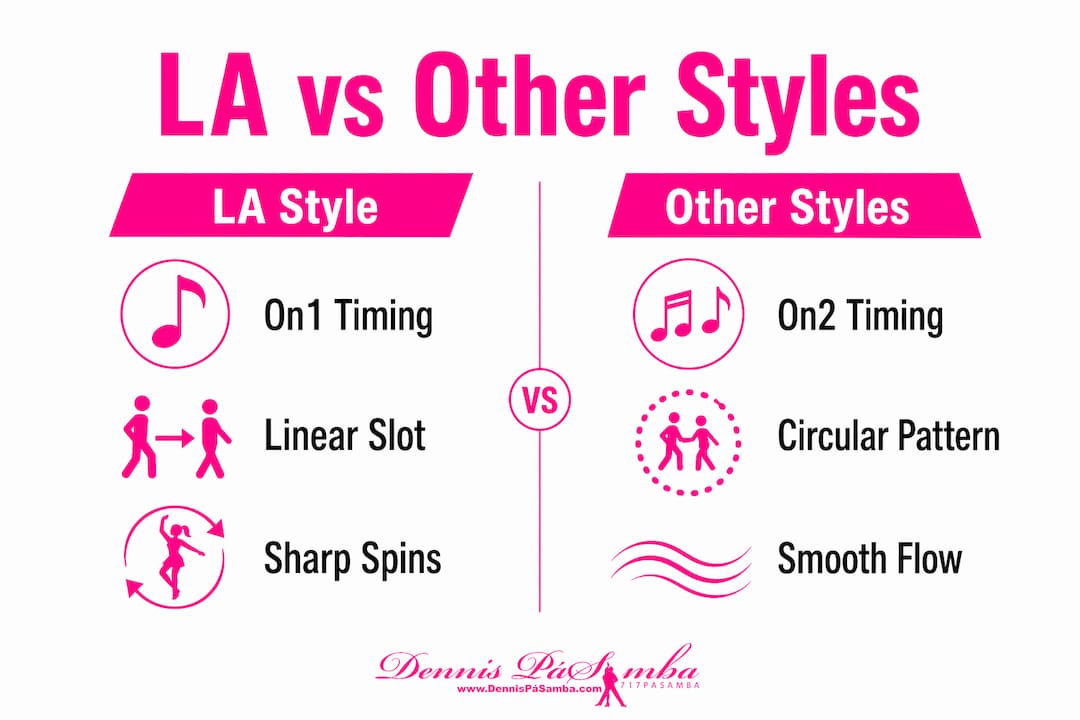
LA style’s On1 timing is more intuitive for many beginners compared to NY On2, which is smoother but more complex musically. That accessibility is a big reason why LA style became the standard in studios and festivals across Los Angeles, London, Chicago, and Asia.
What are the fundamental techniques in LA style salsa?
The foundation of LA style salsa is a 3-step pattern over 4 beats, skipping the 4th and 8th beats. You step on beats 1, 2, 3, then pause on beat 4, then step on beats 5, 6, 7, and pause on beat 8. That pause is not a rest. It is a weight transfer that sets up your next move.
Here are the core techniques every beginner needs to build first:
- Break step on beat 1. The leader steps forward on beat 1, the follower steps back. This synchronized break is what locks both partners into the same musical phrase.
- Cross-body lead. The leader moves to the side and guides the follower across the slot in front of them. This is the most used move in LA style and the foundation for nearly every pattern you will learn.
- Weight transfer and posture. Sharp, clean movement starts with a low center of gravity and controlled hip action. Sloppy weight shifts make turns unstable.
- Turns and spins. LA style is known for multiple spins in a single pattern. Balance and spotting (fixing your eyes on a point during a spin) are non-negotiable skills.
- Styling. Arms, hands, and body isolations add the theatrical flair that makes LA style visually exciting. Styling is taught after footwork is solid.
The theatrical sharpness and complex spins of LA style demand early focus on balance and weight transfer. Skipping this foundation leads to the most common beginner frustration: losing your partner during turns.
Pro Tip: Practice your basic step with a metronome set between 160 and 180 BPM before adding any partner work. Internalizing the rhythm solo first makes everything click faster once you are dancing with someone.
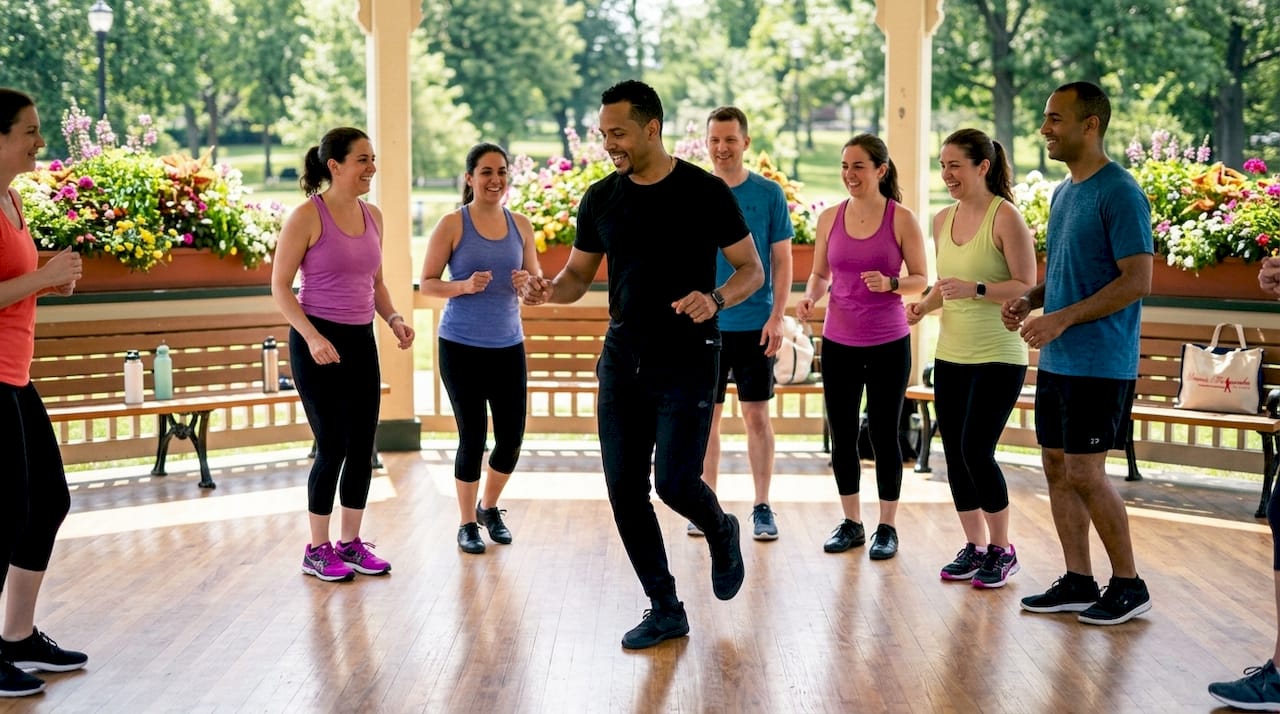
Typical beginner classes run 60 minutes and cover the basic step, cross-body lead, and one or two simple turn patterns. Group classes generally cost $15–$30 per session. Private lessons move faster and cost more, but they fix technique problems that group classes often miss.
How does LA style salsa connect to music and social dancing?
LA style salsa fits naturally with salsa romántica and pop salsa, which are the most common tracks played at social dance events. These songs have a clear, strong downbeat that makes the On1 break feel obvious even to new dancers. The music practically tells you when to step.
Deeper musicality comes from learning to hear the conga and clave rhythms beneath the melody. The clave is a two-bar rhythmic pattern that underlies all salsa music. The conga drum marks the beats in a way that guides your body if you listen for it. True mastery of LA style salsa involves shifting focus from counting steps to feeling these rhythms, which produces natural, improvised movement.
LA style salsa has become a universal language in social dance scenes worldwide. Dancers who learn it in Chicago can walk into a social in London, Tokyo, or São Paulo and connect with a partner immediately, because the timing and slot structure are shared.
The Vazquez brothers built a performance-forward style with emphasis on spins, clean lines, and dramatic poses. Their work spread through competitions, videos, and dance congresses throughout the 1990s and 2000s. That media exposure turned LA style into the global default for salsa instruction.
Social dance scenes in cities like Chicago thrive on LA style because it works on a crowded floor. The slot structure keeps couples in a contained space, which is practical at busy venues. You can check out the Chicago Friday night dance social at Dennis pasamba to see this in action.
What should beginners know before starting LA style salsa classes?
Starting LA style salsa is straightforward when you know what to expect. The learning curve is real, but it is not steep if you approach it with the right mindset and preparation.
Key things to know before your first class:
- No partner needed. Most group classes rotate partners throughout the session. You will dance with multiple people, which actually accelerates learning.
- Wear the right shoes. Smooth-soled shoes let you pivot cleanly. Rubber-soled sneakers grip the floor and make turns painful on your knees.
- Stage salsa vs. social salsa are different. Stage salsa is more dramatic; social salsa is adaptable and approachable. Beginners learn social salsa first. The big lifts and acrobatics you see in videos are stage performance, not what happens at a Friday night social.
- Expect to feel off-beat for a few weeks. This is normal. Your brain is learning to process music and movement at the same time. It takes repetition, not talent.
- Practice outside of class. Even 10 minutes of solo stepping to music at home between classes cuts your learning time significantly.
Common beginner mistakes in Latin dance include looking down at your feet, tensing your arms, and rushing through the pause beats. All three problems fix themselves once your timing becomes automatic.
Pro Tip: Attend a salsa social before you feel “ready.” Watching experienced dancers and attempting a few dances in a low-pressure environment teaches you more about real social dancing than any class drill.
Finding the right studio matters. Look for a school that offers structured beginner levels, clear progression paths, and regular social events where you can practice. Dennis pasamba in Chicago offers beginner salsa class expectations guidance that helps new dancers know exactly what they are signing up for.
Key Takeaways
LA style salsa is the most beginner-accessible salsa style worldwide because its On1 timing, linear slot structure, and widespread teaching make it easy to learn and immediately useful at social dance events.
| Point | Details |
|---|---|
| On1 timing is the foundation | Breaking on beat 1 locks you and your partner into the same musical phrase from the start. |
| Linear slot creates clean lines | The slot structure keeps movement contained and visually sharp, ideal for social floors. |
| Cross-body lead is the core move | Master this one pattern first and every other LA style move builds from it. |
| Stage salsa differs from social salsa | Beginners learn adaptable social salsa, not the acrobatic moves seen in performance videos. |
| Musicality grows with practice | Shift from counting beats to hearing the conga and clave to reach the next level. |
Why LA style salsa changed how I think about partner dancing
I have been teaching Latin dance for over 33 years, and LA style salsa is still the style I recommend first to adult beginners. Not because it is the easiest, but because it gives you the fastest path to actually dancing with another person at a real social event.
Most beginners come in thinking they need to master footwork before they can enjoy themselves. That thinking slows them down. The cross-body lead is simple enough to learn in one class, and it is enough to have a genuine, connected dance with a partner. You do not need 20 moves. You need 3 good ones done with confidence and timing.
The theatrical side of LA style, the sharp lines, the spins, the dramatic pauses, gets people excited. But what keeps them coming back is the social connection. There is something powerful about moving in sync with another person to live music. LA style gives you that feeling faster than almost any other partner dance I know.
The global reach of this style also means your investment pays off everywhere. I have had students who learned here in Chicago and then danced in New York, Miami, and overseas without missing a beat. That is the real value of learning a style with a shared international vocabulary.
— Dennis pasamba
Ready to dance LA style salsa in Chicago?
Dennis pasamba is Chicago’s top-rated Latin dance studio with over 850 five-star Google reviews and 33+ years of experience. Whether you want group classes, private one-on-one lessons, or a fun Friday night social, there is a spot for you here.
New to salsa? The beginner salsa classes in Chicago at Dennis pasamba are built specifically for adults starting from zero. No partner needed, no experience required. You can also check the dance studio questions checklist to know exactly what to ask before you sign up. Singles and couples are both welcome. Come for the class, stay for the community.
FAQ
What is LA style salsa in simple terms?
LA style salsa is a linear partner dance) that breaks on the first beat of the music, known for sharp, flashy moves and a slot-based structure developed in Los Angeles in the 1990s.
Is LA style salsa good for beginners?
Yes. LA style’s On1 timing is one of the most intuitive entry points into salsa dancing, and it is the standard taught at most studios and festivals worldwide.
How long does it take to learn LA style salsa basics?
Most beginners can execute the basic step and cross-body lead after 4–6 group classes. Building confident social dancing typically takes 3–6 months of consistent practice.
What is the difference between LA style and Cuban salsa?
LA style uses a linear slot and breaks On1, while Cuban salsa moves in a circular pattern with no fixed slot and a more grounded, Afro-Cuban character.
Do I need a partner to start LA style salsa classes?
No. Group classes rotate partners throughout the session, so you can show up solo and still get full practice time with multiple dancers.