
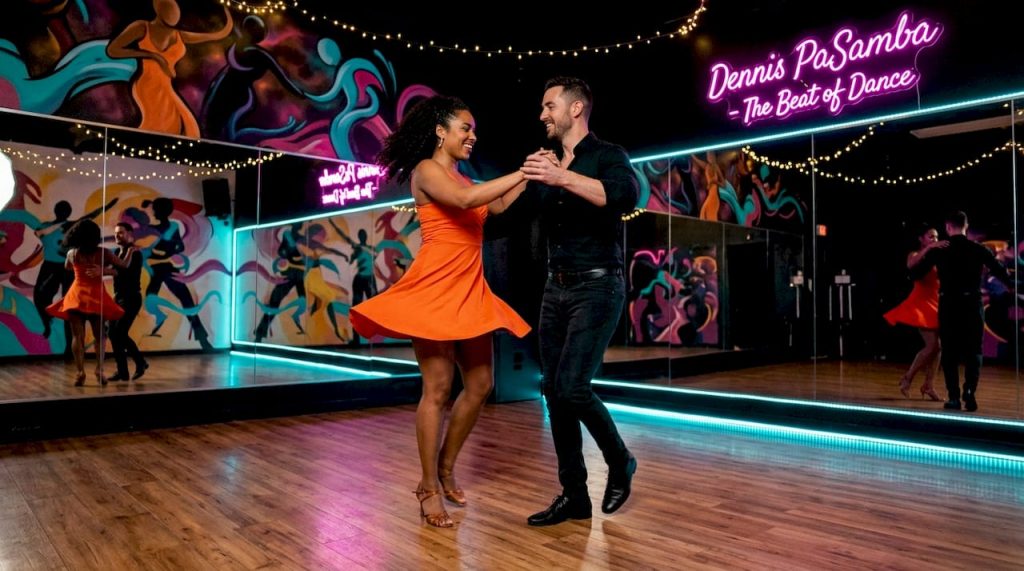
Salsa dancing is defined as a family of Latin American) social partner dances performed to salsa music and related Afro-Latin repertoires, including distinct styles like LA-style, New York-style, and Cuban casino. The dance combines rhythmic footwork, partner communication, and a deep cultural identity rooted in Afro-Cuban and Caribbean traditions. Music tempos typically range from 150 to 250 bpm), which explains the energetic, quick-stepping feel that makes salsa immediately recognizable. Whether you are drawn to it for fitness, social connection, or pure fun, salsa is one of the most accessible and rewarding partner dances you can learn.
What is salsa dancing at its core?
Salsa is best understood as a family of dances rather than a single fixed syllabus. That distinction matters because it means no single “correct” version exists. What you learn in Chicago may look different from what you see in Cali, Colombia, or in a New York ballroom. The common thread across all styles is the clave rhythm, a foundational Afro-Cuban percussion pattern that gives salsa its pulse. Dancers interpret the clave fluidly, using it to locate themselves rhythmically without mechanically matching every strike.
The dance is typically practiced with a partner, though solo “shines” (individual footwork sequences) are common in social settings. The leader initiates movement and the follower responds, making it a communicative partner dance rather than a performance of fixed routines. This conversational quality is what separates salsa from choreography-heavy stage dances. You are not performing a script. You are having a physical conversation.
What are the basic salsa steps and timing?
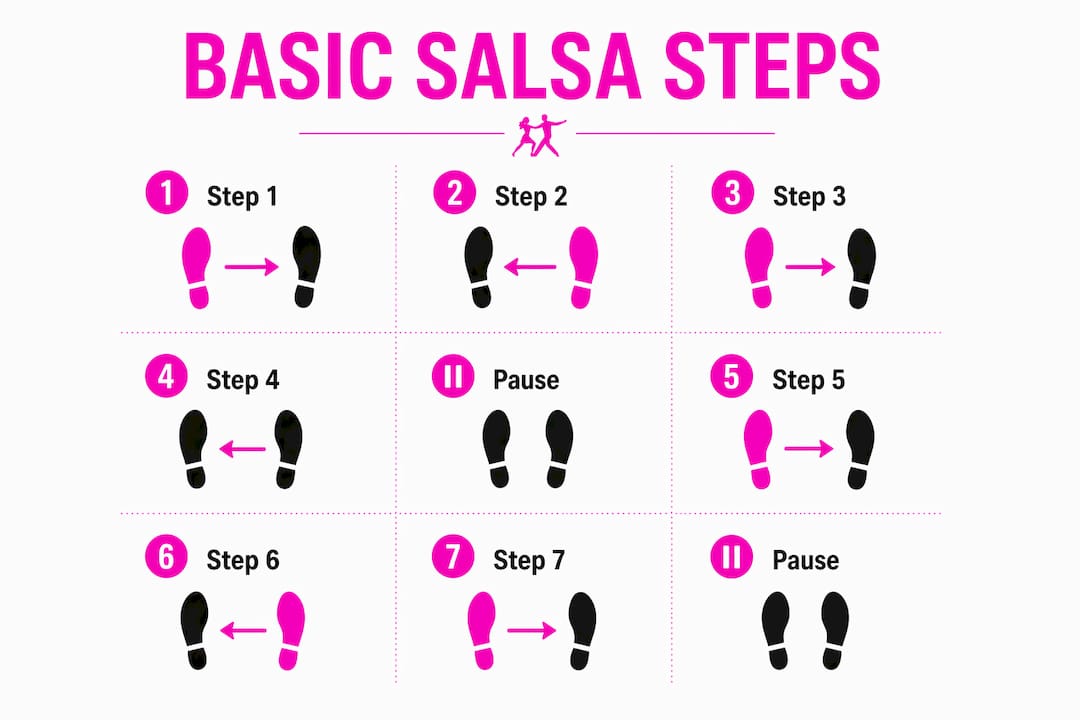
Salsa dance basics follow an 8-count rhythm, but you only take six actual steps. Here is how it breaks down:
- Count 1: Step forward (leader) or back (follower)
- Count 2: Shift weight to the opposite foot
- Count 3: Return to center
- Count 4: Pause (no step)
- Count 5: Step back (leader) or forward (follower)
- Count 6: Shift weight again
- Count 7: Return to center
- Count 8: Pause (no step)
The pauses on counts 4 and 8 are the single most important concept beginners miss. These pauses are not mistakes or hesitations. They align your movement with the music’s natural phrasing and make you look musical rather than mechanical. Most new dancers rush through them, which immediately breaks the rhythm.
The “Golden Rule” of salsa timing is stepping on counts 1, 2, 3 and 5, 6, 7. This applies to both On1 (LA-style) and On2 (New York-style) timing, with the difference being which beat you emphasize for your break step. On1 breaks on count 1, On2 breaks on count 2. Neither is more correct. They simply feel different and suit different musical interpretations.
Partner connection happens through the salsa frame, the physical structure created by your arms and upper body. The leader holds the follower’s hand and places a hand on the follower’s back. This frame allows silent communication. A slight pressure forward signals a turn. A gentle pull back signals a return. No words needed.
Pro Tip: Keep your steps small. Big steps break your frame, slow your footwork, and make turns harder to lead and follow. Think of your feet staying close to the ground, shifting weight rather than traveling across the floor.
How do the different salsa styles compare?
Linear and circular styles) define the two main branches of salsa. Linear styles move in a straight line or slot. Circular styles rotate around a shared axis. Each has a distinct feel, social context, and learning curve.
| Style | Timing | Floor Pattern | Social Setting | Difficulty for Beginners |
|---|---|---|---|---|
| LA-style (On1) | Breaks on count 1 | Linear slot | Studios, competitions | Beginner-friendly |
| New York-style (On2) | Breaks on count 2 | Linear slot | Social clubs, advanced scenes | Intermediate |
| Cuban casino | Circular break | Circular | Latin social events, rueda | Beginner-friendly |
| Colombian (Cali-style) | Fast footwork, circular | Circular | Colombian diaspora events | Intermediate |
LA-style is the most widely taught in the United States, making it the practical starting point for most beginners in cities like Chicago. New York-style (also called “mambo style”) has a more syncopated feel and is favored by dancers who want to connect more deeply with the musical phrasing. Cuban casino is looser and more playful, often evolving into rueda de casino, where multiple couples dance in a circle and swap partners on cue.
Colombian salsa from Cali stands apart with its rapid, intricate footwork and minimal upper body movement. It is visually stunning but technically demanding. Most instructors recommend building a foundation in LA-style or Cuban casino before attempting Cali-style.
Pro Tip: Choose your first style based on what is most popular in your city. If your local scene dances On1, learn On1. Dancing the same style as the people around you makes social dancing immediately more enjoyable.
What is the cultural and historical background of salsa?
Salsa’s origins trace directly to Cuban son and Afro-Cuban rumba, two foundational music and dance traditions that traveled from Cuba to New York through Caribbean migration in the mid-20th century. New York became the central hub where these traditions mixed with Puerto Rican, Colombian, and other Latin American influences to produce what we now call salsa. The name itself was a marketing term, not a dance category, coined to sell a sound that was already a synthesis of many traditions.
Migration, nightlife, and identity politics shaped salsa as much as music theory did. For Latin communities in New York during the 1960s and 1970s, salsa was a declaration of cultural pride. Dancing it was a way of saying: we are here, and this is ours. Venues like the Palladium Ballroom and later the Fania Records scene gave salsa a commercial platform without stripping its community roots.
“Salsa is not a single dance. It is a living archive of Afro-Latin movement traditions, continuously rewritten by the communities that dance it.”
Salsa has never stopped evolving. LA-style emerged from the West Coast ballroom scene in the 1970s and 1980s. New York-style codified the On2 timing that mambo pioneers like Eddie Torres championed. Cuban casino developed independently on the island, less influenced by the commercial New York sound. Each branch reflects the specific community that shaped it, which is why salsa feels different depending on where you learn it.
How does salsa benefit fitness and what should beginners expect?
Salsa dancing delivers moderate-to-vigorous cardiovascular exercise, with sessions burning roughly 245 kcal in 45 minutes and keeping heart rates in zones 3 and 4 for most of the session. That puts salsa in the same fitness category as cycling or brisk jogging, but with the added benefit of social engagement and music. You are working your heart without it feeling like work.
Beyond cardio, salsa builds coordination, balance, and spatial awareness. The constant weight shifting and footwork patterns engage your core and lower body. Over time, regular dancing improves posture and body awareness in ways that gym workouts rarely address.
Here is what to expect at your first salsa social:
- Free beginner lesson: Most salsa socials offer a beginner lesson before open dancing starts, typically 30 to 60 minutes long.
- Open social dancing: After the lesson, the floor opens for everyone. You do not need to bring a partner.
- Rotating partners: Asking strangers to dance is normal and expected. Most dancers are happy to dance with beginners.
- Cover charge: Expect a small cover fee, often between $5 and $15, which usually includes the lesson.
- Mixed skill levels: You will see beginners and advanced dancers on the same floor. Watch, learn, and participate at your own pace.
Pro Tip: Arrive early for the beginner lesson even if you have danced before. Reviewing basics in a new environment helps you calibrate to the local style and meet other dancers before the floor gets crowded.
For Chicago-area beginners, Dennispasamba offers beginner-friendly salsa classes that build from the ground up in a welcoming, no-partner-needed environment.
Key takeaways
Salsa dancing is a partner-based Latin social dance built on a six-step, eight-count rhythm, shaped by Afro-Cuban traditions, and practiced in distinct styles that vary by timing, floor pattern, and cultural context.
| Point | Details |
|---|---|
| Salsa is a dance family | Expect style variation by region; LA-style, Cuban casino, and New York-style are the main branches. |
| Timing is the foundation | Step on counts 1, 2, 3 and 5, 6, 7; pause on 4 and 8 to match the music’s natural phrasing. |
| Partner connection is silent | The salsa frame communicates lead and follow through arm and body pressure, not words. |
| Fitness benefits are real | A 45-minute session burns roughly 245 kcal and keeps your heart rate in a moderate-to-vigorous zone. |
| Start with your local style | Learn the style most common in your city to make social dancing immediately accessible and fun. |
What I have learned teaching salsa in Chicago
I have watched hundreds of beginners walk into their first class convinced that salsa requires natural rhythm or a lifetime of Latin heritage. Neither is true. What salsa actually requires is patience with the pause. That moment on count 4 and count 8 where nothing happens is where most people fall apart. They fill it with an extra step, a shuffle, anything to avoid the stillness. But the pause is the music. Learning to trust it is the real breakthrough.
The other thing I see consistently is beginners chasing moves before they own their timing. They want the spin combinations and the fancy footwork before they can hold a clean basic step for 30 seconds. I get it. The flashy stuff looks fun. But a dancer with solid fundamentals and strong partner connection will always feel better to dance with than someone who knows 20 moves but loses the beat every eight counts.
Salsa is also one of the most effective social tools I have ever seen. People who walk in alone leave with a room full of connections. The dance floor removes the awkwardness of small talk. You are already doing something together. That shared experience builds community faster than almost anything else I know.
My honest advice: pick one style, commit to the basics for at least six weeks, and show up to a social before you feel ready. You will learn more in one night of social dancing than in three weeks of solo practice.
— Dennis
Start dancing salsa in Chicago with Dennispasamba
Ready to move from reading about salsa to actually dancing it? Dennispasamba offers salsa and Latin dance classes in Chicago for every level, from complete beginners to dancers ready to sharpen their technique. No partner needed. No experience required.
Classes cover salsa, Bachata, and Cumbia in a welcoming, high-energy environment with Chicago’s top-rated Latin dance coach. Whether you want to join a beginner group class or push into intermediate and advanced training, there is a class built for where you are right now. Join the community and get on the floor.
FAQ
What is salsa dancing in simple terms?
Salsa is a Latin American social partner dance performed to salsa music, built on a six-step pattern within an eight-count rhythm. It combines rhythmic footwork, partner connection, and Afro-Cuban musical traditions.
How long does it take to learn salsa dance basics?
Most beginners can hold a clean basic step and simple turns within four to six weeks of consistent practice. Building confidence for social dancing typically takes two to three months.
What are the main salsa dance styles?
The four primary styles are LA-style (On1), New York-style (On2), Cuban casino, and Colombian (Cali-style). They differ in timing, floor pattern, and the social contexts where they are most commonly danced.
What should I wear for salsa dancing?
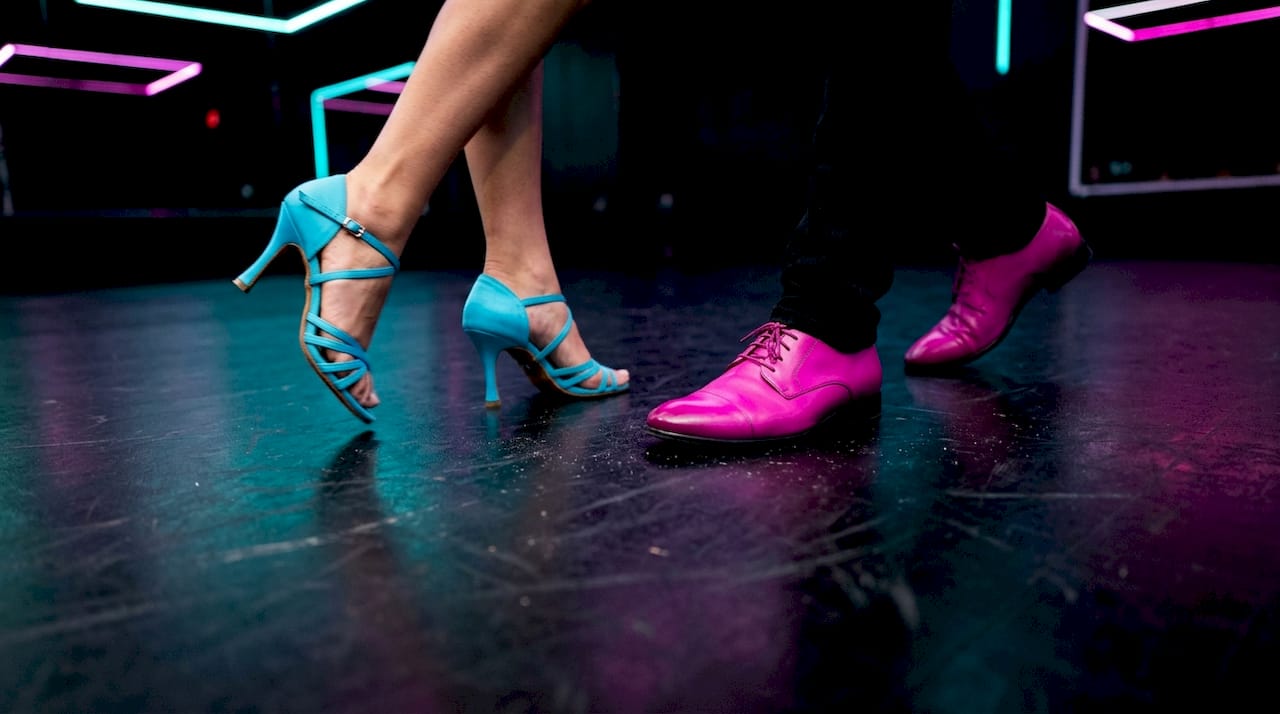
Wear fitted, flexible clothing that allows free leg movement, and choose shoes with smooth leather or suede soles that allow you to pivot easily. Avoid rubber-soled sneakers, which grip the floor and make turns difficult.
Is salsa dancing good exercise?
Yes. A 45-minute salsa session burns approximately 245 kcal and maintains heart rate in a moderate-to-vigorous zone, making it a legitimate cardiovascular workout with the added benefit of social engagement.