
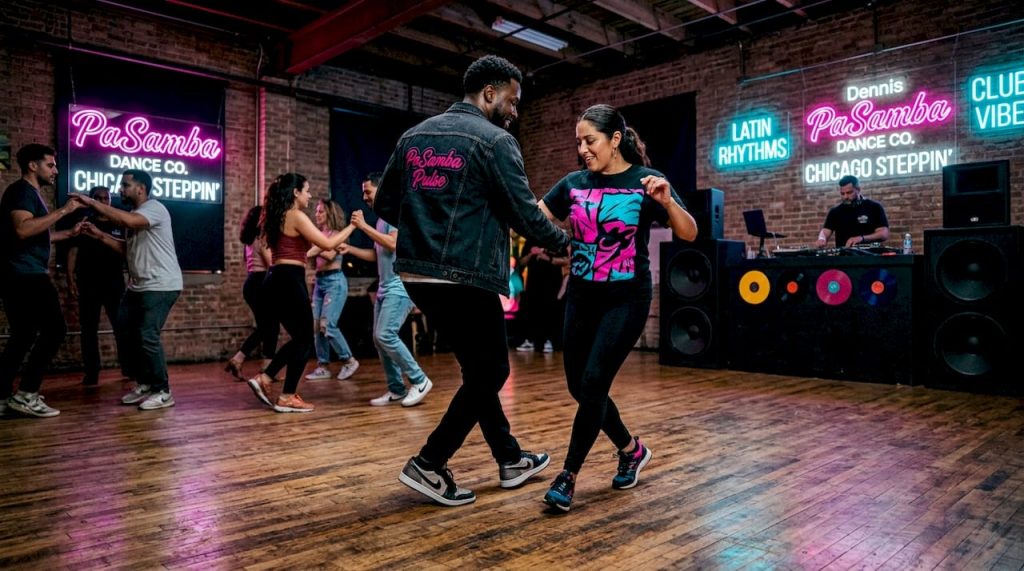
Chicago dance culture is defined by its roots in Black and queer community spaces that transformed club floors into inclusive, ritualistic environments, producing globally influential genres and a thriving participatory scene that continues today. No other American city built its dance identity from the same combination of social refuge, grassroots music distribution, and city-supported public access. If you want to understand why Chicago dance culture is unique, you have to start with who built it, why they built it, and how that foundation still shapes every event, style, and social happening in the city right now.
The core of what makes Chicago dance special is not just the music or the moves. It is the community logic behind every space. Dance floors as communal ritual spaces organized bodies and transformed participants, creating shared experiences that were unavailable to Black and queer Chicagoans in mainstream venues. That origin story is inseparable from every element of Chicago dance culture today, from the Footwork battles on the South Side to the free Salsa lessons in Grant Park.
Why Chicago dance culture is unique: community origins
The single most important factor in Chicago’s dance identity is who created the spaces and why. The Warehouse (1977 to 1982) gathered Black, gay, and alternative communities seeking belonging at a time when mainstream clubs excluded them. That was not incidental. It was the entire point. The room was designed with specific communities in mind, and that design philosophy shaped everything that followed.
“The specific communities and social needs DJs and curators intended to serve shape participation and cultural meaning.” This concept, sometimes called “room logic,” explains why Chicago’s dance spaces feel different from those in other cities. The intention behind the room determines who shows up and what happens there.
This is why Chicago’s club culture produced house music rather than simply absorbing it from elsewhere. The music was made for those rooms, by people who understood those rooms. DJ Frankie Knuckles, who became known as the “Godfather of House,” curated sets at The Warehouse that blended disco, soul, and electronic sounds specifically to serve that community’s emotional and social needs. The dance floor was not entertainment. It was a refuge.
Key elements that defined these early Chicago dance spaces:
- Inclusive by design. The Warehouse and venues that followed it were explicitly welcoming to Black, gay, and working-class communities excluded from mainstream nightlife.
- Ritual over spectacle. Dancing was communal and participatory, not performative. The goal was collective transformation, not individual display.
- DJ as community curator. The DJ’s role was to read the room and serve the people in it, not to showcase personal artistry for its own sake.
- Neighborhood anchoring. These spaces were embedded in specific Chicago neighborhoods, giving them a local identity that national trends could not easily erase.
Pro Tip: If you want to experience this community logic firsthand, look for Chicago events that center local DJs and neighborhood venues rather than touring acts. The room logic is still alive in those spaces.
What makes Chicago house music and dance styles distinct
House music’s defining characteristics are specific and traceable. The four-on-the-floor beat, minimalist or soulful vocals, and prominent bass line were not accidental choices. They were functional decisions made by DJs and producers who needed music that would keep a specific community moving for hours. Chicago house music developed its grassroots circulation through local DJs, record stores, and radio programs rather than mainstream commercial pipelines. That distribution pattern protected the genre’s identity during its formative years.
The key figures who shaped Chicago’s distinct sound include:
- Frankie Knuckles at The Warehouse and later The Power Plant, who established the emotional and sonic template for house music.
- Chip E, one of the first producers to respond to the gap left by disco’s decline, creating tracks that defined the early Chicago house sound.
- Larry Heard (Mr. Fingers), whose track “Can You Feel It” (1986) became one of the most cited examples of deep house, a subgenre born entirely in Chicago.
- Jesse Saunders, who released “On and On” in 1984, widely recognized as the first commercially released house record.
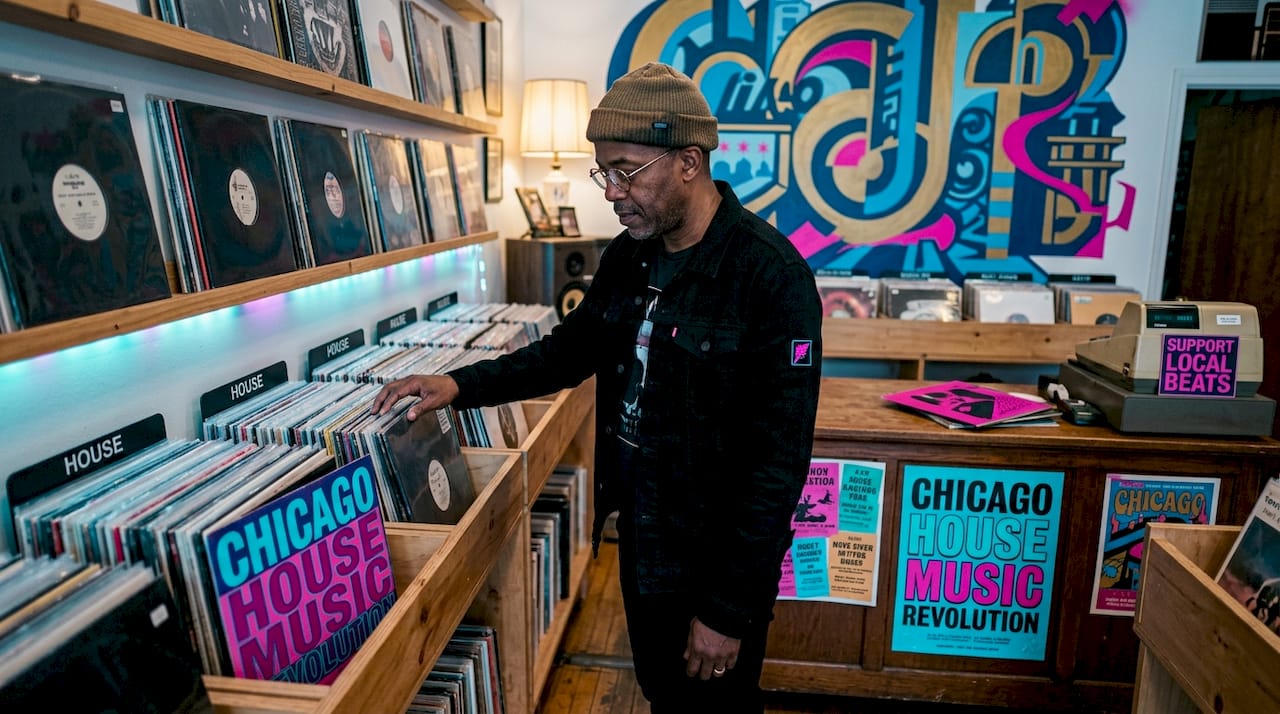
The local distribution network mattered as much as the artists themselves. Record stores like Importes Etc. and Gramaphone Records served as community hubs where new tracks were heard and debated before they reached any national audience. Radio shows on WBMX, hosted by the Hot Mix 5 DJs, brought the sound into homes across the city. This created a self-contained ecosystem that developed its own aesthetic standards independent of New York or Los Angeles.
| Feature | Chicago house music | Mainstream pop/dance |
|---|---|---|
| Beat structure | Four-on-the-floor, steady and hypnotic | Variable, trend-driven |
| Vocal style | Soulful, gospel-influenced, often minimal | Lead-vocal centered |
| Distribution | Local DJs, record stores, community radio | Major labels, national media |
| Community function | Refuge and ritual for marginalized groups | Broad commercial entertainment |
| Cultural ownership | Black and queer Chicago communities | Corporate music industry |
How city-supported programs sustain Chicago dance culture today
Chicago’s city government actively invests in keeping dance accessible and public. Chicago SummerDance 2026 offers free dance and movement lessons citywide, with professional instructors teaching all skill levels during July and August, followed by live music and social dancing. This program, run by the Department of Cultural Affairs and Special Events (DCASE), removes the financial barrier that keeps many people from participating in dance culture. Free access is not a minor detail. It is a direct continuation of the inclusive philosophy that built Chicago’s dance identity in the first place.
Chicago Dance Month 2025 featured over 30 unique dance groups with free performances, lessons, and installations across the city. That number reflects the depth of Chicago’s dance ecosystem. This is not one style or one community. It is dozens of distinct groups, each with their own traditions, all operating within the same city at the same time.
What city-supported dance programming delivers for Chicago residents:
- Free instruction at all skill levels, removing cost as a barrier to participation.
- Neighborhood-based events that bring dance culture to communities rather than requiring people to travel to a central venue.
- Multi-style programming covering everything from house and Steppin’ to Latin social dances, reflecting the city’s actual demographic diversity.
- Consistent annual scheduling that builds community habits and expectations around dance participation.
Pro Tip: Chicago SummerDance events are free and open to everyone. No partner is needed, and instructors are on-site to help beginners. Show up early for the lesson before the social dancing starts.
In what ways does community control shape Chicago dance events?
The Forever Mine Festival 2026 at Union Park is the clearest current example of community-controlled cultural programming in Chicago’s dance scene. The festival spotlights local Black and brown culture producers, with lineups, vendors, and food choices that center “the communities that have been here forever.” That framing is deliberate. It is a direct statement about cultural ownership in a city where gentrification has displaced many of the communities that built the dance culture.
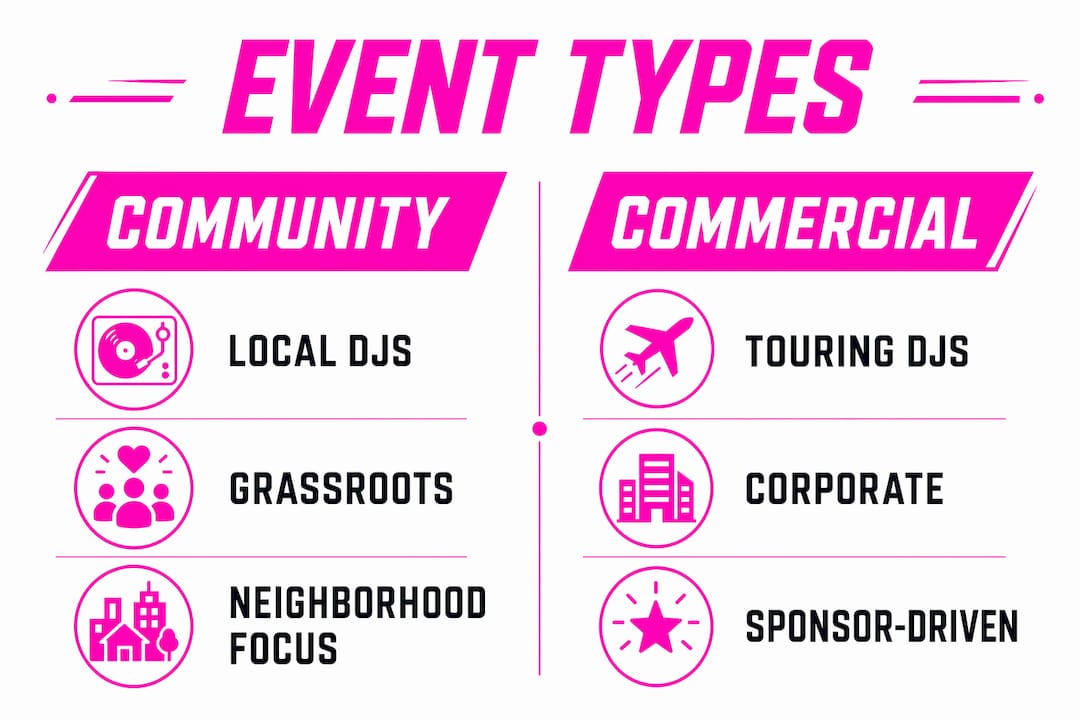
The distinction between community-controlled and commercially controlled events is significant. When local Black and Latinx producers organize an event, they make choices that reflect their community’s values and aesthetics. They book local DJs who understand the room logic. They hire vendors from the neighborhood. They program music that connects to the community’s history. The result is an experience that cannot be replicated by an outside promoter, no matter how large their budget.
| Community-controlled events | Commercially controlled events |
|---|---|
| Local DJs with community roots | Touring or celebrity DJs |
| Neighborhood vendors and food | National sponsors and chains |
| Music rooted in local history | Trend-driven programming |
| Proceeds support local economy | Revenue exits the community |
| Authentic cultural expression | Packaged cultural product |
This model of local cultural ownership is one of the most distinctive aspects of Chicago dance culture. It is not just about what happens on the dance floor. It is about who controls the conditions that make the dance floor possible.
What are Chicago’s signature dance styles and why do they matter?
Chicago has produced two dance styles that are recognized globally as original contributions to dance culture. Both are rooted in Black community life on the South and West Sides of the city.
Steppin’ is a partnered social dance with deep roots in Chicago’s Black community. It evolved from the Bop and is characterized by smooth, gliding footwork and an emphasis on connection between partners. Steppin’ is not a performance art. It is a social practice, danced at community events, church functions, and dedicated Steppin’ sets at clubs across the city. The style carries significant cultural weight as an emblem of Black Chicago identity.
Footwork is a fast-paced street dance that developed from Chicago’s house music scene in the late 1980s and 1990s. It features rapid, intricate footwork patterns performed in competitive battles, often at speeds exceeding 160 beats per minute. Footwork battles are community events that function as both artistic competition and social bonding. The style gained international attention through the work of DJ Rashad and DJ Spinn, who brought Footwork music (also called Juke) to global audiences.
Key characteristics of Chicago’s signature dance styles:
- Steppin’ prioritizes partner connection, smooth movement, and community participation over technical display.
- Footwork emphasizes individual speed, creativity, and competitive expression within a community context.
- Both styles developed outside mainstream commercial dance culture, sustained entirely by community practice.
- Both styles are directly connected to Chicago’s house music tradition, either as parallel developments or direct offshoots.
- Both styles are taught and practiced at community events, not primarily in formal studios, which keeps them accessible and community-owned.
Key takeaways
Chicago dance culture is unique because it was built by marginalized communities as a refuge, sustained by grassroots music distribution, and continuously renewed through city-supported public access and community-controlled events.
| Point | Details |
|---|---|
| Community origins define the culture | The Warehouse’s inclusive design for Black and queer communities set the template for all Chicago dance spaces. |
| Grassroots distribution protected the sound | Local DJs, record stores, and radio shows built Chicago house music’s identity outside commercial pipelines. |
| City programs keep dance accessible | Chicago SummerDance and Chicago Dance Month provide free, public dance participation across all skill levels. |
| Community control preserves authenticity | Events like Forever Mine Festival center local Black and Latinx producers, keeping the culture locally owned. |
| Signature styles carry community history | Steppin’ and Footwork are globally recognized dance forms born entirely from Chicago’s Black community life. |
What I’ve learned from teaching in this city
I have been teaching Latin dance in Chicago for years, and the one thing that consistently surprises newcomers is how seriously this city takes dance as a community practice. Not as a hobby. Not as a fitness trend. As something people do together, regularly, because it matters.
What I see at Dennispasamba classes and socials reflects what the broader Chicago dance scene has always known: the floor is where community happens. When you show up to a Salsa social or a Bachata class in this city, you are stepping into a tradition that goes back to The Warehouse, to the Steppin’ sets on the South Side, to the Footwork battles in the park. The specific style is different, but the logic is the same. You come to connect, to move, and to belong.
The part that most dance culture writing misses is that Chicago’s uniqueness is not just historical. It is structural. The city funds free dance lessons. Community organizations run their own festivals. Local DJs still define the sound of the room. These are not nostalgic gestures. They are active choices that keep the culture alive and accessible. Any city can have a dance scene. Chicago has a dance ecosystem, and the difference is that the ecosystem is maintained by the people who live in it.
My honest advice: do not just read about Chicago dance culture. Get on the floor. The history is in the movement, not the articles.
— Dennis
Join Chicago’s dance community with Dennispasamba
Chicago’s dance culture is participatory by design. The best way to experience it is to start moving.
Dennispasamba offers Salsa, Bachata, and Cumbia classes for all skill levels in Chicago, taught by one of the city’s top coaches. Whether you are stepping onto a dance floor for the first time or looking to sharpen your technique, there is a class built for you. New classes starting now are perfect for beginners, with no partner required. If you are ready to go deeper, intermediate and advanced classes connect you directly to Chicago’s Latin dance community. Great vibes, real instruction, and a welcoming community are waiting for you.
FAQ
Why is Chicago considered a dance hub?
Chicago is a dance hub because it produced house music, Steppin’, and Footwork, three globally recognized dance forms, all rooted in Black and queer community spaces that prioritized inclusion and communal participation over commercial appeal.
What are the most unique aspects of Chicago dance culture?
The most unique aspects of Chicago dance culture are its community-controlled origins, its grassroots music distribution network, and its city-funded public dance programs that keep participation free and accessible to all residents.
What is Chicago house music and why does it matter to dance culture?
Chicago house music is a genre built on a four-on-the-floor beat, soulful vocals, and prominent bass lines, developed in the late 1970s and 1980s by DJs like Frankie Knuckles and Chip E for Black and queer community spaces. It is the musical foundation of Chicago’s entire dance identity.
What is Steppin’ in Chicago?
Steppin’ is a partnered social dance rooted in Chicago’s Black community, evolved from the Bop, and characterized by smooth footwork and partner connection. It is practiced at community events and dedicated club nights across the city.
How does Chicago support its dance culture today?
Chicago supports its dance culture through programs like Chicago SummerDance, which offers free lessons and social dancing citywide each summer, and Chicago Dance Month, which featured over 30 dance groups with free public events in 2025.