
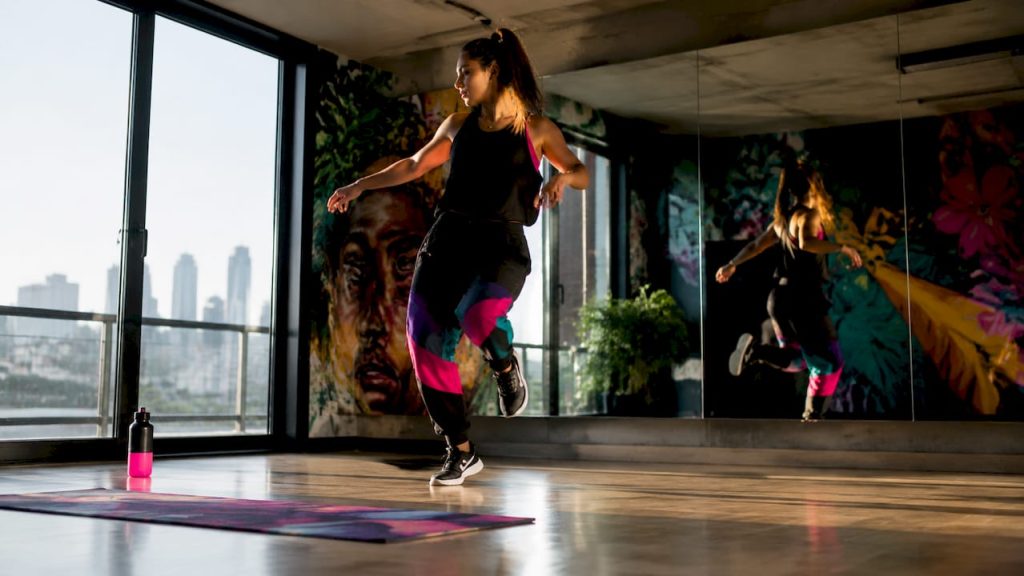
A beginner dancer is defined as someone with fewer than 30 hours of dance experience or less than two months of consistent training at one to two classes per week. In competitive Latin dance, the industry term “novice dancer” describes someone in their first competition year. Whether you call it the beginner dancer definition or the definition of novice dancer, the concept is the same: you are at the start of a skill-building process, not at a permanent stopping point. At Dennis pasamba in Chicago, this is exactly where the most exciting transformations begin.
What skills and knowledge define a beginner dancer?
A beginner dancer is primarily identified by three things: limited automaticity, basic rhythm awareness, and unfamiliarity with studio terminology. Absolute beginner classes focus on foundational studio language including rhythm, musical counting, posture, and weight transfers. These classes run at a slower pace on purpose. The goal is to build a solid base without overwhelming new students.
Understanding beginner dance skills means knowing what you are actually learning in those first sessions. The core elements are:
- Rhythm and musical counting: Learning to hear beats and match movement to music
- Posture and frame: Holding your body correctly so your partner can follow your lead or respond to it
- Weight transfers: Shifting your body weight cleanly from foot to foot, which is the foundation of every Latin step
- Basic footwork patterns: The specific step sequences for each dance style
- Studio vocabulary: Terms like “on one,” “on two,” “closed hold,” and “open position”
Early mastery of studio language accelerates progress by improving how quickly you understand your instructor’s directions. This is one of the most overlooked advantages a new dancer can gain in the first month.
One of the biggest misconceptions about beginner dance skills is that rhythm is something you either have or you do not. Rhythm is a learned skill, developed through practice, not a trait you are born with. That single fact removes one of the most common excuses people use to avoid starting.

Pro Tip: Focus on one skill per class. If you are working on weight transfers, let that be your entire focus for the session. Trying to perfect footwork, posture, and timing all at once slows down your progress.
Beginners also benefit from understanding that quality over quantity is the rule at this stage. Mastering three steps cleanly will take you further on a social dance floor than knowing fifteen steps you cannot execute with confidence.
How long does it take to go from beginner to intermediate?
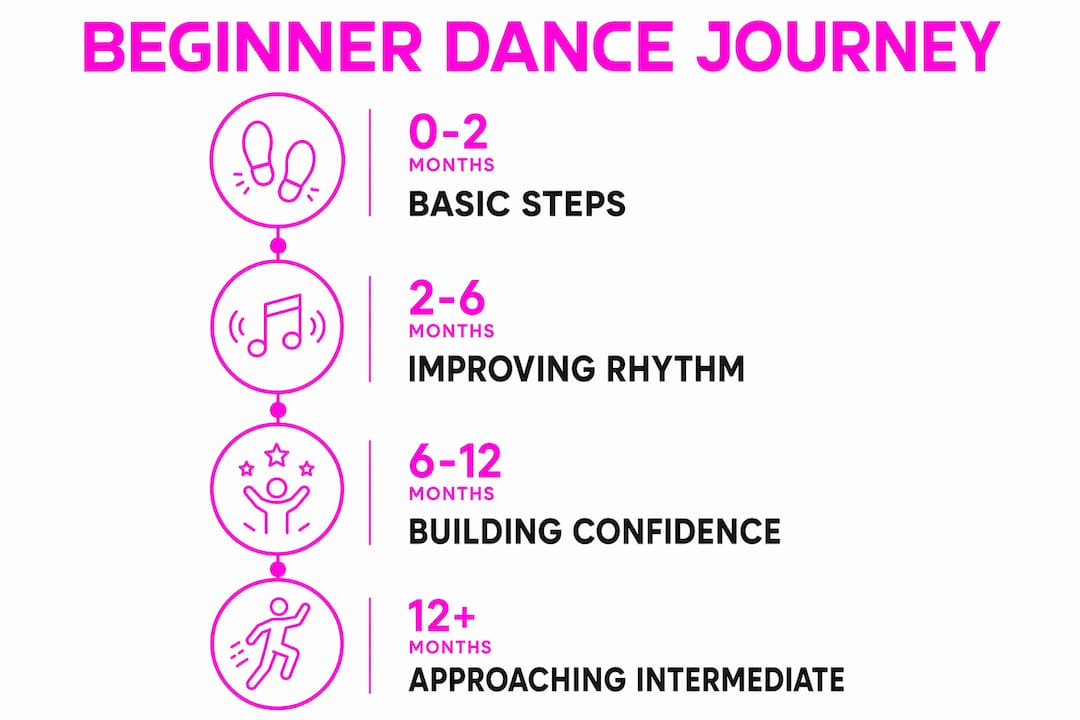
Most beginners feel comfortable with basic social dance steps within 1–3 months of consistent training at one to two classes per week. Reaching intermediate skill takes 1–2 years, and amateur proficiency develops over 3–5 years. These timelines assume regular attendance, not occasional drop-in sessions.
Practice frequency matters more than session length. Practicing 30 minutes twice a week builds muscle memory faster than attending a four-hour workshop once a month. Short, regular repetition is how your body learns to move without thinking.
The clearest sign you are leaving the beginner stage is automaticity. Beginners think step by step, consciously counting and placing each foot. Intermediate dancers have internalized those patterns. Their attention shifts to connection with their partner and responding to the music. That mental shift is the real marker of progression, not just the number of months you have been attending class.
| Stage | Typical Timeline | Key Marker |
|---|---|---|
| Absolute beginner | 0–2 months | Learning basic steps and counting |
| Developing beginner | 2–6 months | Steps feel familiar, rhythm improving |
| Late beginner | 6–12 months | Comfortable on social floor, some automaticity |
| Intermediate | 1–2 years | Steps automatic, focus shifts to musicality |
| Amateur | 3–5 years | Consistent technique, style developing |
The table above reflects general benchmarks. Your actual timeline depends on how often you practice, the quality of your instruction, and whether you supplement group classes with private dance lessons for personalized feedback.
What challenges do beginner dancers face and how do they overcome them?
The biggest barrier for adult beginners is psychological, not physical. Feeling clumsy, off-beat, or self-conscious is universal. Experienced instructors treat those early struggles as teaching moments, not signs of failure. Awkwardness is not a problem to fix. It is evidence that your brain is processing new movement patterns.
Successful beginner dancers treat embarrassment as a growth indicator. Every time you feel uncomfortable, you are at the edge of your current ability. That is exactly where learning happens.
Here are the mindset strategies that actually work for new dancers:
- Accept the awkward phase: Every dancer you admire went through it. There are no shortcuts past it.
- Compare yourself to your past self only: Measuring your week-one skills against someone’s year-three skills is not useful.
- Ask questions in class: Instructors at quality studios expect and welcome beginner questions.
- Show up consistently: Two classes per week beats one marathon session every few weeks.
- Celebrate small wins: Nailing a clean weight transfer is worth recognizing. Progress is cumulative.
Pro Tip: Record yourself dancing once a month. You will not see your own progress in real time, but video makes it undeniable. Most beginners are further along than they think.
Developing body awareness including frame and weight transfer is a subtle area where beginners can get early feedback and accelerate learning. Ask your instructor to watch your posture specifically. One correction in the right place can unlock weeks of stalled progress.
You also do not need to wait until you are “ready” to start. Dance skills develop with exposure and practice, not prior ability. Fitness level, age, and natural coordination matter far less than consistency and willingness to show up.
How does the beginner dancer definition apply in Latin dance styles?
Latin dance has its own beginner classifications, and they vary by style. Salsa, Bachata, Cumbia, and Kizomba each have distinct rhythm patterns and partner roles that shape what “beginner” means in practice. A beginner in Salsa is learning to step on the beat in a specific timing structure (on one or on two). A beginner in Bachata is learning a four-count side-to-side pattern with a hip motion on count four. These are not interchangeable starting points.
Different Latin dance styles have unique beginner challenges related to rhythm patterns and partner roles. This is why tailored beginner guidance matters. A generic “intro to dance” class will not give you the specific foundation each Latin style requires.
The distinction between social dance readiness and competition novice status is also worth understanding. Social dance readiness means you can hold basic timing and move comfortably with a partner at a Friday night social. Competition novice status, as defined in competitive dance, means you are in your first competition year regardless of how many social hours you have logged.
| Class type | Focus | Best for |
|---|---|---|
| Absolute beginner group class | Footwork, rhythm, basic vocabulary | Zero experience, first 1–2 months |
| Beginner workshop | One style or concept in depth | Filling a specific gap in your foundation |
| Social dance practice night | Applying steps in a real setting | Beginners with 1–3 months of class |
| Private beginner lesson | Personalized correction and faster progress | Any beginner wanting to accelerate |
Beginners in Latin styles benefit most from a consistent approach that emphasizes partner connection and posture early. Those two elements set the foundation for every social dance interaction you will have for years. Getting them right at the start saves you from unlearning bad habits later.
If you are exploring which Latin style to start with, a salsa vs. Bachata comparison can help you match your personality and physical preferences to the right entry point. Some people connect immediately with Salsa’s energy. Others find Bachata’s slower tempo easier to internalize at first.
Key Takeaways
A beginner dancer is defined by fewer than 30 hours of experience and the absence of automatic movement, not by talent or natural ability.
| Point | Details |
|---|---|
| Beginner dancer definition | Fewer than 30 hours or two months of training, with steps requiring conscious thought. |
| Rhythm is learned | Rhythm is a skill built through practice, not a trait you either have or lack. |
| Progression timeline | Basic comfort arrives in 1–3 months; intermediate skill develops over 1–2 years. |
| Consistency beats intensity | Two short weekly sessions build muscle memory faster than infrequent long workshops. |
| Latin styles differ | Salsa, Bachata, and Cumbia each have distinct beginner challenges requiring style-specific guidance. |
What 33 years of teaching beginners has shown me
After more than three decades of teaching Latin dance in Chicago, the pattern I see most often is this: the students who progress fastest are not the most naturally coordinated. They are the ones who stop trying to look good and start trying to understand what they are doing.
Most beginners walk in wanting to impress someone, whether that is a partner, a friend watching, or themselves in the mirror. That mindset slows you down. The students who commit to looking confused, asking basic questions, and repeating the same four-count pattern for twenty minutes straight are the ones who show up six months later dancing with real confidence.
The other thing I will say plainly: the beginner stage in Latin dance is genuinely fun if you let it be. Salsa, Bachata, and Cumbia are social dances. They were built for people to enjoy together, not to perform perfectly. Your first Friday social night will not be flawless. It will be memorable. That is the point.
The studios and programs that serve beginners best are the ones that make you feel welcome before you feel competent. At Dennis pasamba, no partner is required, and no prior experience is assumed. You walk in as you are. The dance studio checklist for Latin beginners is a good starting point if you want to know what to look for and what to ask before you commit to a program.
— Dennis pasamba
Start your Latin dance journey at Dennis pasamba
Ready to move from definition to dance floor? Dennis pasamba offers beginner evening dance classes in Chicago designed specifically for adults with zero experience. No partner needed. No prior rhythm required. Classes cover Salsa, Bachata, and Cumbia with clear, step-by-step instruction from one of Chicago’s most experienced Latin dance coaches.
Dennis pasamba is 5-star rated with over 850 Google reviews and 33 years of teaching experience. Whether you want group classes, private one-on-one lessons, or a Friday night social to practice what you have learned, there is a format that fits your schedule and comfort level. Use the beginner Latin dance checklist to prepare your first questions and walk in ready to learn. Your first class is the only step that matters right now.
FAQ
What is the standard beginner dancer definition?
A beginner dancer is someone with fewer than 30 hours of dance experience or less than two months of training at one to two classes per week. In competitive dance, a novice dancer is specifically someone in their first competition year.
How long does it take a beginner to feel comfortable dancing?
Most beginners feel comfortable with basic social dance steps within 1–3 months of consistent training. Reaching intermediate skill typically takes 1–2 years with regular practice.
Do you need natural rhythm to start Latin dance as a beginner?
No. Rhythm is a skill developed through practice, not an innate trait. Beginners in Salsa, Bachata, and Cumbia all learn to feel the beat through repetition and guided instruction.
What is the difference between a beginner and a novice dancer in competition?
In social dance, beginner refers to someone new to the skill. In competitive dance classification, novice is the formal term for a dancer in their first competition year, regardless of social dance experience.
What should a beginner dancer focus on first in Latin dance?
Beginners should prioritize posture, weight transfers, and basic rhythm before adding complex footwork or styling. Mastering a few foundational steps cleanly is more valuable than collecting many moves without control.