
Partner dancing is the most effective social activity for singles to meet new people because it removes every barrier that makes typical social settings awkward. No cold approaches. No forced small talk. No performance pressure. You show up, you move, and the connections happen naturally. This is why singles meet people dancing at rates that apps and bars simply cannot match. The structure of partner dance classes, from Salsa to Bachata to Cumbia, creates repeated, low-stakes interaction that builds real chemistry fast. Dennis pasamba has watched this happen for over 33 years on the Chicago dance floor.
Why singles meet people dancing: the science behind it
Partner dancing works as a social connector because it replaces verbal performance with shared physical experience. You are not trying to impress anyone with your resume or your opening line. You are focused on the music, the movement, and your partner. That shared focus is exactly what makes connection feel effortless.
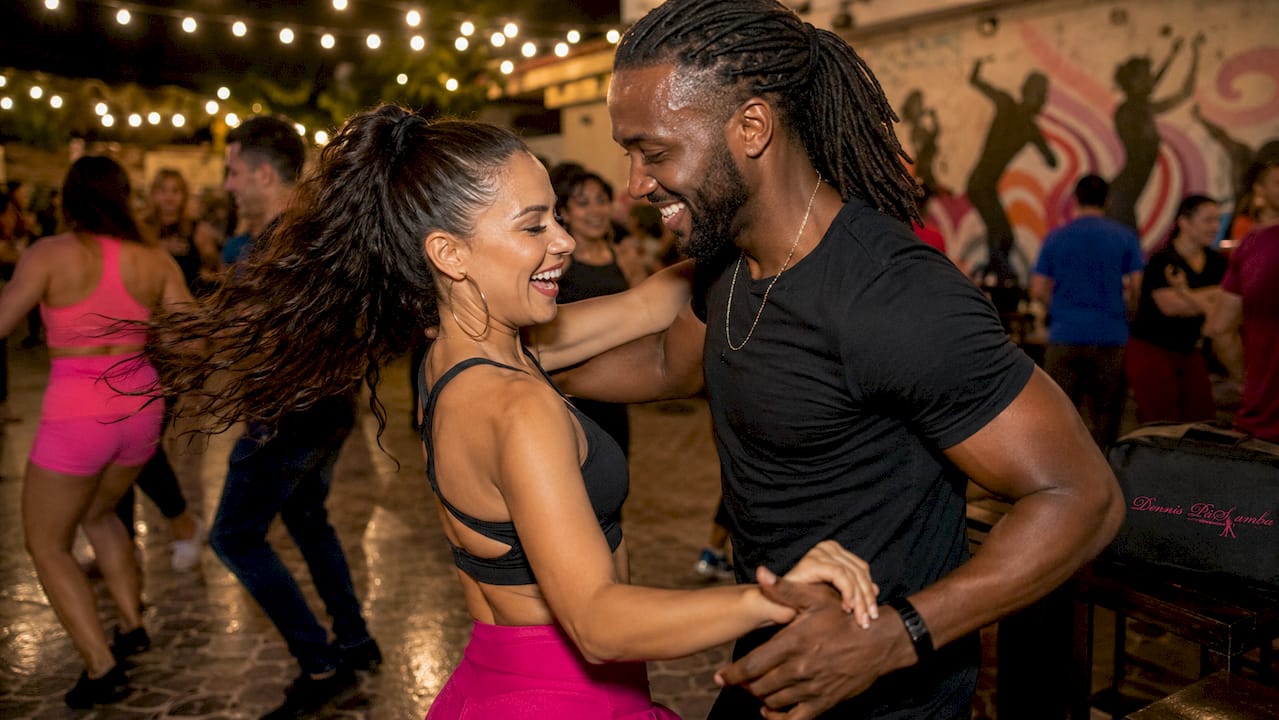
Dance functions as a matchmaking technology that bypasses the performance anxiety of traditional dating. Instead of presenting yourself, you are simply doing something together. That shift from self-promotion to shared activity is the core reason social dancing for singles works so well.
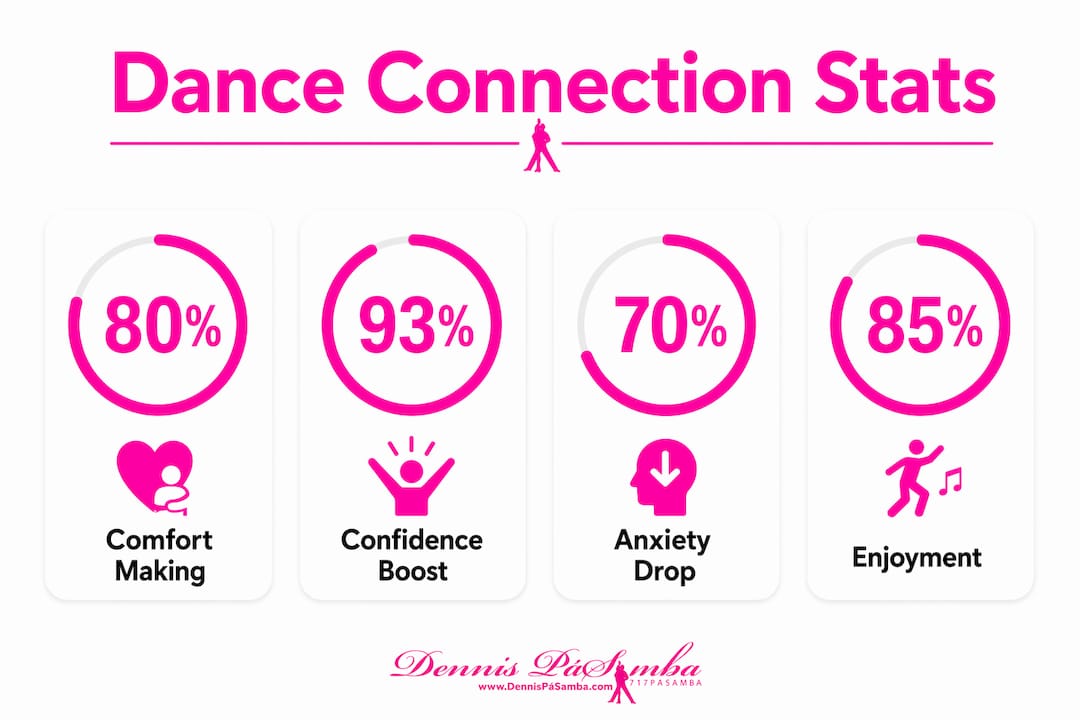
The results show up in the data. Survey research found that 80% of partner dance participants felt more comfortable making and keeping eye contact after taking dance classes. That number matters because eye contact is the foundation of trust and attraction. The same survey found 89% felt less nervous socially, and 93% reported higher self-confidence overall.
How partner dance classes are structured for singles
Most singles arrive to dance events alone, and that is actually the best way to come. Singles programs are designed for solo attendees, and arriving without a partner accelerates how quickly you meet people. You are not anchored to one person all night.
A typical singles dance social follows a clear format:
- Intro lesson: A short beginner-friendly class, usually 30–45 minutes, that teaches basic steps. No experience needed.
- Partner rotation: You switch partners every few minutes throughout the lesson. You meet 10 to 20 people before the social dancing even starts.
- Open social dancing: After the lesson, the floor opens for freestyle dancing. You can ask anyone to dance or be asked.
- Low entry cost: Singles dance socials typically cost $16–$22 per session, including both the lesson and the social time. That is a fraction of a bar tab.
The format removes every logistical excuse not to go. You do not need a date, a group of friends, or any prior skill. You just show up.
Pro Tip: Arrive at the start of the intro lesson, not after it. The lesson is where most of the partner rotation happens, and that is your fastest path to meeting the most people in the room.
What dancing does to your brain and body when you connect
The neurochemistry of partner dancing explains why connections made on the dance floor feel deeper than those made at a cocktail party. Coordinated movement triggers the release of dopamine, serotonin, and oxytocin. These are the same chemicals your brain produces during bonding, trust, and happiness.
Oxytocin in particular is known as the bonding hormone. Physical touch and synchronized movement both stimulate its release. Partner dancing delivers both at once. That is why two strangers can share a three-minute Salsa and walk away feeling genuinely connected.
“Social dancing syncs nervous systems and creates trust and connection through shared movement, triggering the same neurochemical pathways that bond close friends and romantic partners.”
The table below shows the three key confidence outcomes reported by partner dance participants:
| Outcome | Percentage reporting improvement |
|---|---|
| Increased self-confidence | 93% |
| Reduced social nervousness | 89% |
| Better eye contact comfort | 80% |
These numbers reflect a consistent pattern. Dance does not just make you feel good in the moment. It rewires how you show up socially over time.
Why dancing beats networking events for meeting singles
Networking events fail at creating real connection because they are built around self-promotion. You walk in, you pitch yourself, and you collect business cards from people who are doing the same thing. Partner dancing succeeds where networking fails by offering repeated proximity, shared tasks, and a low-stakes environment.
The comparison is stark:
| Factor | Typical networking event | Partner dance social |
|---|---|---|
| Conversation starter | You must initiate | Partner rotation handles it |
| Social pressure | High (self-promotion required) | Low (shared task is the focus) |
| Number of people met | 3–5 on average | 10–20 in one evening |
| Connection depth | Surface level | Physical and emotional |
| Repeat interaction | Rare | Built into the format |
Dance also solves the hardest part of meeting someone new: the approach. Partner rotation automates introductions by moving you to a new partner every few minutes. You never have to walk across a room and introduce yourself cold. The structure does it for you.
Pro Tip: Non-verbal communication through movement often reveals more about a person’s personality than an hour of conversation. Pay attention to how someone leads or follows. It tells you a lot.
Silence on the dance floor is not awkward. It is productive. You are communicating through movement, rhythm, and physical response. That kind of embodied connection builds faster than words.
Practical tips for singles getting started with dance
Starting is the hardest part. Once you are in the room, the format takes over. Here is how to make the most of your first few dance events:
-
Go solo on purpose. Bringing a close friend can feel safer, but it often keeps you in your comfort zone. Singles who arrive alone integrate faster socially because they rotate more freely and talk to more people.
-
Embrace the temporary container. Each dance lasts one song, roughly 3–4 minutes. Each interaction has a clear start and end, which removes the pressure of sustaining a long conversation. You can be fully present for three minutes without worrying about what comes next.
-
Take a beginner class first. Knowing even the basic step of Salsa or Bachata makes you far more comfortable on the social floor. Check out this beginner Latin dance guide before your first social event.
-
Stay after class. The 20 minutes after a class ends are socially rich. People are relaxed, energized, and open. That is when casual conversations turn into real connections. Ask someone if they want to practice a move you just learned.
-
Come back consistently. Familiarity builds connection. The people you see week after week become your community. Regulars at Friday night dance socials often form friendships and relationships that extend well beyond the studio.
Pro Tip: Avoid checking your phone between dances. The moments between songs are when the most natural conversations happen. Stay present and let the social momentum carry you.
What 33 years on the dance floor taught me about singles and connection
I have watched thousands of singles walk through the doors of Dennis pasamba nervous, stiff, and convinced they have no rhythm. Within 30 minutes, most of them are laughing, moving, and talking to people they just met. That transformation is not magic. It is structure.
The biggest mistake singles make is waiting until they feel ready. They think they need to learn more steps, get in better shape, or find someone to come with them. None of that is true. The dance floor does not care about your resume. It only cares about whether you show up.
What I have seen consistently is that the people who come back two or three times are the ones who build real friendships and, yes, sometimes find romance. The first night is about breaking the ice. The second night is about recognizing faces. By the third visit, you have a community. That is not something any app can replicate.
Dance also has a health dimension that people underestimate. You are moving your body, releasing stress, and laughing. That combination makes you more attractive, more open, and more genuinely yourself. The connections that form in that state tend to be real ones.
— Dennis pasamba
Ready to meet people at Dennis pasamba’s Latin dance classes?
Dennis pasamba is Chicago’s top-rated Latin dance studio with over 850 five-star Google reviews and 33 years of experience building community through dance. Classes are designed specifically for singles, with no partner required and full partner rotation built into every session.
Whether you are brand new or have a little experience, Dennis pasamba offers beginner evening dance classes in Salsa, Bachata, and Cumbia that fit busy adult schedules. Friday night socials give you the perfect low-pressure setting to practice and meet people. Before your first class, grab the free Latin dance studio checklist to know exactly what to expect and how to prepare. Your first step onto the floor is the only one that matters.
FAQ
Why do singles meet people more easily through dancing?
Partner dancing removes the need for cold approaches by using partner rotation to guarantee multiple interactions in a single evening. Shared movement creates connection faster than conversation alone.
Do I need a partner to join singles dance classes?
No partner is needed. Singles dance programs are specifically designed for solo attendees, and arriving alone actually helps you meet more people through the rotation format.
What types of dance are best for singles looking to meet people?
Salsa, Bachata, and Cumbia are the most popular partner dances for singles because they are beginner-friendly, high-energy, and widely taught at social dance events across Chicago.
How quickly can dancing build real social connections?
Dance triggers oxytocin, dopamine, and serotonin within minutes of synchronized movement, meaning genuine feelings of connection can develop within a single song.
How much does a singles dance social typically cost?
Singles dance socials typically cost $16–$22 per session, covering both an introductory lesson and open social dancing time.
Key takeaways
Partner dancing is the most effective social activity for singles because it automates introductions, triggers bonding neurochemicals, and builds community through repeated low-pressure interaction.
| Point | Details |
|---|---|
| Structure removes pressure | Partner rotation guarantees you meet 10–20 people per session without cold approaches. |
| Dance rewires confidence | 93% of partner dance participants report higher self-confidence after classes. |
| Neurochemistry accelerates bonding | Synchronized movement releases oxytocin, dopamine, and serotonin, creating real trust fast. |
| Solo arrival is an advantage | Singles who arrive alone integrate faster and meet more people than those who come in groups. |
| Consistency builds community | Returning weekly turns brief dance interactions into lasting friendships and real connections. |