
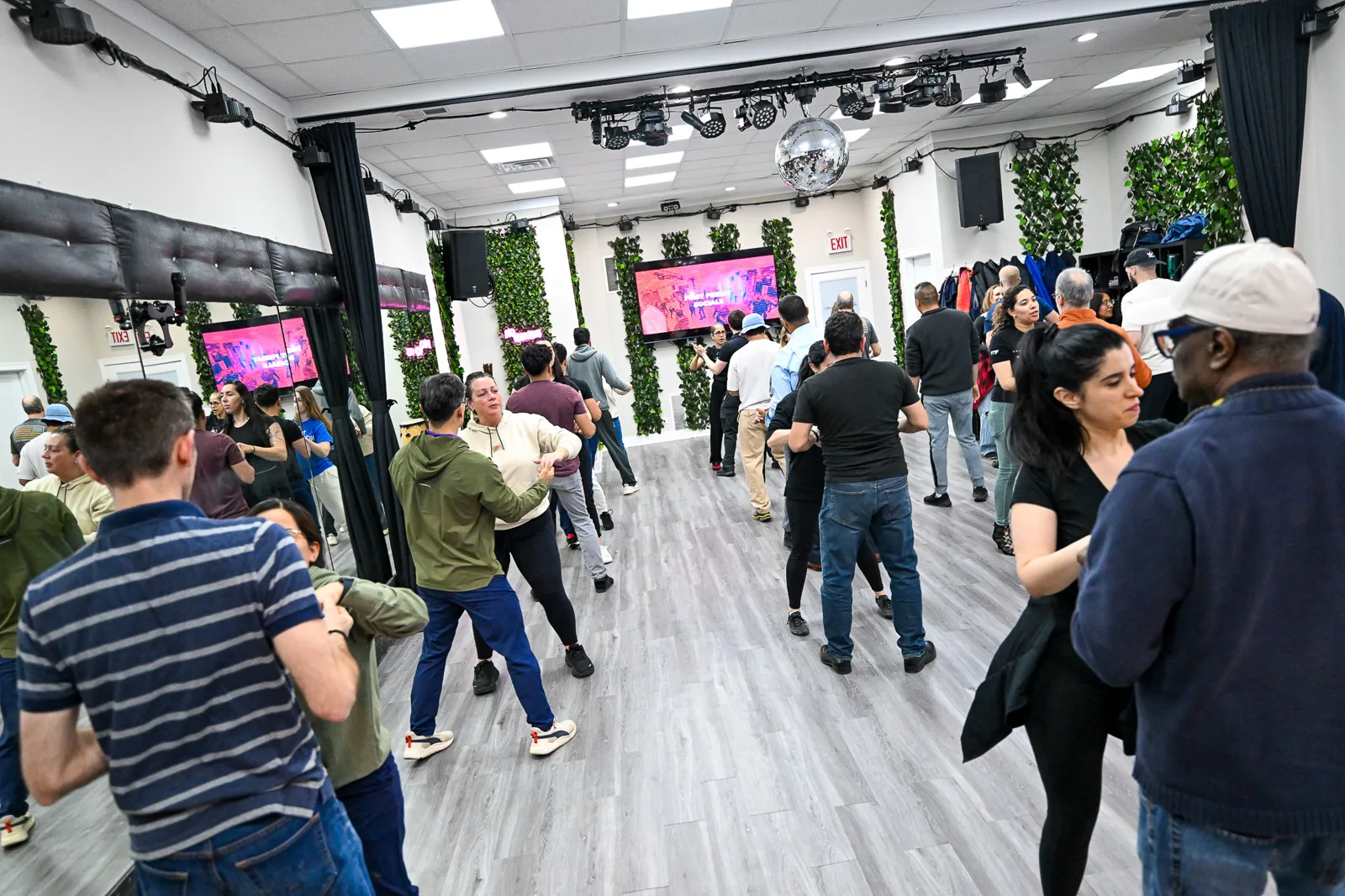
How Do Connection Techniques Differ Between Argentine Tango and Salsa?
In Argentine Tango, the connection starts directly through the upper body and a close embrace. Leaders and followers often share chest-to-chest contact or a tight close frame that creates an immediate tactile bond. Salsa uses a flexible arm frame and hand holds to send signals back and forth. In Salsa, you maintain an active frame through your arms and shoulders, allowing space for quick turns, spins, and rhythmic footwork patterns across the dance floor.
Weight balance and axis management work very differently in these two dance styles. Argentine Tango often involves a shared axis where partners lean slightly into each other to feel every subtle movement of the torso. Salsa dancers maintain their own individual upright axis throughout the entire dance. In Salsa, each partner stays balanced on their own two feet, using the connection through their hands and arms to direct momentum rather than sharing weight.
Salsa relies heavily on dynamic tension and compression to execute fast turns and patterns. The connection feels like an elastic band stretching and releasing as partners push and pull gently through their hands. This push-and-pull mechanism gives Salsa its playful and bouncy energy. The leader generates directional cues by building soft tension in the arms, which tells the follower exactly when to break, turn, or execute a fast spin along the straight slot.
Argentine Tango relies on chest movement and subtle shifts in weight rather than hand tension. The leader invites the follower to step by shifting their own chest and core weight first. There is very little pushing or pulling with the hands in traditional Tango. Instead, the connection feels continuous, smooth, and deeply grounded. Every step is guided by the core, making the lead feel subtle, quiet, and extremely sensitive to small changes in balance.
The physical distance between partners creates another major technical difference between the two styles. Argentine Tango keeps partners very close, minimizing space to maintain a continuous chest or upper-body connection. Salsa constantly shifts between open and closed positions. Salsa partners might dance in a close hold for a moment, then separate into an open hand-to-hand hold, or even disconnect entirely for solo footwork shines before returning to a connected hold.
The connection in Argentine Tango is heavily focused on micro-pauses, slow glides, and sudden changes in musical timing. Followers must wait patiently for the leader's chest to initiate movement before taking a step. Salsa connection operates on a steady, continuous eight-count rhythm. In Salsa, the connection must remain active and spring-like so both partners can keep up with fast Latin percussion, quick cross-body leads, and complex multi-turn sequences without losing sync.
Switching between Tango and Salsa connection techniques can feel challenging at first, but mastering both will make you a far better social dancer. Studying Tango teaches you deep listening, quiet posture, and precise weight transfers. Studying Salsa builds quick hand reactivity, arm strength, and dynamic spatial awareness. Our studio at 4820 W. Irving Park Rd. in Chicago provides a friendly space in Six Corners with free parking to help you learn both styles.
Questions people ask
Is the leader's connection stronger in Argentine Tango or Salsa?
Neither dance requires pushing or pulling with strong physical force. Tango relies on a clear, continuous chest connection and subtle body weight shifts. Salsa uses light, spring-like tension in the hands and arms to guide turns and steps.
Can I use my Salsa connection technique when dancing Argentine Tango?
It is best not to use Salsa connection techniques in Tango. Salsa relies on arm tension and independent balance, while Tango requires a relaxed upper body and chest-to-chest contact. Mixing them can make Tango feel stiff or heavy to your partner.
How can I practice improving my partner connection in Chicago?
You can practice both connection techniques by taking social dance lessons at Dennis PaSamba Dance Company. Our studio is located at 4820 W. Irving Park Rd. in the Irving Park neighborhood with convenient free parking. Text 717-PaSamba to get details on current class options.
Visit the studio
Dennis PaSamba Dance Company
4820 W. Irving Park Rd., Chicago, IL 60641
Six Corners · Portage Park · Irving Park
dennispasamba.com · Text/Call 717-PASAMBA ((717) 727-2622)