
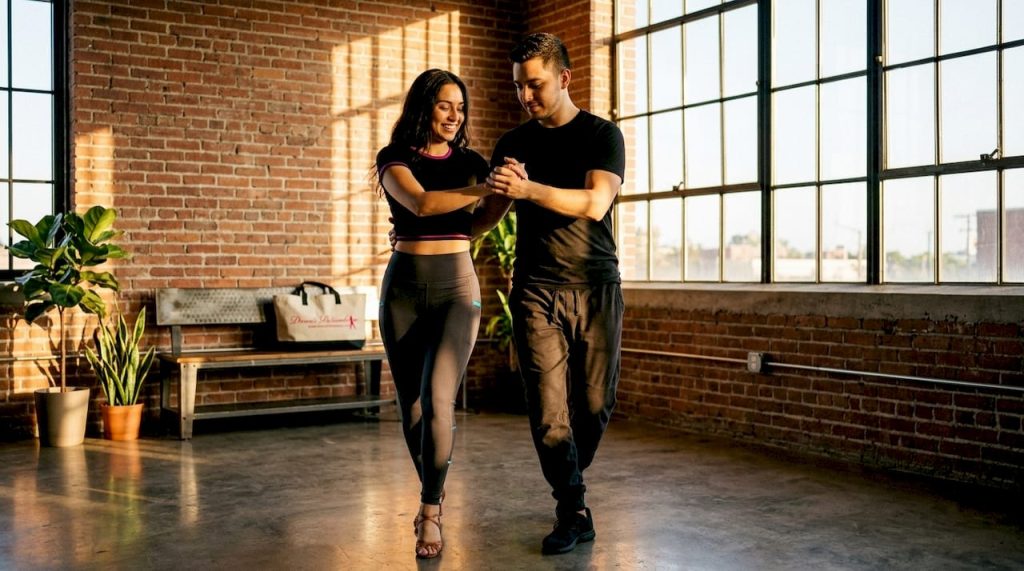
Bachata is defined as a partner dance from the Dominican Republic built on a four-count rhythm, three steps plus one tap, that repeats in a side-to-side pattern. Common bachata beginner mistakes include rushing the beat, taking steps that are too large, and forcing hip movement that should happen naturally. These errors break your rhythm, disconnect you from your partner, and make the dance feel harder than it is. The good news: every one of these mistakes is fixable with focused awareness and the right guidance from an experienced instructor like Dennis pasamba.
1. What are the most common bachata beginner mistakes with rhythm and timing?
Rhythm errors are the number one reason beginners feel lost on the dance floor. Most new dancers count numbers in their head instead of listening to the instruments. Counting beats mentally causes you to lose the music the moment your concentration slips. The fix is to listen for the güira’s sharp metallic slap or the bongo’s heavy thud, which gives you a physical sound to lock onto instead of an abstract number.
Rushing is the second major timing error. Beginners often anticipate the rhythm due to nerves or excitement, which creates chaotic sequences instead of steady flow. Rushing also throws off your partner, who has no way to predict where you will land next. Slow down deliberately, even if it feels too slow at first.
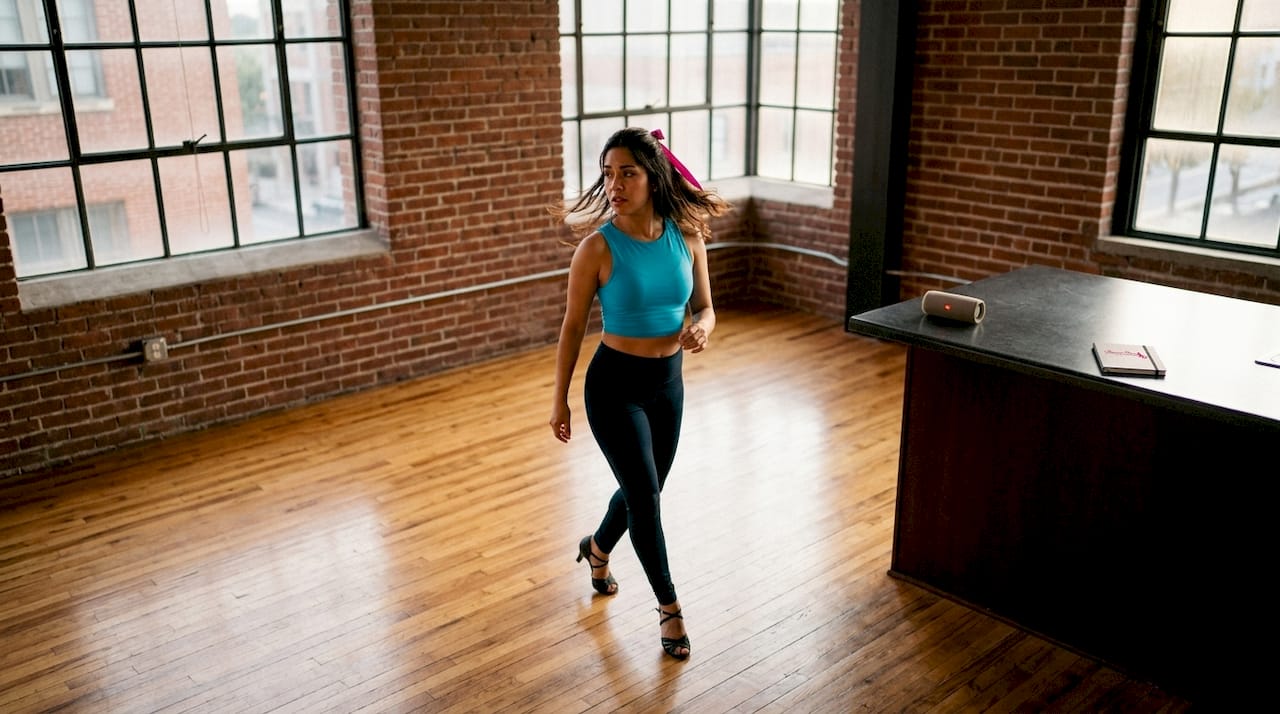
The tap on beat 4 or beat 8 is a specific trap. The tapping foot must stay light so you can lift it instantly for the next step. Pressing your weight into the tap foot causes stumbling right at the moment the sequence resets.
Pro Tip: Before your next class, put on a bachata song and close your eyes. Isolate just the güira or bongo. Tap your hand to that sound for two minutes before you move your feet. Your body will sync to the music instead of fighting it.
- Listen to instruments, not numbers
- Keep the tap foot light on beats 4 and 8
- Slow your steps down until the rhythm feels steady
2. How do step size and foot placement mistakes affect your dancing?
Step size is a mechanical error with immediate consequences. Steps wider than shoulder-width reduce your control, throw off your balance, and break the timing of the four-count pattern. Your steps should stay directly under your body, compact and controlled.
Foot placement relative to your partner matters just as much. Standing toe-to-toe puts both dancers on a collision course. Your right foot needs room to move between your partner’s feet, and that space only exists if you offset your stance slightly to the left. This small adjustment prevents the most common social dancing accident: stepping on your partner’s toes.
Weight shifting is the part most beginners skip. Each step requires a full weight transfer to that foot, so your free foot can move cleanly on the next beat. Incomplete weight shifts create a shuffling, flat-footed look that also makes turns and transitions much harder to execute.
Pro Tip: Practice your basic step in front of a mirror with your feet no wider than hip-width. If your feet cross the line of your shoulders, reset. Small steps feel awkward at first but become natural within a few sessions.
Here is a quick comparison of what incorrect versus correct step mechanics look like:
| Element | Incorrect | Correct |
|---|---|---|
| Step width | Wider than shoulders | Hip-width or narrower |
| Foot position | Toe-to-toe with partner | Offset slightly to the left |
| Weight transfer | Partial, shuffling | Full transfer on each step |
| Tap foot pressure | Weighted, planted | Light, ready to lift |
3. What common errors do beginners make with body movement and hip motion?
Forcing your hips is the most visible beginner error in bachata. Active hip muscle contraction is discouraged in professional coaching because it produces a rigid, mechanical look. Natural hip movement is a byproduct of relaxed knees and a full weight transfer from foot to foot. When you shift your weight correctly, your hips follow without any extra effort.
Upper body tension compounds the problem. Stiff shoulders and a rigid frame prevent your partner from feeling your lead or follow signals. Connection in bachata is communicated through gentle pressure in the frame, and tension blocks that signal entirely. Drop your shoulders, soften your elbows, and breathe.
Solo practice is the fastest way to fix body movement errors. Working on rhythm and weight shifts alone removes the pressure of a partner and lets you focus entirely on how your body feels. You can also check out bachata body movement technique guidance to understand the mechanics before you apply them with someone else.
Pro Tip: Stand with slightly bent knees and shift your weight from foot to foot slowly, without music. Feel where your hips go naturally. That is the movement you want to reproduce when the music starts.
- Relax your knees to let hips move freely
- Drop your shoulders and soften your frame
- Practice weight shifts solo before adding a partner
- Breathe steadily throughout the dance
4. Which social and mindset mistakes slow down beginner progress?
Looking down is a habit that signals discomfort and breaks partner connection. Your eyes should stay up, roughly at your partner’s shoulder or face level. Looking at your feet does not help your footwork. It just confirms that you do not trust your body yet, and that trust only builds through repetition.
Holding your breath is a physical mistake with a mental cause. Tension from nerves causes dancers to freeze their breathing, which tightens every muscle in the body. Tight muscles cannot move fluidly. Take slow, conscious breaths between phrases of music and your whole body will soften.
Comparing yourself to advanced dancers on the social floor is the mindset trap that kills motivation fastest. Advanced dancers have logged hundreds of hours of practice. You are in week two. The comparison is not useful. Beginner frustration fades with consistent weight transfer and rhythm practice, not by watching someone else’s highlight reel.
- Keep your eyes up and maintain soft eye contact
- Breathe steadily to release physical tension
- Focus on your own progress, not others’ skill level
- Ask for feedback from your instructor, not from comparison
Pro Tip: After each song at a social, mentally note one thing that felt better than last time. Progress in dance is incremental, and noticing it keeps you motivated.
Key Takeaways
Fixing common bachata beginner mistakes requires correcting rhythm, step size, body tension, and mindset together, because each element directly affects the others.
| Point | Details |
|---|---|
| Listen to instruments | Lock onto the güira or bongo sound instead of counting beats in your head. |
| Keep steps compact | Steps wider than shoulder-width break balance, timing, and partner connection. |
| Let hips move naturally | Relax your knees and shift your weight fully; hips follow without muscular effort. |
| Practice solo first | Solo rhythm work builds confidence and fixes body mechanics before partner dancing. |
| Stay present mentally | Breathe, keep your eyes up, and measure progress against your own past, not others. |
What I have learned after 33 years of watching beginners dance bachata
The mistake I see most often is not a footwork problem. It is a tension problem. New dancers grip their partner’s hand like a lifeline, lock their shoulders, and hold their breath for four counts. The body cannot move well under that kind of physical stress. The first thing I tell every beginner at Dennis pasamba is to exhale before the music even starts.
Rhythm is the second thing I address, and I always start with the instruments, not the count. When you hear the güira, your body has a physical reference point. When you count “one, two, three, tap” in your head, you are one distraction away from losing the beat entirely. Listening to the role of music in Latin dance is a skill, and it is trainable.
Solo practice is underrated by almost every beginner I have ever taught. Dancers want to be on the floor with a partner immediately, which is understandable. But practicing bachata solo at home for even 10 minutes a day accelerates progress faster than one group class per week. You build the muscle memory without the social pressure, and that memory shows up when you need it most.
The dancers who improve fastest are not the most naturally talented. They are the ones who stay curious, ask questions, and do not take their early mistakes personally. Bachata is supposed to feel good. When you stop fighting the music and start listening to it, the dance starts to make sense.
— Dennis pasamba
Ready to put these corrections into practice?
Dennis pasamba is Chicago’s top-rated Latin dance studio, with 850+ five-star Google reviews and 33 years of coaching experience. Beginner classes are structured specifically to address the errors covered here, from rhythm training to body movement and partner connection.

No partner needed. Singles and couples are both welcome. Whether you prefer group classes, private one-on-one sessions, or Friday socials, Dennis pasamba has a format that fits your schedule and comfort level. Use the beginner dance class checklist to know exactly what to look for before you sign up. Bachata and Cumbia classes in Chicago are enrolling now. Come in, make the mistakes in a safe space, and fix them fast with expert coaching.
FAQ
What is the biggest timing mistake beginners make in bachata?
Counting beats in your head instead of listening to the güira or bongo is the most common timing error. Listening to percussion instruments gives you a physical sound cue that keeps you on the music even when you stop thinking.
How wide should my steps be in bachata?
Your steps should stay at hip-width or narrower. Steps wider than shoulder-width reduce balance and break the four-count timing pattern.
Why do my hips not move naturally in bachata?
Forced hip movement looks rigid because the hips are meant to follow weight transfer, not muscle effort. Bend your knees slightly and shift your full weight to each foot, and your hips will move on their own.
Should I practice bachata without a partner?
Solo practice is one of the fastest ways to improve. Working on rhythm and weight shifts alone builds muscle memory and removes the social pressure that causes tension and rushing.
How long does it take to fix common errors in bachata?
Most beginners notice clear improvement in rhythm and step size within four to six weeks of consistent practice. Mindset habits like breathing and keeping your eyes up often improve even faster once you become aware of them.