
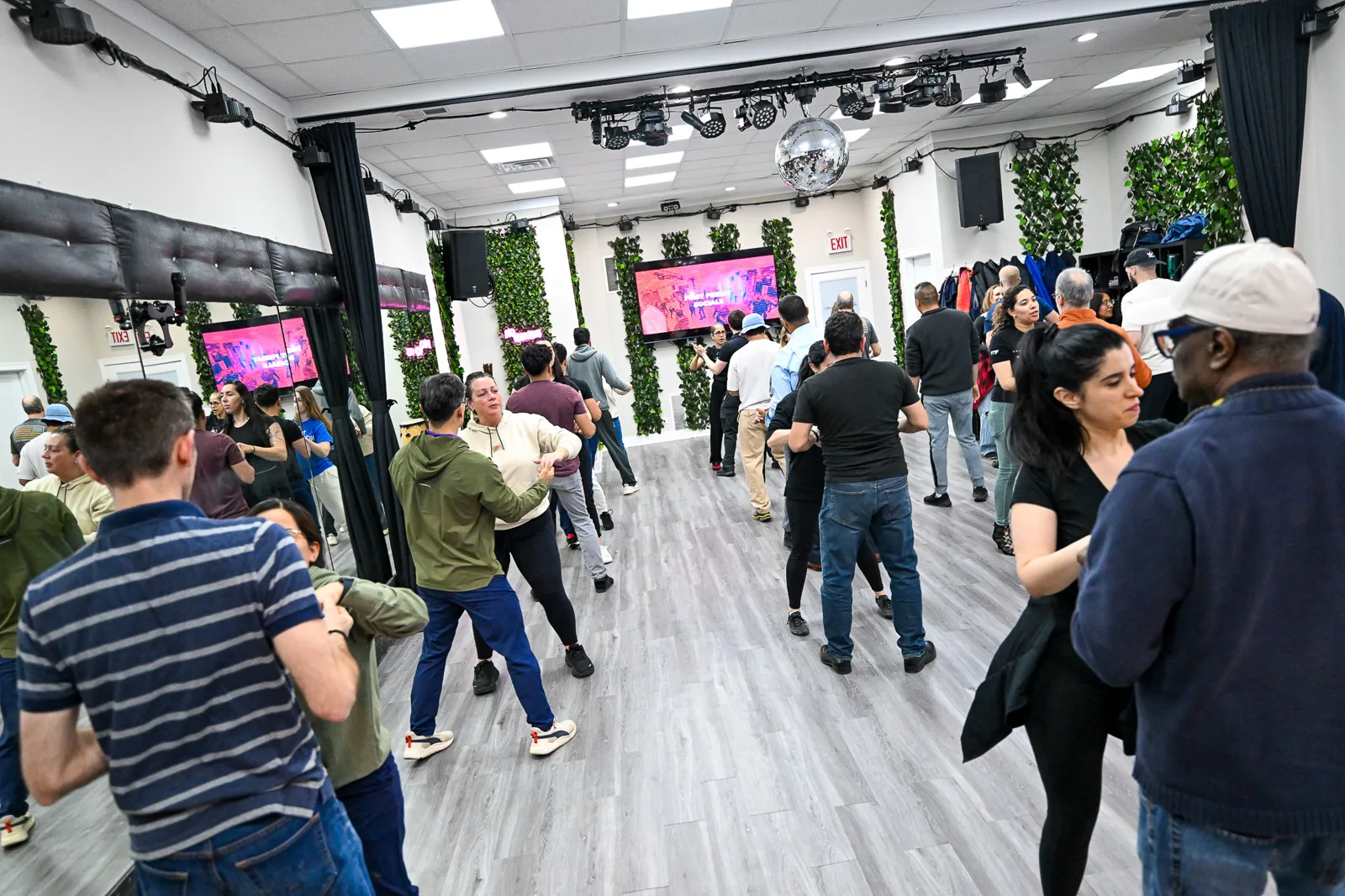
How Does Milonga Rhythm Differ From Argentine Tango for Beginners?
Argentine tango is known for its smooth, dramatic, and grounded movement. The music uses a steady four-beat measure that allows partners to pause, extend steps, and express deep emotion. Dancers take long, sweeping strides and focus on deliberate connection with their partner. In contrast, milonga music is faster, lighter, and distinctly cheerful. It follows a quick two-beat rhythm that keeps your feet moving steadily without long pauses. Text 717-PaSamba to learn more about our Chicago dance studio options.
The music is the main reason these two dances feel so different to new students. Argentine tango music often features slow build-ups, sudden pauses, and rich orchestral melodies. Milonga music, however, has a distinct syncopated beat that makes you want to bounce gently in place. Because the music moves much faster, milonga requires quicker footwork and smaller steps. Beginners often find that listening closely to the drumbeat or bassline helps them spot the difference right away.
Your movement and posture must adjust when switching between tango and milonga. In classic Argentine tango, you have time to stretch your leg, transfer your weight completely, and collect your feet between steps. Milonga does not give you that extra time. To stay on beat in milonga, you must keep your steps very small and stay over your feet. You keep a relaxed posture, but your feet move with fast, precise taps and small weight shifts.
The mood and energy on the social dance floor also set these styles apart. Argentine tango feels intimate, slow, and full of storytelling. It encourages quiet focus and subtle communication between partners. Milonga is playful, energetic, and rhythmic. Dancers smile, bounce softly, and move around the room with lighthearted enthusiasm. Learning both styles helps you become a more flexible social dancer who can enjoy any song played at a local event.
Timing can be tricky for beginners when first trying milonga. In tango, you usually step on the main beats, but you can also wait or hold a position across several beats. In milonga, the fast tempo means you must continuously mark the rhythm. Dancers often use small, quick-quick-slow patterns to stay locked into the music. Practicing these fast weight changes builds great balance, which will actually make your traditional tango steps much cleaner too.
At Dennis PaSamba Dance Company, located at 4820 W. Irving Park Rd. in Chicago, we teach students how to navigate both rhythms smoothly. Our studio in Six Corners features free parking and a friendly atmosphere for all levels. Whether you want to master the slow elegance of tango or the quick fun of milonga, our step-by-step guidance makes it easy. Text or call 717-PaSamba for details about upcoming schedules and options.
Joining a dance class in Irving Park gives you the chance to practice these rhythms with different partners. Working on both styles accelerates your overall music appreciation and body control. You will learn to recognize tempo shifts immediately when listening to classic Latin and South American orchestras. Dancers who understand both milonga and tango always have more fun at social dances because they can comfortably stay on the floor all night.
Questions people ask
Should a complete beginner learn Argentine tango or milonga first?
Most beginners start with traditional Argentine tango to learn basic posture, walking technique, and partner connection. Once you feel comfortable walking to a slower beat, adding milonga rhythm is much easier. Text 717-PaSamba for details on beginner opportunities at our Chicago studio.
Is milonga harder to dance than traditional Argentine tango?
Milonga is faster, which means your feet must move quickly, but the steps themselves are often simpler and smaller than tango steps. Many beginners find milonga very fun because the music is upbeat and forgiving. With a little practice on fast weight shifts, anyone can learn it.
Where is Dennis PaSamba Dance Company located in Chicago?
We are located at 4820 W. Irving Park Rd., Chicago, IL 60641 in the Six Corners area of Irving Park. Our studio offers free parking nearby for your convenience. Text or call 717-PaSamba to ask questions or get started with dance lessons today.
Visit the studio
Dennis PaSamba Dance Company
4820 W. Irving Park Rd., Chicago, IL 60641
Six Corners · Portage Park · Irving Park
dennispasamba.com · Text/Call 717-PASAMBA ((717) 727-2622)