
What Is the Difference Between Social Dancing and Stage Performance Choreography?
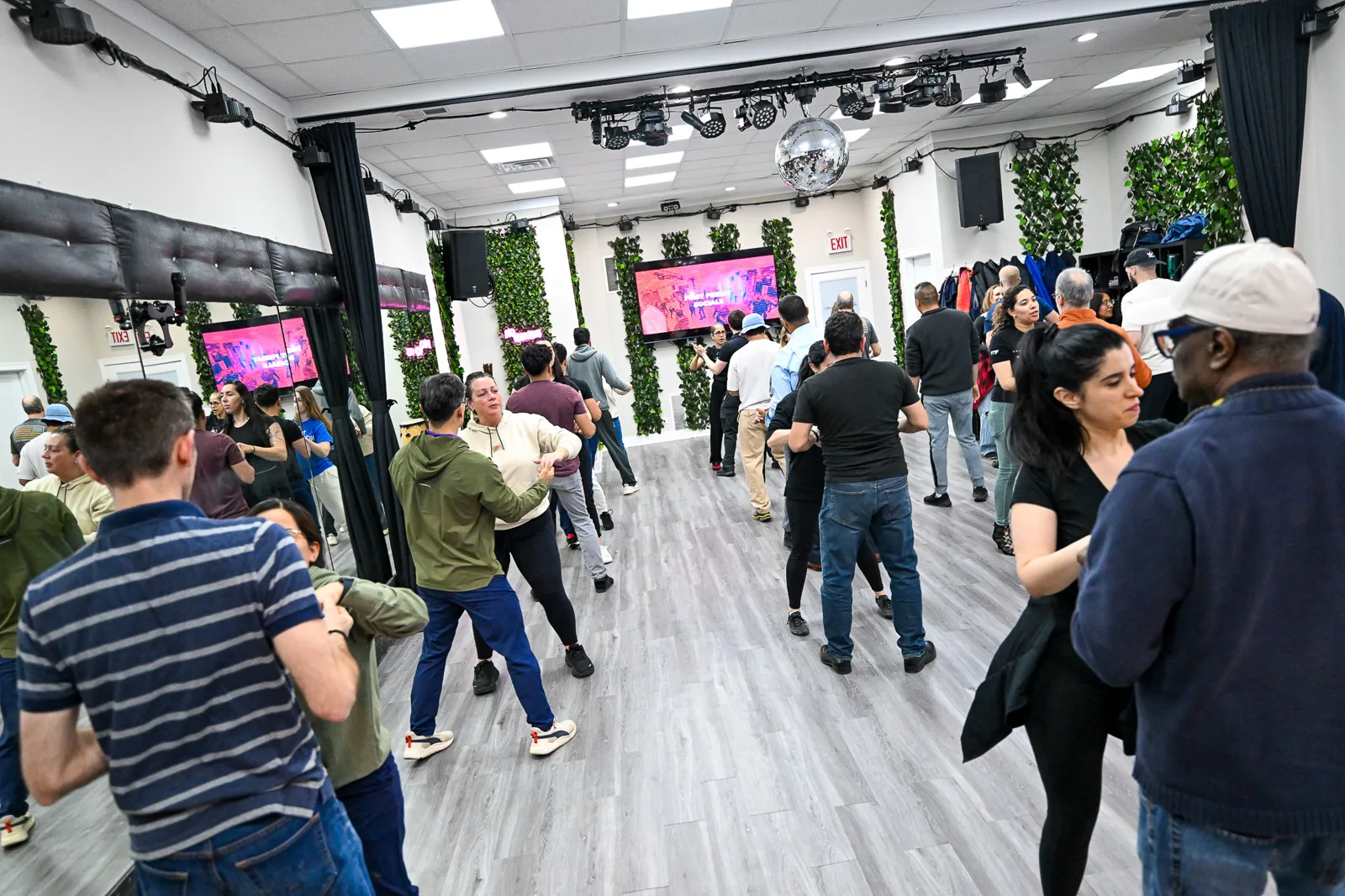
Social dancing relies on real-time communication between a lead and a follow. Neither partner knows exactly what move comes next during the song. The leader indicates direction and rhythm through subtle physical cues, while the follower reads those signals and responds. This spontaneous format requires flexibility and active listening on the floor. At Dennis PaSamba Dance Company in Chicago, we teach dancers how to improvise naturally in any social setting. Text 717-PaSamba to learn more about our social dance options.
Stage performance choreography is fully memorized and heavily rehearsed before taking the stage. Every step, count, and body angle is decided well before the music starts playing. Dancers practice the exact same sequence repeatedly so they can execute it seamlessly under bright lights. Instead of listening for a partner's spontaneous lead, performers rely on muscle memory and shared counts. This structure ensures that complex tricks, lifts, and team formations happen safely and predictably during a live show.
The target audience changes the overall structure of both dance styles. In social dancing, the only audience that truly matters is your partner. You adjust your spacing, speed, and comfort level to match the person dancing right in front of you. In stage choreography, the focus shifts entirely to the spectators watching the show. Movement must be larger, cleaner, and visually striking from a distance so people sitting in the back row can appreciate the entire routine.
Floorcraft and spatial awareness work very differently in each format. Social dancers must constantly scan a crowded room to avoid bumping into other couples on the dance floor. They shorten steps or change directions on the fly based on surrounding traffic. Stage performers work on an open stage with predictable boundaries. They focus on maintaining exact spacing relative to other team members and keeping their body lines turned toward the front where the cameras and audience sit.
Musical interpretation also sets these two dance styles apart from each other. Social dancers react to whatever song the DJ plays, interpreting beats and breaks spontaneously as they hear them. Stage teams perform to custom audio tracks that are trimmed and edited for maximum dramatic impact. The choreography maps out specific movements to hit every accent, snare, and pause in that specific track. This creates a polished, dramatic presentation that highlights technical skill.
Mistakes are handled very differently between social and stage environments. If a lead miscommunicates a move during a social dance, both partners laugh it off and keep moving with the music. On stage, a missed step requires quick recovery to keep the rest of the group synchronized. Performers train to mask errors so the audience never notices a slip. Both skill sets build personal confidence, but they prepare you for totally different dancing environments.
Both social dancing and performance choreography build strong dance fundamentals, but they target distinct goals. Social dancing builds adaptability, physical lead-follow connection, and casual fun for nights out at Latin dance clubs. Performance training builds discipline, sharp technique, stage presence, and group coordination. Located at 4820 W. Irving Park Rd. in Chicago with free parking, Dennis PaSamba Dance Company offers guidance for both paths. Text 717-PaSamba for schedule details.
Questions people ask
Can I learn performance choreography without prior social dance experience?
Yes, you can start learning stage performance choreography as a beginner. Rehearsing set steps helps you build footwork, timing, and posture quickly. However, practicing social dancing alongside performance training will greatly improve your balance and overall partner connection.
Should I start with social dance classes or performance training?
Starting with social dance classes is usually ideal for beginners because it takes away the pressure of memorizing long routines. You learn how to feel the rhythm and react to a partner naturally. Once you feel comfortable on the floor, joining a performance team is a great next step. Text 717-PaSamba for details.
Does Dennis PaSamba Dance Company offer both social dancing and performance training?
Yes, Dennis PaSamba Dance Company provides training for both social dancers and performance artists in Chicago. We are located at 4820 W. Irving Park Rd. in Irving Park at Six Corners with free parking. Text or call 717-PaSamba to find out which program fits your current goals.
Visit the studio
Dennis PaSamba Dance Company
4820 W. Irving Park Rd., Chicago, IL 60641
Six Corners · Portage Park · Irving Park
dennispasamba.com · Text/Call 717-PASAMBA ((717) 727-2622)