
How Do Performance Teams Learn Stage Spatiality and Smooth Formation Changes?
Teaching spatial awareness begins with understanding the geometry of a stage. Instructors break the floor into a clear grid system using front, center, back, stage left, and stage right markers. Dancers learn to identify physical reference points in the room to keep their lines straight. By focusing on specific visual anchors, performers build a mental map of the dancing space. This structural baseline helps every dancer understand exactly where they belong during any moment of the routine.
Dancers cannot constantly look at each other to check their alignment during a fast routine. Performance teams use targeted drills to develop peripheral vision and group awareness. Dancers practice executing routine movements while keeping their eyes fixed forward on the audience. They learn to feel where their teammates are positioned without turning their heads. This heightened spatial sense creates a cohesive team appearance on stage while preventing accidental collisions during fast dancing.
Formation changes require precise timing and strict step counts to look intentional and clean. Directors assign exact count structures for moving from one position to the next. Dancers learn how many steps they have to travel across the floor without rushing or falling behind. Practicing these transition counts ensures that the entire group arrives at their new spots simultaneously. Clear timing transforms a chaotic movement into a polished visual effect for the audience.
Moving between formations is not a break from performing or dynamic dancing. Instructors train dancers to maintain their full energy, facial expressions, and character while traveling across the stage. Transitions are choreographed with expressive footwork, arm stylings, and body movement that match the music. When dancers treat formation changes as active parts of the routine, the entire performance flows naturally without sudden drops in presentation or stage presence.
Creating clean formations depends heavily on sightlines and distance management. Teams practice adjusting their spacing relative to the dancers around them, not just static floor marks. Instructors teach performers how to window themselves so every dancer remains visible to the audience. Practicing windowing and line adjustments trains dancers to make micro-corrections in real time. This flexibility keeps the group looking organized even on stages of different sizes.
One effective method for teaching tricky transitions is running rehearsals in slow motion. Directors have the team execute formation changes at half speed to pinpoint spacing issues or awkward paths. Dancers observe how their travel pathways cross with others to avoid blocking visual lanes. Running isolated transition drills repeatedly builds muscle memory. This focused repetition ensures that moving across the stage becomes second nature during high-energy live performances.
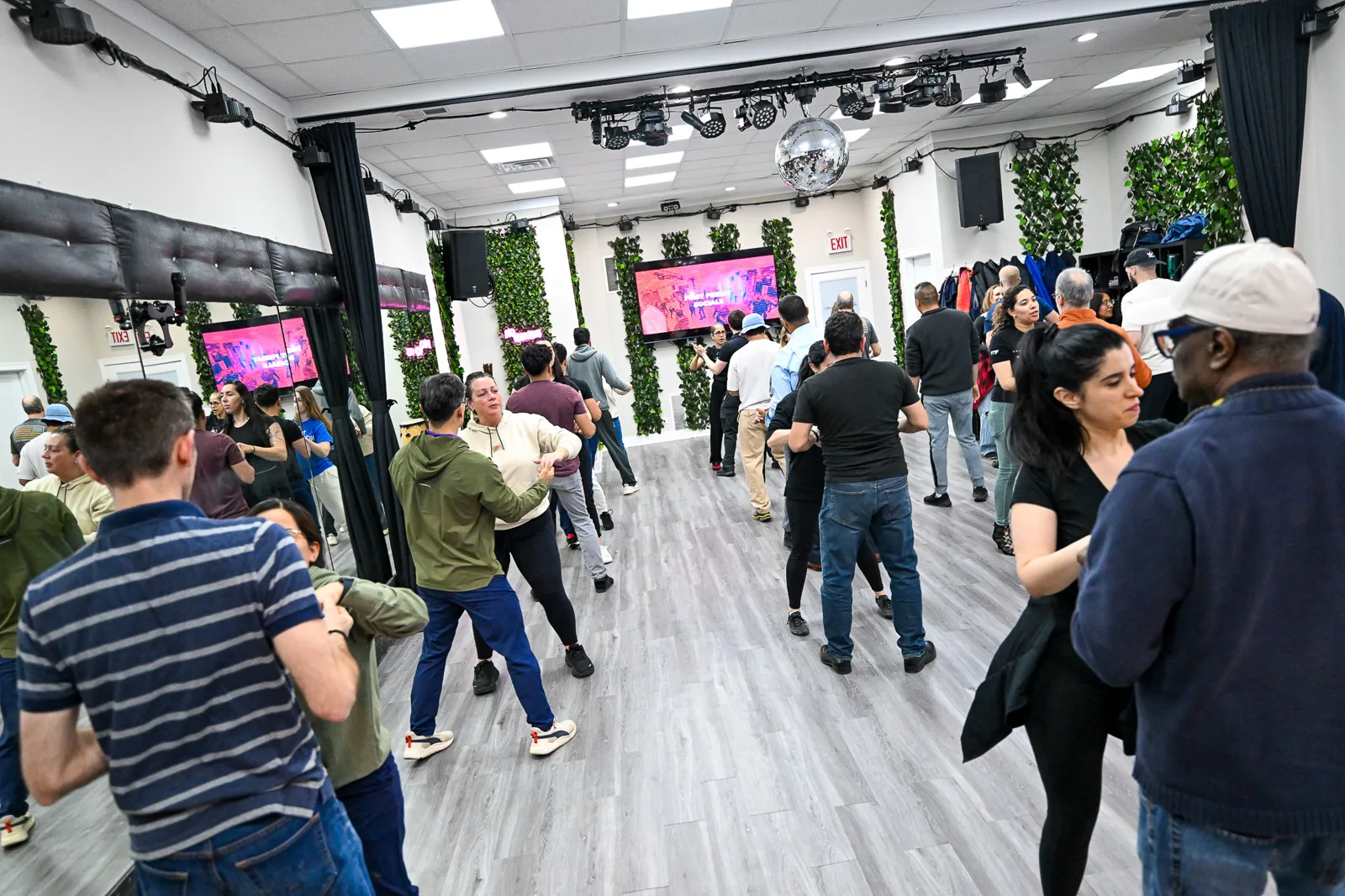
Stage sizes change depending on the venue, so performance teams must learn to adapt quickly. In our studio at 4820 W. Irving Park Rd. in the Six Corners area of Irving Park, we simulate various performance dimensions during team rehearsals. Dancers practice compressing their formations for smaller spaces and expanding their steps for larger stages. Learning how to scale spatiality helps team members stay confident and adaptable no matter where they perform.
Questions people ask
How do beginner dancers learn spatial awareness on a stage?
Beginners start by learning basic stage directions and floor grid systems in rehearsal. Instructors use visual markers and simple line-up drills to teach spacing relative to other dancers. Over time, students develop peripheral vision and natural spatial awareness.
What happens if a formation change gets off count during a live show?
Performance teams are trained to use peripheral vision and visual anchors to make quick adjustments on stage. Dancers take slightly larger or smaller steps to reach their target spot without breaking character. Regular transition drills help performers handle unexpected floor issues smoothly.
How can I join a performance team at Dennis PaSamba Dance Company?
We welcome dancers who want to elevate their technique, teamwork, and stage presence. Our Irving Park studio offers free parking and convenient scheduling for rehearsals. Text 717-PaSamba to get more details on team opportunities and schedules.
Visit the studio
Dennis PaSamba Dance Company
4820 W. Irving Park Rd., Chicago, IL 60641
Six Corners · Portage Park · Irving Park
dennispasamba.com · Text/Call 717-PASAMBA ((717) 727-2622)