
How Do You Find and Count the Beat in Sonidero Cumbia?
Sonidero music is built on traditional cumbia beats mixed with heavy bass and electric sounds. Most sonidero tracks use a standard four-beat measure combined into an eight-count phrasing structure. When listening to a song, try to find the steady scrape of the güiro instrument. That rhythmic pattern gives you the core tempo. You will count your dance steps across eight beats, matching the basic movement pattern of the music.
The standard count for sonidero steps follows a simple pattern: one, two, three, pause four, then five, six, seven, pause eight. You weight shift your feet on counts one, two, and three, then hold your balance on beat four. You repeat this movement pattern on the other side for counts five, six, and seven, resting again on beat eight. This pause creates the signature swing of the style.
Listening to the bassline is another great way to track the rhythm in sonidero tracks. The bass notes often land heavily on beat one and beat five of the measure. If you get lost while dancing, wait for that strong bass drop to reset your counting. Once you catch beat one with your lead foot, your stepping pattern falls right back into place effortlessly without missing a single beat of the song.
The vocals and sound effects from the DJ can sometimes make counting feel tricky for beginners. Sonidero DJs talk over the track, adjust the pitch, and play echo effects during the song. Do not let these extra voice overlays distract your feet. Focus your hearing beneath the talking to keep tracking the constant drum machine and güiro pulse that runs without stopping in the background.
Practicing at home helps build muscle memory for hearing beat one automatically. Play your favorite sonidero track while clapping on counts one, two, three, and counts five, six, seven. Skip your claps on counts four and eight to practice the pause. Once your hands understand the timing, start taking small steps in place to build strong rhythm awareness before taking your skills out onto a crowded social dance floor.
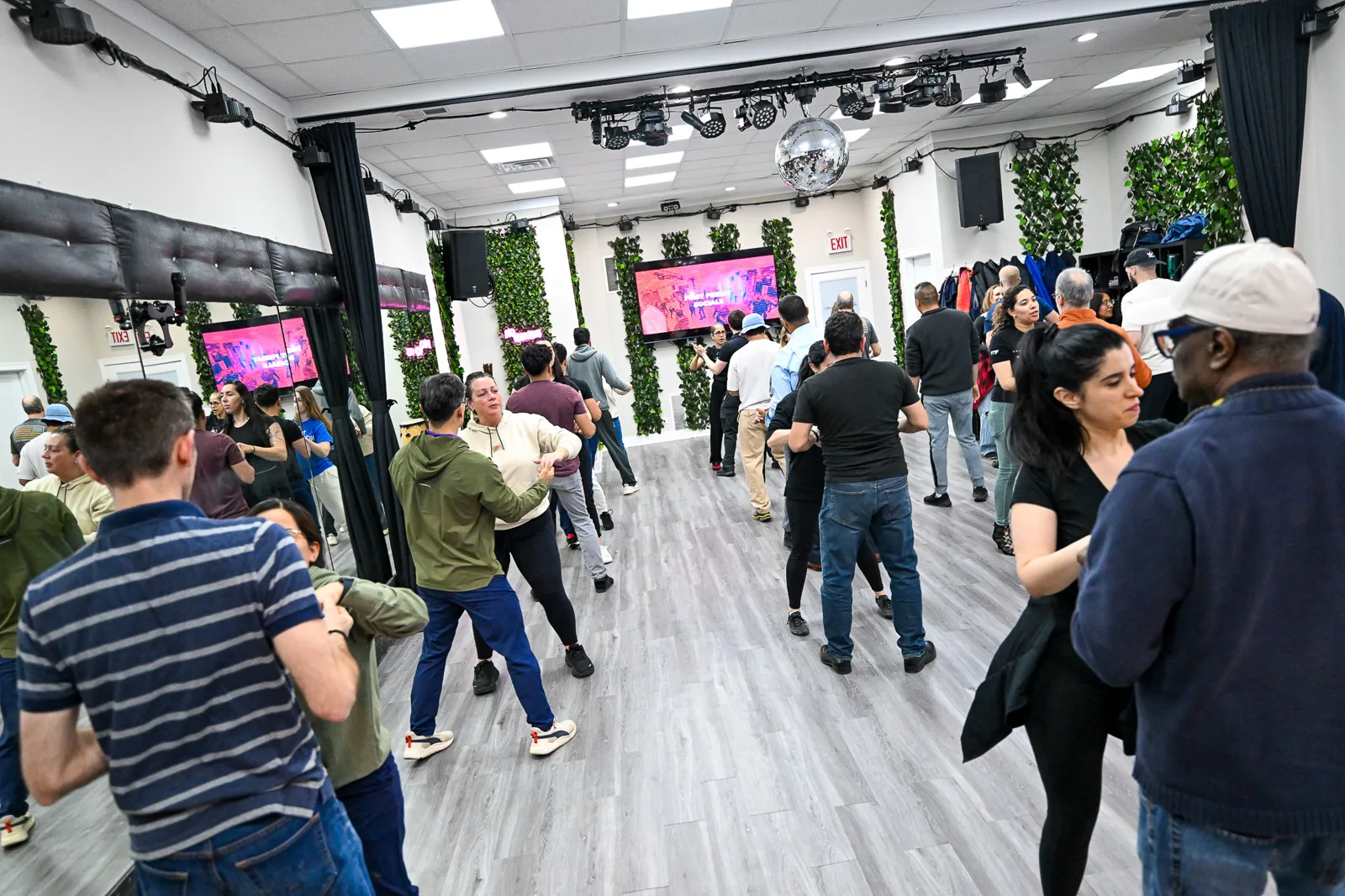
At Dennis PaSamba Dance Company in Chicago, we teach dancers how to connect their ears to their feet. Located at 4820 W. Irving Park Rd. in the Six Corners area of Irving Park, our studio offers free parking and a friendly environment. We break down musicality into easy exercises so you can identify beats quickly. Text or call 717-PaSamba to learn more about our upcoming dance sessions.
Mastering the rhythm of sonidero music opens the door to enjoying parties, social events, and club nights. Once you learn to count the eight-count structure, you can add turns, partner connection, and personal style without losing the timing. Clear timing gives you the freedom to relax, enjoy the music, and share great dances with your partners every time you step out on the dance floor.
Questions people ask
What beat do you start stepping on in sonidero music?
You usually start stepping on beat one of the eight-count cycle with your lead foot. You step through counts one, two, and three, then pause your feet on count four. You then step on counts five, six, and seven, pausing again on beat eight.
How is sonidero rhythm different from standard cumbia rhythm?
Sonidero rhythm uses the same basic eight-count timing as standard cumbia, but it features a slower tempo and pitch-shifted bass lines. The sound also includes DJ voiceovers and electronic effects over the güiro scrape. Finding beat one remains identical, even with the extra electronic sound layers.
How can I practice counting sonidero music at Dennis PaSamba Dance Company?
Our instructors guide you step by step through musicality exercises at our studio located at 4820 W. Irving Park Rd. in Six Corners, Irving Park. We feature free parking and hands-on instruction to help you catch the beat. Text or call 717-PaSamba to get more details about joining our dance community.
Visit the studio
Dennis PaSamba Dance Company
4820 W. Irving Park Rd., Chicago, IL 60641
Six Corners · Portage Park · Irving Park
dennispasamba.com · Text/Call 717-PASAMBA ((717) 727-2622)