
How Do You Control On-the-Beat Acceleration in Intermediate Salsa On1?
Salsa On1 timing relies heavily on the core breakdown of counts one and five. When you transition from beginner to intermediate dancing, music gets faster and patterns become more complex. You cannot simply move your feet faster without structure, or you will fall off the beat. True speed comes from precise weight placement and efficient movement choices on every single count. Understanding where your weight sits during counts one, two, and three gives you the ground stability needed to accelerate safely when the music demands it.
Acceleration in Salsa On1 happens within the musical grid, not outside of it. Many intermediate dancers make the mistake of rushing their basic step when a fast turn or spin is signaled. Instead, your feet must remain firmly anchored to the one-two-three, five-six-seven count. Sharp acceleration requires you to execute turns quicker within the allowed counts, giving you time to pause naturally on counts four and eight. At our studio, we practice drills that isolate upper body speed while keeping lower body timing completely grounded.
To accelerate on the beat effectively, lead and follow connections must remain clean and clear. Leads often force quick movements by pulling too hard, which throws the follower off timing. Followers sometimes jump ahead of the count because they anticipate a fast turn sequence. Intermediate training focuses on subtle frame tension, allowing smooth signals that trigger fast execution without breaking timing. When both partners respect the On1 structure, rapid turns feel effortless and stay locked into the rhythm of the song.
Footwork acceleration requires short, clean steps rather than larger strides across the dance floor. Taking steps that are too wide makes it physically impossible to catch the next beat when the tempo increases. By keeping your steps compact and directly under your hips, you minimize travel time between counts. This technique allows you to execute double turns, rapid shines, and quick direction changes while remaining strictly On1. Controlled footwork ensures you never scramble to find count one again.
Listening to the music plays a massive role in timing your acceleration correctly. Intermediate Salsa songs feature complex percussion layers, including the clave, congas, and timbales. Identifying the specific instrument driving the tempo helps you anticipate bursts of speed in the arrangement. When you train your ears to hear musical cues, your body naturally prepares for quick accelerations. You stop reacting late to turns and start executing fast moves cleanly on the exact beat intended by the musicians.
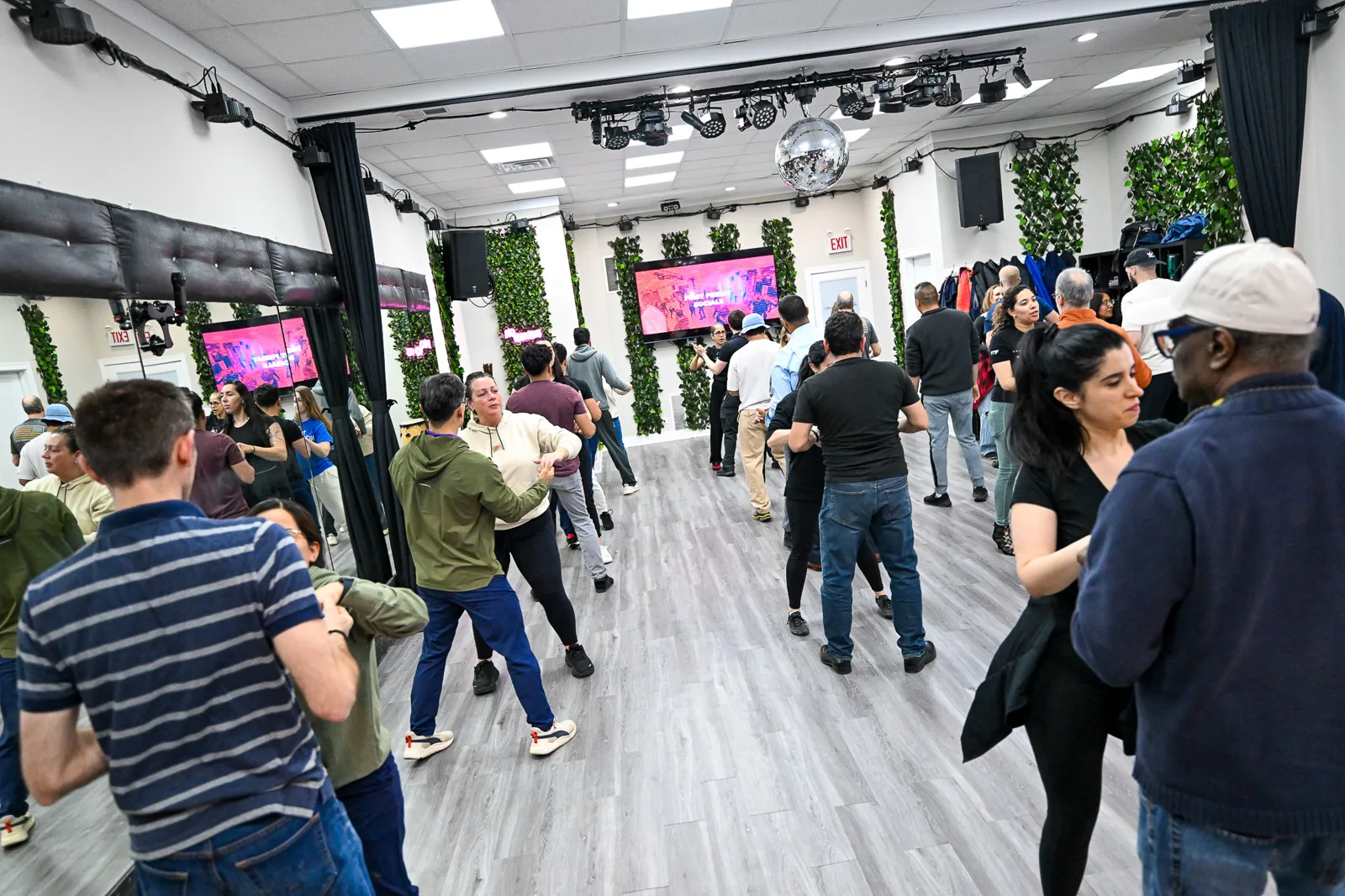
Practicing at Dennis PaSamba Dance Company gives you dedicated guidance to refine these advanced timing habits. Located at 4820 W. Irving Park Rd. in Chicago's Six Corners neighborhood, our studio provides a spacious floor and free parking for easy visits. We break down complex acceleration techniques into simple, repeatable steps that boost your social dance skills. Whether you want to sharpen your spins or lock into fast tempos, direct coaching makes all the difference. Text 717-PaSamba to get more details about our class schedules.
Building confidence with fast On1 Salsa takes consistent repetition under knowledgeable supervision. You will learn how to maintain your balance through quick directional shifts without dropping your connection. Over time, accelerating on the beat becomes second nature, allowing you to focus on styling and musicality. Texting 717-PaSamba connects you directly with our team so you can start working on your intermediate Salsa timing right away. Join us in Irving Park to elevate your dancing to the next level.
Questions people ask
What is the difference between rushing and on-the-beat acceleration in Salsa On1?
Rushing happens when a dancer moves ahead of the musical count, causing them to lose timing with their partner and the music. On-the-beat acceleration means executing a fast turn or footwork pattern quickly while keeping your core steps strictly tied to the 1-2-3, 5-6-7 rhythm. It relies on control, technique, and proper weight transfer rather than speed alone.
How do I stop losing my On1 timing when trying fast turn patterns?
To stay on timing during fast turns, focus on keeping your steps small and your core frame steady. Avoid taking wide strides that waste precious time between counts. Practicing slow spins with clean weight shifts helps build muscle memory so you can accelerate safely when the music speeds up.
Where can I take intermediate Salsa On1 timing classes in Chicago?
Dennis PaSamba Dance Company offers expert dance instruction at 4820 W. Irving Park Rd. in Chicago's Irving Park and Six Corners area, featuring free parking. We teach detailed timing and speed control techniques to help intermediate dancers excel on the social floor. Text 717-PaSamba for details on joining our upcoming sessions.
Visit the studio
Dennis PaSamba Dance Company
4820 W. Irving Park Rd., Chicago, IL 60641
Six Corners · Portage Park · Irving Park
dennispasamba.com · Text/Call 717-PASAMBA ((717) 727-2622)