
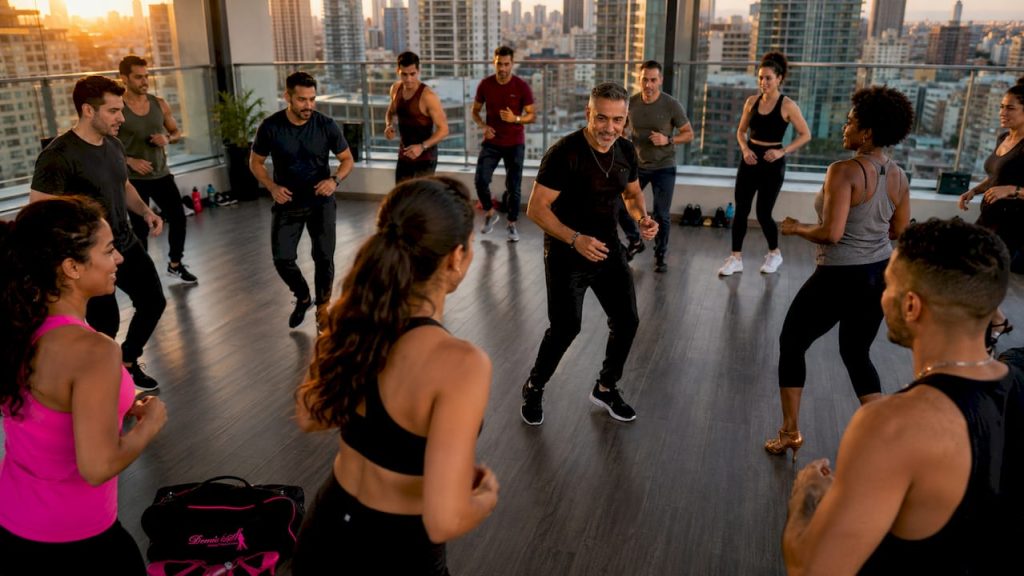
Salsa dance levels are defined skill stages that guide dancers from basic footwork to advanced musicality and styling. Most studios organize these stages into three main tiers: beginner, intermediate, and advanced, often labeled Level 1 through Level 3 and beyond. Understanding salsa dance skill levels helps you choose the right class, track real progress, and build confidence on the social dance floor. Whether you are brand new or have been dancing casually for years, knowing where you stand changes everything about how fast you grow.
What are the salsa dance levels explained by skill stage?
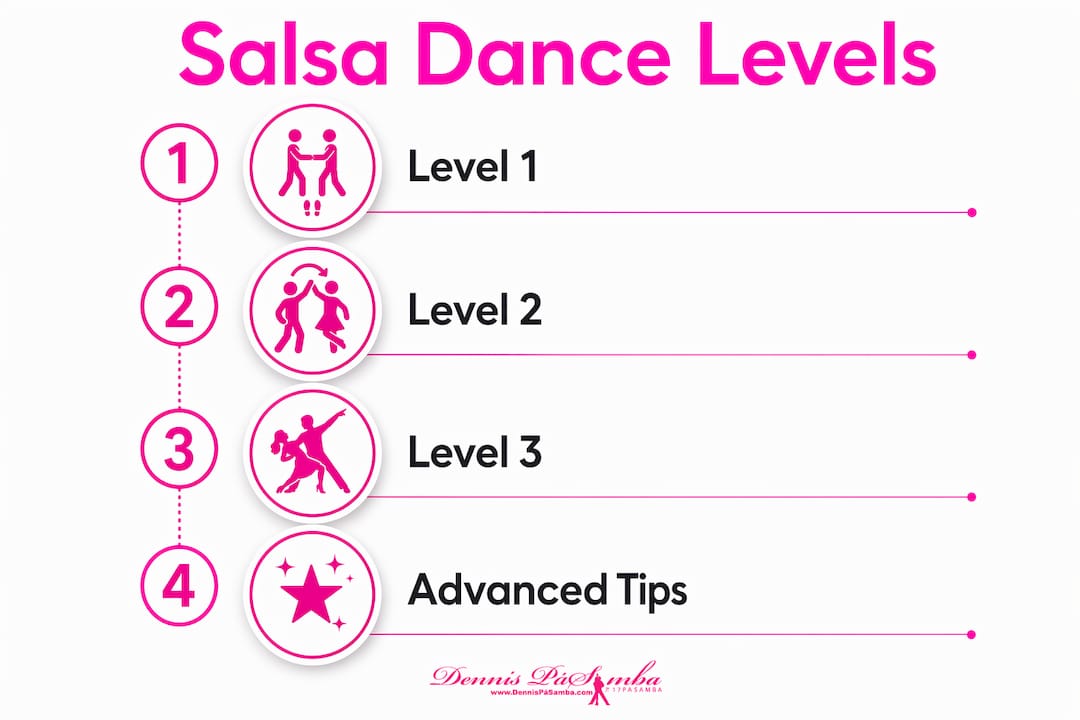
Salsa dance progression follows a clear structure built on the 8-count rhythm, counted as 1-2-3, 5-6-7. Every level builds on this foundation, adding complexity in technique, connection, and musical awareness. The three core tiers look like this:
- Level 1 (Beginner): Weight changes, basic footwork, posture, simple turns, and an introduction to partner connection. You learn to stay on beat and move with a partner without overthinking every step.
- Level 2 (Improver/Intermediate): More complex turn patterns, traveling steps, cleaner timing, and stronger lead-follow connection. You start reading your partner instead of just executing moves.
- Level 3 and above (Advanced): Intricate patterns, body styling, musical interpretation, and improvisation. You stop dancing steps and start dancing the music.
Most studios also offer Level 2.5 or “Intermediate Advanced” tracks for dancers who have outgrown Level 2 but are not yet fully comfortable at Level 3. This is common and completely normal.
The table below shows how skills build across the three main tiers.
| Level | Core Skills | What Changes |
|---|---|---|
| Level 1 (Beginner) | Basic step, timing, posture, simple turns | Learning to stay on beat with a partner |
| Level 2 (Intermediate) | Complex turns, traveling patterns, connection | Reading your partner, cleaner footwork |
| Level 3+ (Advanced) | Styling, musicality, improvisation | Dancing the music, not just the steps |
Pro Tip: If you can execute every move at your current level without thinking about the count, you are probably ready to test the next one.
Advancement readiness is based on skill mastery, not time spent in class. Level progression reflects a shift from learning moves to embodying rhythm and connection. That shift takes different amounts of time for every dancer.
How do instructors assess readiness to move between salsa levels?
Instructor assessments focus on timing consistency, partner connection, and comfort with current level moves. Knowing a pattern is not the same as owning it. Rushing progression causes bad habits that are genuinely hard to fix later. This is one of the most consistent findings across experienced salsa instructors.
The criteria instructors typically evaluate include:
- Timing: Can you stay on the 1 or the 2 consistently, even when distracted by a new partner?
- Connection: Does your lead or follow feel clear and comfortable, or are you muscling through patterns?
- Comfort: Are you executing current level moves without visible effort or hesitation?
- Musicality: Do you respond to changes in the music, or are you on autopilot?
Diagnostic approaches like the 90-Second Read assess connection at four levels: physical contact, clarity, musical touch, and flow. This kind of evaluation goes far beyond whether you can complete a turn sequence. It measures whether you are actually dancing with someone.
Technical traits like rhythm, timing, and musicality live in the body. They require consistent practice to develop correctly. Step memorization alone does not build them.
Pro Tip: Ask your instructor to watch you dance with three different partners in one class. Consistency across partners is the clearest sign you are ready to move up.
What practical tips help adult learners progress through salsa levels?
Adult learners progress fastest when they practice consistently and focus on quality over quantity. These six habits make the biggest difference:
- Show up regularly. Spaced repetition improves motor learning retention significantly compared to cramming sessions. Weekly classes beat monthly intensives every time.
- Rotate partners in class. Dancing with different people forces you to adapt your lead or follow. It builds real skill, not just familiarity with one person’s style.
- Wear the right shoes. Proper footwear means flat-bottomed or medium-heeled dress shoes with ankle support. Sneakers, clogs, and flip-flops work against your technique and increase injury risk.
- Take two levels in one evening. Repeating and overlapping levels is not failure. It is intentional skill building. Taking Level 2 and Level 3 back to back challenges you and reinforces what you already know.
- Focus on connection, not steps. Body awareness and partner sensitivity matter more than knowing twenty patterns. A dancer with ten moves and great connection outperforms one with fifty moves and poor timing.
- Ignore myths about fast promotion. Moving up quickly is not the goal. Readiness depends on demonstrating connection and timing, not just accumulating steps. Check out common beginner mistakes to avoid the traps that slow most dancers down.
No partner is needed to start. Studios like Dennis pasamba rotate partners in every group class, so you get variety built right into the session.
How do salsa levels connect with social dancing and performance?
Salsa dance class levels are not just academic categories. They directly shape your experience on a real dance floor. Each tier prepares you for a different kind of dancing environment.
- Beginner dancers build the fundamentals that make social dancing possible. Timing and basic footwork give you the confidence to say yes when someone asks you to dance at a Friday social.
- Intermediate dancers develop the fluidity and connection needed to navigate a crowded floor. You stop thinking about steps and start responding to your partner and the music in real time.
- Advanced dancers bring musicality, styling, and improvisation to both social settings and staged performances. Your dancing becomes expressive, not just technical.
Understanding your level also helps you choose the right events. A beginner who shows up to an advanced social may feel lost. An advanced dancer who stays in beginner classes gets bored and stops growing. Matching your level to your environment is how you stay motivated.
For dancers building toward performance, the jump from intermediate to advanced is where social confidence and stage presence start to merge. That is when salsa becomes genuinely personal. The role of music in Latin dance becomes central at this stage, not just background sound.
Key Takeaways
Salsa dance levels are skill-based stages that require mastering timing, connection, and musicality before advancing, not just accumulating time or steps.
| Point | Details |
|---|---|
| Three core levels | Beginner, intermediate, and advanced each require distinct skills before moving forward. |
| Mastery over speed | Instructors assess timing, connection, and comfort, not how fast you progress. |
| Spaced practice wins | Regular weekly classes build motor memory far better than occasional intensive sessions. |
| Overlap levels intentionally | Taking two levels in one evening reinforces skills and accelerates real growth. |
| Levels shape your social life | Matching your skill level to the right events and classes keeps you motivated and improving. |
What 33 years of teaching salsa levels taught me
Most dancers I meet want to skip to Level 3. I understand the impulse. Advanced looks exciting. But the dancers who rush past Level 1 almost always come back to fix the same three things: timing, posture, and connection. Those are Level 1 skills. Skipping them does not make them disappear. It just buries them under bad habits.
The progress you make at Level 1 and Level 2 is subtle. You will not feel like you are improving week to week. But one day you will dance with a new partner and realize you never thought about the count once. That is the moment the level actually landed. That is what mastery feels like.
I also see dancers treat level repetition as embarrassing. It is the opposite. The best dancers I have coached repeated levels on purpose. They wanted the foundation solid before adding anything on top. Patience at the early stages is not a weakness. It is the fastest path to dancing well.
Musical connection is the thing most people overlook entirely. You can memorize every pattern in the book and still look mechanical. The dancers who stand out are the ones who listen to the music and let it move them. That skill does not come from steps. It comes from time, attention, and a willingness to feel the rhythm before you perform it.
— Dennis pasamba
Ready to find your salsa level in Chicago?
Dennis pasamba is Chicago’s top-rated Latin dance studio with over 850 five-star Google reviews and 33 years of expert instruction. Classes run for every skill stage, from your very first step to advanced performance technique.
Not sure which level fits you? Grab the free Dance Studio Questions Checklist to know exactly what to ask before you sign up. Ready to get on the floor? Check out beginner salsa classes designed specifically for adults in Chicago. No partner needed. Singles and couples are both welcome. Great music, great people, and a clear path from Level 1 to the social floor.
FAQ
What are the main salsa dance levels?
Salsa dance levels are typically organized into three tiers: beginner (Level 1), intermediate (Level 2), and advanced (Level 3 and above). Each level builds on the previous one, adding complexity in turns, connection, and musicality.
How long does it take to move from beginner to intermediate salsa?
There is no fixed timeline. Instructors assess readiness based on timing consistency, partner connection, and comfort with current moves, not weeks spent in class.
Is it okay to repeat a salsa level more than once?
Repeating a level is common and recommended. It deepens your fundamentals and builds the muscle memory needed before adding more complex patterns.
Do I need a partner to take salsa classes?
No partner is needed. Most group salsa classes rotate partners throughout the session, which actually accelerates your skill development by exposing you to different leads and follows.
What shoes should I wear to a beginner salsa class?
Wear flat-bottomed or medium-heeled dress shoes with ankle support. Avoid sneakers, clogs, or flip-flops, as they restrict proper footwork and increase the risk of slipping.