
How Do You Move From Intermediate To Advanced Bachata Dancing?
Moving past the intermediate stage starts with mastering intricate musicality rather than just collecting more turn patterns. Intermediate dancers often focus heavily on complex turn sequences, but advanced dancers listen closely to the instruments. You need to recognize the syncopations, accents, and rhythmic changes created by the requinto guitar, bongo, and bass. When you adapt your footwork and body movement to these specific musical cues, your social dancing immediately transforms into a higher art form.
Body movement and isolation are essential keys to making this major skill transition smoothly. Advanced bachata relies heavily on fluid hip action, ribcage isolation, and subtle shoulder rolls. Intermediate dancers sometimes move their limbs without fully engaging their core muscles. By spending time practicing isolated body movements in front of a mirror, you build the control needed for complex sensual moves and sharp traditional hits. This precise control makes every lead clearer and every follow smoother.
Partner connection changes dramatically when you level up your bachata skills. An advanced lead uses minimal frame tension, micro-leads, and subtle weight shifts to guide their partner effortlessly across the floor. An advanced follow learns to anticipate less, listen more, and style without compromising the connection. Focus on maintaining a gentle yet responsive frame during social dances. This high level of sensitivity creates a seamless dialogue between partners, making complicated routines feel effortless and dynamic.
Footwork speed and syncopated timing separate intermediate dancers from advanced dancers. To push your boundaries, practice rapid directional changes, double-time steps, and intricate taps off the beaten count. Do not just execute footwork variations during solitary practice; integrate them smoothly into your social dancing without disrupting your partner. Mastering clean transfers of weight keeps your footwork sharp, grounded, and steady. This control gives you the confidence to improvise spontaneously when the rhythm speeds up.
Clean technique and intentional styling elevate your social dance presence significantly. Advanced dancers do not perform random arm styling or forced head rolls just to look busy. Every line, extension, and movement serves a purpose and aligns with the tempo. Take time to slow down your movements during practice to check your posture, balance, and hand placement. Refining these subtle details ensures that your dancing looks polished, effortless, and elegant on any social floor.
Consistency and focused feedback play huge roles in reaching the advanced tier of bachata dancing. Social dancing every week helps build muscle memory, but dedicated instruction catches habits that hold you back. Working with experienced instructors allows you to receive personalized corrections on subtle lead-follow mechanics. Dedicated studio time ensures that you break through plateaus faster. Consistent practice coupled with expert guidance transforms your raw energy into controlled, high-level social dancing performance.
Patience is required throughout this process because progress is rarely a straight line. Dancers often hit a plateau where techniques feel awkward before they feel natural. Embrace the awkward phases as proof that your body is adapting to new motor patterns. Keep testing your skills in different environments and with partners of various experience levels. Over time, techniques that required intense concentration become second nature, allowing you to fully enjoy the dance.
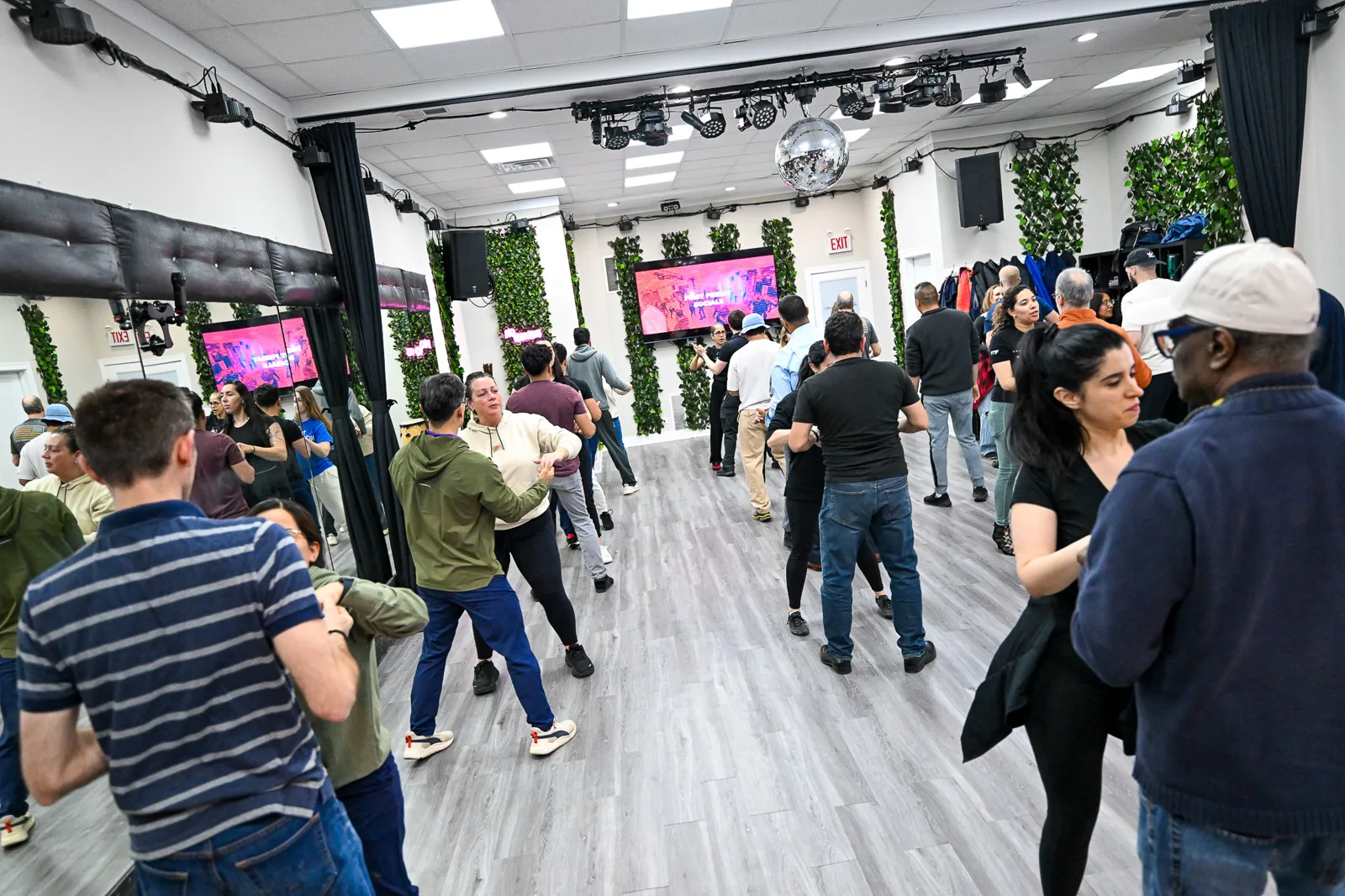
Our studio provides a supportive environment to guide you through every step of this journey. Dennis PaSamba Dance Company is conveniently located at 4820 W. Irving Park Rd. in Chicago, right in the Six Corners area of Irving Park with free parking available. Whether you want to refine your sensual technique or sharpen your traditional footwork, personalized instruction accelerates your progress. Text or call 717-PaSamba to learn more about class options and schedules today.
Questions people ask
How do I know if I am ready for advanced bachata?
You are ready when basic turns, timing, and fundamental patterns feel automatic during social dances. You should also be comfortable leading or following partners of various skill levels without losing the beat. Text 717-PaSamba to ask our team about getting an assessment.
What is the main difference between intermediate and advanced bachata?
Intermediate dancers focus on executing remembered patterns and basic timing. Advanced dancers prioritize musicality, deep connection, body isolations, and spontaneous improvisation based on the song's instruments. Contact us at 717-PaSamba for details on mastering these concepts.
Where can I practice advanced bachata techniques in Chicago?
Dennis PaSamba Dance Company offers expert instruction at 4820 W. Irving Park Rd. in Six Corners, Irving Park, featuring free parking. Text or call 717-PaSamba today to get details on our upcoming training opportunities.
Visit the studio
Dennis PaSamba Dance Company
4820 W. Irving Park Rd., Chicago, IL 60641
Six Corners · Portage Park · Irving Park
dennispasamba.com · Text/Call 717-PASAMBA ((717) 727-2622)