

Latin dance is defined as an umbrella term for a family of partner dances originating mainly from Latin America, characterized by energetic hip movements, rhythmic timing, and close social connection. The core repertoire includes Salsa, Bachata, Merengue, Cha-Cha, Cumbia, and Kizomba. These styles range from fast and syncopated to slow and romantic, but all share one thing: they are built for people to enjoy together. Whether you are curious about what is latin dance or ready to take your first class, this guide covers every style, beginner tip, and cultural detail you need.
What is Latin dance and where does it come from?
Latin dance is a product of rich cultural fusion blending indigenous, African, and European traditions. That mix gave birth to the rhythms and movement styles you hear and see today. Over centuries, traditional folk dances evolved into the modern social and competitive forms practiced worldwide.
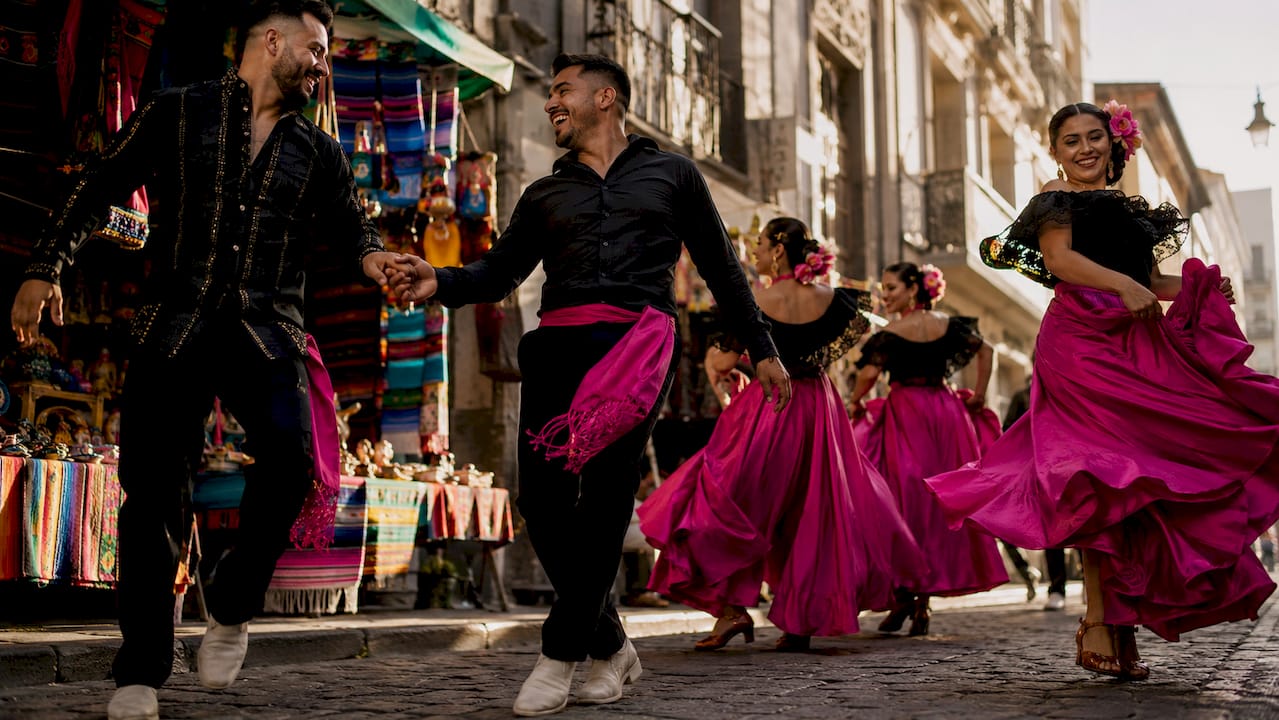
The term “Latin dance” covers both social dancing and competitive DanceSport. Social Latin dance happens at clubs, studios, and community events. Competitive Latin dance, governed by organizations like the World Dance Council, follows strict technique and choreography rules. Most beginners start on the social side, where the atmosphere is welcoming and the learning curve is gentle.
Latin dance culture is also deeply tied to its music. Salsa music draws from Cuban son and jazz. Bachata comes from the Dominican Republic. Merengue is the national dance of the Dominican Republic. Each style has its own sound, and learning to recognize that sound is half the battle when you are starting out.
What are the main types of Latin dances and their unique features?
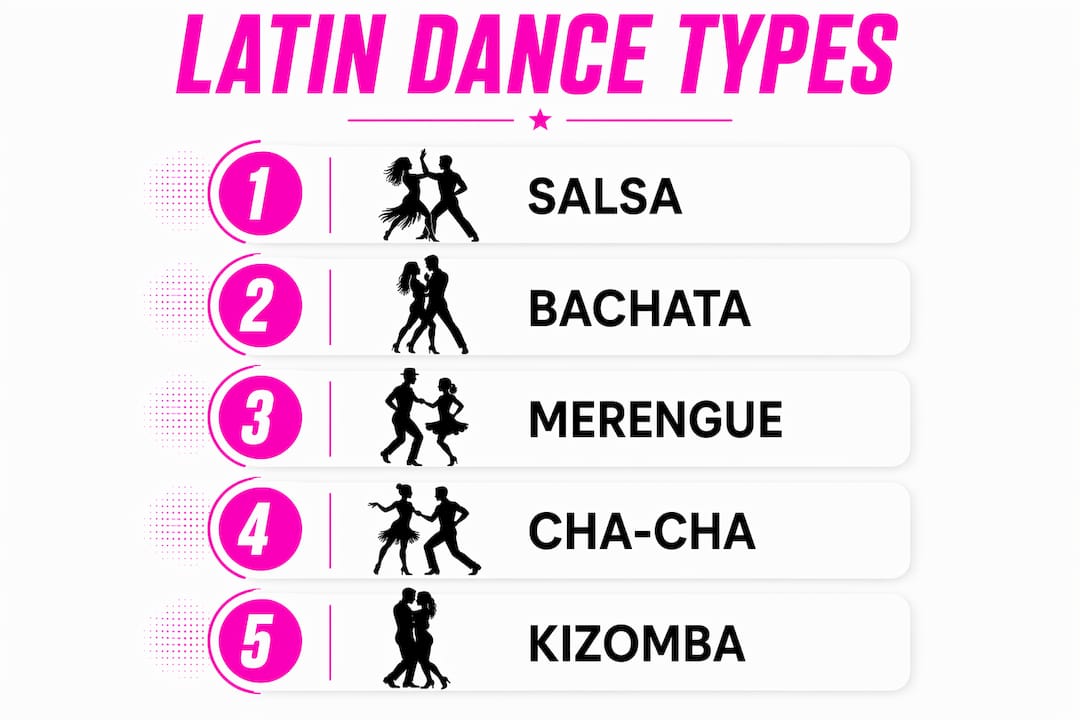
Latin dance styles each have a distinct tempo, footwork pattern, and cultural personality. Knowing the differences helps you pick the right starting point.
Salsa
Salsa is fast-paced with syncopated footwork and a strong forward energy. It comes in regional styles including LA style, Cuban style, and New York style. LA style is linear and showy. Cuban style is circular and grounded. New York style, also called On2 or Mambo style, emphasizes a strong back break on beat 2. Salsa suits high-energy learners who enjoy quick footwork and expressive movement.
Bachata
Bachata is slower and romantic, with simple footwork and hip movements on every fourth beat. It originated in the Dominican Republic and has grown into one of the most popular social dances worldwide. Basic Bachata steps can be learned in as little as 10 minutes, making it one of the most beginner-friendly options available. The close connection and gentle rhythm make it a top choice for couples.
Merengue
Merengue uses a simple weight change on every beat, which makes it the easiest Latin dance to pick up for absolute beginners. The steady, predictable rhythm helps new dancers find their footing fast. It is a great first dance for anyone who feels nervous about coordination.
Cha-Cha
Cha-Cha is playful and flirtatious, built around a distinct triple-step rhythm called the “cha-cha-cha.” It sits between Salsa and Merengue in terms of speed and complexity. The syncopated footwork gives it a fun, bouncy character that stands out on any dance floor.
Other styles worth knowing
Kizomba is a slower, close-embrace dance from Angola that has found a strong following in Latin social dance communities. Cumbia, popular across Latin America and Chicago’s dance scene, has a rolling, circular footwork pattern that feels natural quickly. Samba brings Brazilian carnival energy with fast hip action and bounce.
Here is a quick comparison to help you choose:
| Dance | Tempo | Beginner-friendly | Best for |
|---|---|---|---|
| Merengue | Slow to medium | Very high | Absolute beginners |
| Bachata | Slow to medium | Very high | Couples and social dancers |
| Cha-Cha | Medium | High | Playful, rhythmic learners |
| Salsa | Fast | Medium | High-energy learners |
| Kizomba | Slow | Medium | Close-connection dancers |
| Cumbia | Medium | High | Social and group settings |
Pro Tip: If you are brand new, start with Merengue or Bachata. Both have simple, predictable rhythms that build your confidence fast before you tackle faster styles like Salsa.
How do beginners learn Latin dance?
A typical beginner lesson lasts 30–60 minutes covering basic steps, then transitions into 2–3 hours of open social dancing with partner rotation. That structure is intentional. You learn the moves, then immediately practice them with real people in a real setting.
Partner rotation is standard in group classes. You switch partners every few minutes, which exposes you to different leads and follows. That variety accelerates learning faster than practicing with one person all night. It also builds social confidence quickly.
The most common beginner misconception is that you need prior dance experience or a partner to start. You do not need either. Learning Latin dance is like learning a new language. You start with simple phrases, which are basic steps, in a group setting with no pressure. The community around you is there to help, not judge.
Here is what a typical beginner journey looks like:
- Week 1–2: Learn basic footwork and weight transfers in Merengue or Bachata
- Week 3–4: Add simple partner connection and leading or following cues
- Week 5–6: Attend your first social dance night and practice with multiple partners
- Month 2+: Layer in turns, styling, and a second dance style
Pro Tip: Focus on foundational rhythm and weight transfer before attempting arm styling or turn patterns. Over-focusing on flashy moves early leads to poor balance and difficulty connecting with partners.
Social Latin dance vs. competitive Latin dance
Social Latin dance prioritizes enjoyment, musicality, and community over technique scores. Competitive DanceSport, by contrast, focuses on polished routines, specific costumes, and judged performances. The two worlds share the same dances but serve very different purposes.
Social dancing is improvisational. You respond to your partner and the music in real time. No two dances are the same. That spontaneity is what makes a Latin dance party or social night so exciting. You are not performing a rehearsed routine. You are having a conversation through movement.
Here is how the two settings differ:
- Social Latin nights: Open floor, partner rotation, mix of Salsa, Bachata, Merengue, Cha-Cha, and Kizomba; anyone can join
- Competitive DanceSport: Choreographed routines, strict technique requirements, judged by panels, specific dress codes
- Social etiquette: Accepting most dance invitations is the norm; declining is rare and never taken personally
- Competitive etiquette: Structured heats, formal registration, and performance-focused preparation
Social dancing is far more accessible for beginners. You show up, you dance, and the community welcomes you at whatever level you are at.
How to start engaging with Latin dance culture
The fastest way to start is to attend a beginner class followed by a social dance night. Many studios, including Dennis pasamba in Chicago, structure their Friday socials exactly this way. You get instruction first, then immediate practice in a real social setting.
When you arrive at a social, ask people to dance. Most experienced dancers love dancing with beginners. The unwritten rule in Latin dance communities is that accepting invitations is the norm, and the community actively encourages skill sharing. Nobody expects perfection from a newcomer.
Here are five practical steps to get started:
- Pick one style first. Choose Merengue or Bachata as your entry point based on their simple rhythms.
- Sign up for a beginner group class. Group classes give you structure, feedback, and instant social connection.
- Attend a social dance night. Practice what you learned with real partners in a low-pressure environment.
- Learn the music. Spend time listening to Salsa, Bachata, and Merengue tracks so you can recognize each style by ear. The role of music in Latin dance is as important as the footwork itself.
- Be consistent. Two classes per week builds momentum faster than one class every two weeks.
Pro Tip: Check out beginner dance mistakes before your first class. Knowing what to avoid from day one saves weeks of relearning bad habits.
Key Takeaways
Latin dance is a family of partner dances from Latin America, and Merengue and Bachata are the most beginner-friendly styles to start with before progressing to Salsa or Cha-Cha.
| Point | Details |
|---|---|
| Latin dance definition | An umbrella term for partner dances from Latin America with rhythmic hip movements and social connection. |
| Best styles for beginners | Merengue and Bachata are rated most beginner-friendly due to simple, predictable rhythms. |
| How lessons work | Beginner classes run 30–60 minutes, followed by open social dancing with partner rotation. |
| Social vs. competitive | Social Latin dance is improvisational and community-focused; competitive DanceSport is technique-driven and judged. |
| No partner needed | Group classes use partner rotation, so you can start alone and still get full practice. |
Why Latin dance changed how I think about learning
After 33 years of teaching Salsa, Bachata, Cumbia, and more at Dennis pasamba in Chicago, the question I hear most from beginners is: “Am I too old, too stiff, or too uncoordinated to do this?” My honest answer is always the same. No.
What I have seen over three decades is that the people who progress fastest are not the ones with natural rhythm. They are the ones who show up consistently and stop worrying about looking good. Latin dance rewards presence over perfection. The moment you stop watching your feet and start feeling the music, everything clicks.
The social side of Latin dance is also something most people underestimate. Students come in nervous and leave with a room full of new friends. The community at a Latin social night is genuinely one of the most welcoming spaces you will find anywhere. People share what they know. Experienced dancers seek out beginners on purpose because it sharpens their own leading and following skills.
My advice to anyone starting out: pick one style, commit to two months, and attend at least one social night per week. You will surprise yourself. The growing popularity of Latin dance is not a trend. It is people discovering that movement, music, and community are genuinely good for you.
— Dennis pasamba
Ready to try your first Latin dance class in Chicago?
Dennis pasamba is Chicago’s top-rated Latin dance studio with over 850 five-star Google reviews and 33 years of expert instruction. Whether you want to learn Salsa, Bachata, or Cumbia, beginner classes are open now with no partner required.
New classes are starting now and are designed specifically for adults who have never danced before. You get structured instruction, a welcoming community, and immediate practice at Friday social nights. Singles and couples are both welcome. Join beginner classes now and take your first step on the dance floor tonight. Not sure where to begin? Adult evening classes in Chicago are the perfect low-pressure entry point.
FAQ
What is Latin dance in simple terms?
Latin dance is an umbrella term for partner dances from Latin America, including Salsa, Bachata, Merengue, and Cha-Cha, all defined by rhythmic hip movements and social connection.
Which Latin dance is easiest for beginners?
Merengue and Bachata are the most beginner-friendly Latin dances. Merengue uses a simple weight change on every beat, and basic Bachata steps can be learned in as little as 10 minutes.
Do I need a partner to start Latin dance classes?
No partner is needed. Group Latin dance classes use partner rotation, so you practice with multiple people throughout the lesson and build skills faster than dancing with one person.
What is a Latin dance party or social night?
A Latin dance social is an open-floor event where dancers practice Salsa, Bachata, Merengue, Cha-Cha, and Kizomba with rotating partners. Most socials run from around 9 p.m. until midnight and welcome all skill levels.
How long does it take to learn Latin dance basics?
Most beginners pick up basic footwork in their first 1–2 classes. Building confidence for social dancing typically takes 4–6 weeks of consistent practice in group classes followed by social nights.