
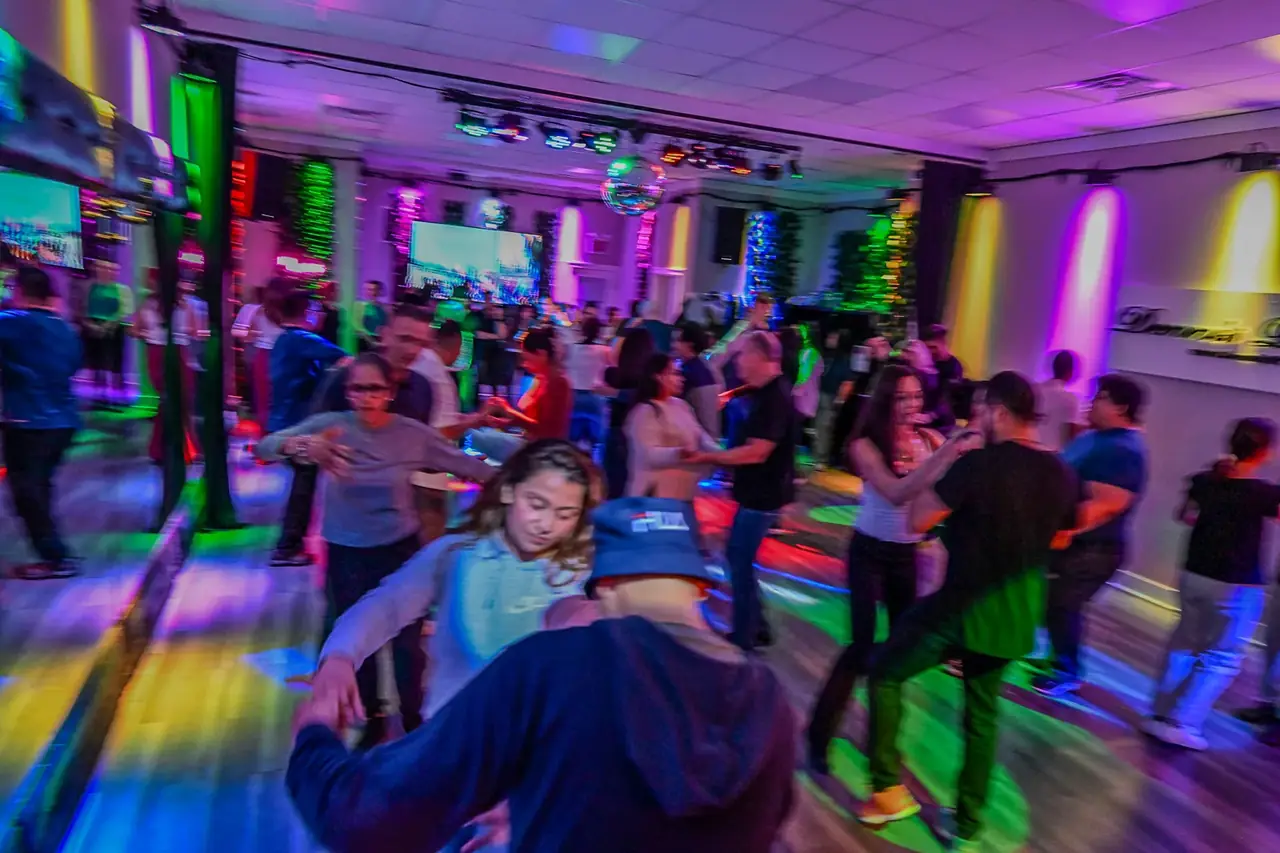
Bachata is slower
Bachata music usually sits at a relaxed tempo, and the basic repeats a simple side-to-side pattern. Beginners often feel comfortable dancing a full song after the first class.
Salsa has faster turns
Salsa moves quicker and builds around turns and the cross-body lead. It takes a little longer to feel smooth, but many dancers love the energy once it clicks.
Which to start with
If you want an easy first win, start with bachata. If you want a challenge and plenty of turns, start with salsa. Lots of students take both, and a second style is $55.
Understanding the Rhythm
Bachata has a distinctive 4-count rhythm, often described as 'one, two, three, tap'. The tap is a key characteristic, where one foot touches the floor without weight. This simple counting makes it very accessible for new dancers. You can quickly pick up the basic step and start enjoying the music. The rhythm feels smooth and romantic, perfect for closer partner connection.
Salsa also uses an 8-count rhythm, but it's usually broken down into 'quick, quick, slow' over six steps, with two steps reserved for a pause or tap. There are different styles of salsa, like On1 or On2, which dictate when the break step occurs. This creates a more dynamic and intricate feel. The musical accents often drive the dancer to move in sync with specific instruments, adding to the excitement.
Musicality and Instruments
Bachata music typically features prominent guitars, especially a lead guitar playing melodic lines. A bongo or güira provides the percussive backbone. The lyrics often tell stories of love and heartbreak, contributing to the dance's emotional depth. The instrumentation tends to be simpler, allowing the dancers to focus on connection and subtle body movements. This creates a relaxed and intimate atmosphere on the dance floor. Many popular bachata songs are easy to identify by their guitar riffs.
Salsa music is richer in instrumentation, featuring trumpets, trombones, piano, bass, and a full percussion section including congas, timbales, and maracas. The interplay between these instruments creates layers of sound that inspire complex footwork and turns. The energetic brass sections often cue faster movements and powerful shimmies. Understanding the different instruments can help you interpret the music while dancing. It's a vibrant sound that fills the room and encourages lively expression.
Dance Floor Interaction
Bachata is generally danced in a closer, more intimate hold. This close proximity allows for subtle lead-follow cues and enhanced body movement. Dancers often incorporate body rolls and hip movements that reflect the sensual nature of the music. The focus is on connection and feeling the rhythm together. It's a wonderful dance for social settings where you want to connect with your partner without large, expansive movements. Many find the close hold comforting and enjoyable.
Salsa allows for a wider range of holds, from open to closed, and often involves more traveling across the dance floor. The emphasis is on turns, spins, and intricate patterns. Leads guide their partners through a series of energetic moves, often breaking apart and coming back together. While connection is still important, there's more room for individual styling and flair. This makes salsa a very dynamic and exciting dance to watch and perform. It encourages playful interaction and a sense of showmanship.
Questions people ask
Where can I learn salsa?
See our salsa classes page for the 4-week salsa course.
Do I need special shoes for bachata or salsa?
Comfortable shoes that allow you to pivot easily are best. Many dancers prefer dance shoes, but smooth-soled street shoes work well for beginners.
Can I switch between bachata and salsa classes?
Yes, many students enjoy learning both styles. A second style in the same session is available at a reduced rate.
Visit the studio
Dennis PaSamba Dance Company
4820 W. Irving Park Rd., Chicago, IL 60641
Six Corners · Portage Park · Irving Park
dennispasamba.com · Text/Call 717-PASAMBA ((717) 727-2622)