
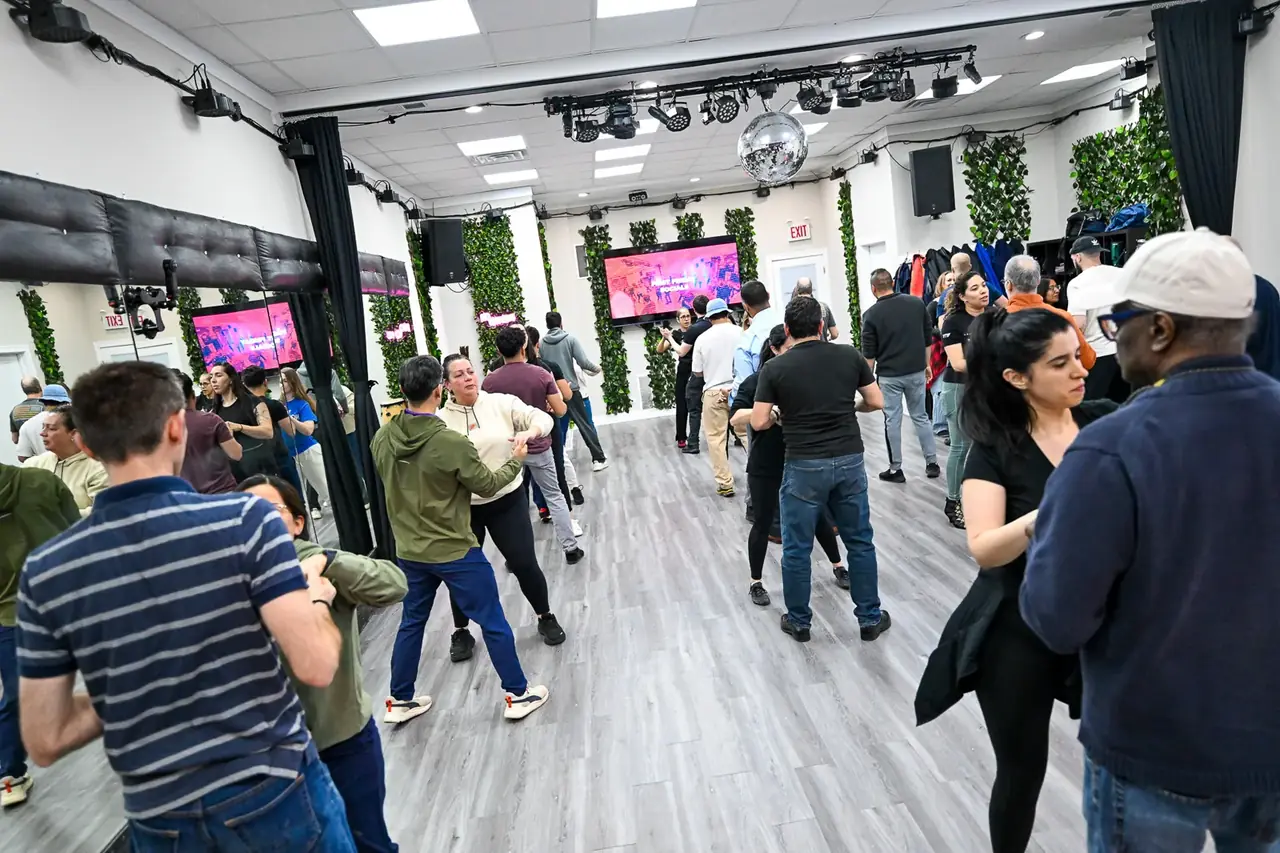
Why can a mirror make dance turns feel disorienting?
During a turn, your brain combines information from your eyes, inner ears, and body to judge movement and balance. A mirror adds a moving image to that mix. If your eyes follow your reflection, the visual information may be harder to interpret as you rotate. That can leave you feeling briefly unsure of your direction or position. Mirrors do not bother every dancer, but they can make turning feel more confusing for some people.
Watching yourself throughout a turn is different from using a steady visual reference. Your reflected face and shoulders move as you move, so they are not fixed points in the room. Trying to check your alignment in the mirror while rotating also divides your attention. You may lose track of where you intended to finish. The issue is often not the mirror alone, but the effort to monitor your reflection while also managing the turn.
Spotting can help organize your visual focus during many dance turns. It means choosing a fixed reference, keeping your gaze there briefly, and returning your eyes to it as your head completes the rotation. If you are learning near a mirror, a stationary mark on the wall beside it may be easier to use than your own reflection. Spotting takes practice, and it does not guarantee that you will never feel dizzy or disoriented.
A mirrored room can also show other dancers moving behind or beside you. Those reflections may draw your eyes away from your chosen reference, especially when you are still learning to turn. Facing a less visually busy part of the room can reduce that distraction. If your instructor agrees, try a simple turning exercise facing away from the mirror. Notice whether your sense of direction feels clearer without the extra movement in your view.
To explore whether the mirror contributes to the feeling, keep the comparison gentle. Try a slow partial turn near a stable support, first with the mirror in view and then facing a plain wall. Pause between attempts and keep the movement similar. Do not keep spinning to prove a point. Feeling steadier away from the mirror suggests that visual input may play a role, though this comparison cannot establish the cause of dizziness.
Mirrors can still be useful for checking posture and alignment before or after a turn. You do not have to watch your reflection during every moment of movement to benefit from one. An instructor can help you separate mirror checks from turning practice and choose an appropriate visual reference. At Dennis PaSamba Dance Company, you can ask about working on mirror-related turning discomfort. Text 717-PaSamba for lesson details and explain what you notice when you turn.
If you become disoriented, stop turning and give yourself time to feel steady before moving again. Sit down if you feel unbalanced, and avoid practicing close to obstacles. Mirrors are only one possible contributor to dizziness, so do not assume that every episode comes from reflections. Seek medical advice if symptoms persist, recur, happen outside dance practice, or come with other concerning symptoms. Turning practice should not mean pushing through a feeling that makes you unsafe.
Questions people ask
Should I look at my reflection while turning?
Following your moving reflection can make it harder to maintain a clear visual reference. For turns that use spotting, ask your instructor to help you choose a fixed point instead of tracking your reflected face.
Does feeling disoriented near a mirror mean my turning technique is wrong?
No, mirror-related disorientation does not automatically mean your technique is wrong. Visual distractions and sensitivity to motion can also affect how turning feels. An instructor can observe your movement, but persistent dizziness needs medical advice rather than a technique assumption.
Do I need to avoid mirrors completely if they make turns confusing?
Not necessarily; you may find it helpful to use the mirror before and after a turn rather than during it. Practice facing away from it when appropriate, with your instructor's guidance. Stop if you feel unsteady instead of forcing yourself to adjust.
Visit the studio
Dennis PaSamba Dance Company
4820 W. Irving Park Rd, Chicago, IL 60641
Six Corners · Portage Park · Irving Park
dennispasamba.com · Text/Call 717-727-2622 (717-727-2622)