
How Does Sonidero Cumbia Differ From Traditional Mexican Cumbia?
Traditional Mexican Cumbia grew out of Colombian cumbia but took on its own identity in Mexico. Bands perform with live brass, electric guitars, bass, and percussion instruments like congas and güiros. The tempo is bright, steady, and energetic. Dancers enjoy crisp turns, smooth footwork, and a continuous bounce. It is played at family parties, weddings, and dance halls across the country. Dancers love its cheerful tone and straightforward musical structure that keeps everyone moving on the floor.
Sonidero Cumbia emerged from urban working-class neighborhoods in Mexico City like Tepito and Peñón de los Baños. This unique subgenre relies on sound system operators called sonideros. Instead of just playing a record, the sonidero slows down the pitch of the song. They pitch-shift the music to create a deep, heavy groove. This slower tempo gives the dance a grounded, relaxed, and rhythmic feel that lets couples take their time on every step.
Another massive difference is the live voice of the sonidero DJ. During a Sonidero Cumbia track, the DJ talks directly over the music using a pitch-shifted, echo-heavy microphone. They shout out greetings to friends, clubs, and neighborhoods while the track plays. They also trigger electronic sound effects, sirens, and delays. In contrast, standard Mexican Cumbia focuses purely on the recorded or live band vocals without an MC talking over the beats.
The instrumentation in Sonidero Cumbia often relies heavily on electronic synthesizers and pitch-bent accordions. While classic Mexican Cumbia uses warm live instruments and traditional accordion playing, Sonidero uses digital keyboards to create swirling, hypnotic melodies. This sound design gives Sonidero a modern, psychedelic edge. Dancers react to these unique synthesizer lines by adding stylish arm movements, slow turns, and relaxed hip rolls that match the lower tempo perfectly.
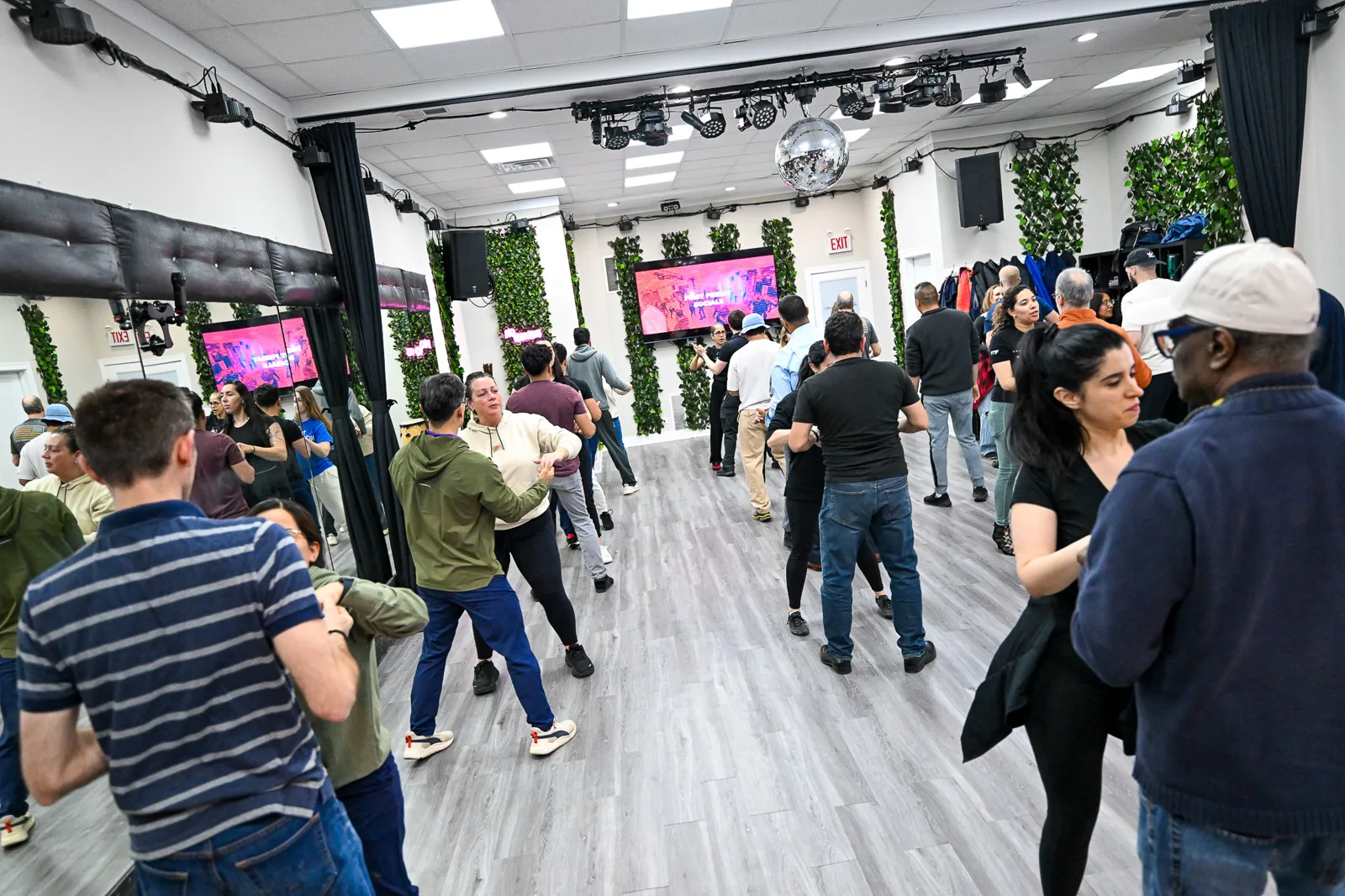
On the dance floor, these musical differences shape how you move with a partner. Standard Mexican Cumbia encourages quick turn patterns, lively footwork, and dynamic momentum across the floor. Dancers follow a crisp rhythm that keeps energy high. Sonidero Cumbia invites a smoother, closer connection with less rush. Dancers focus on deep rhythmic sway, subtle weight shifts, and stylish hand play. The relaxed pace allows dancers to express feelings with control.
Both styles are celebrated in Chicago dance communities. Whether you hear classic Mexican Cumbia bands or heavy Sonidero beats at a local venue, learning the rhythm will boost your confidence. At Dennis PaSamba Dance Company in Six Corners, Irving Park, we help dancers connect with Cumbia music and improve their footwork. You can practice your moves in a friendly environment with free parking right at our studio.
Understanding the music helps you adapt your dance style to any social event. When you recognize the sonidero shout-outs or the bright brass of traditional cumbia, you know how to match your partner's energy. Ready to start dancing? Text or call 717-PaSamba to get full details about our schedule and private sessions. Our instructors in Chicago are excited to welcome you to the floor.
Questions people ask
What is the main vocal difference between Mexican Cumbia and Sonidero Cumbia?
Standard Mexican Cumbia features traditional song lyrics performed by a band singer. In Sonidero Cumbia, a DJ speaks live over the music with echo effects and sends out personal greetings. This gives Sonidero a distinct sound system party vibe.
Is Sonidero Cumbia slower to dance to than regular Mexican Cumbia?
Yes, Sonidero Cumbia is intentionally played at a lower pitch and slower tempo. This relaxed rhythm allows dancers to focus on smooth steps, deep hips, and stylish partner work. Regular Mexican Cumbia has a faster, bouncy tempo.
Where can I learn to dance Cumbia in Chicago?
Dennis PaSamba Dance Company offers dance instruction at 4820 W. Irving Park Rd. in Chicago with free parking available. Text 717-PaSamba to learn more about our current schedule and get dancing with us today.
Visit the studio
Dennis PaSamba Dance Company
4820 W. Irving Park Rd., Chicago, IL 60641
Six Corners · Portage Park · Irving Park
dennispasamba.com · Text/Call 717-PASAMBA ((717) 727-2622)