
What Makes Sonidero Cumbia Different From Colombian Cumbia?
Musical origins and sound style create the first major distinction between these genres. Colombian Cumbia began as a traditional courtship dance along the Caribbean coast of Colombia. It features acoustic instruments like big drums, flutes, and accordion melodies. Sonidero Cumbia originated in the working-class neighborhoods of Mexico City. Sound system operators, known as sonideros, modified the traditional sound. They lowered the speed and pitch of Colombian tracks to create a much slower, heavier groove.
In traditional Colombian Cumbia, live bands perform the music on stage for dancers. In Sonidero culture, the DJ is the star of the night. Sonideros play recorded vinyl or digital tracks through massive audio systems. Crucially, sonideros talk over the music using pitch-shifted microphones during songs. They send live shout-outs to dancers, clubs, and neighborhoods. This creates an interactive street party atmosphere that you will not find in original Colombian style.
Colombian Cumbia moves at a steady, medium-to-fast tempo. The footwork relies on a smooth shuffling step that reflects its historical origins. Dancers maintain an upright posture with gentle hip motion. Sonidero Cumbia is noticeably slower. Because the music is pitched down, the steps become grounded and relaxed. Dancers sink deeper into their knees, using sharp footwork variations and weight shifts that match the slower beats perfectly.
Traditional Colombian Cumbia is historically a group or partner courtship dance focusing on circular movement around each other. Sonidero Cumbia evolved into a dynamic social partner dance. It includes intricate hand turns, spin combinations, and creative arm wraps influenced by other popular Latin dances. Partners stay close while executing continuous open-to-closed position changes, making it a favorite style in modern social dance clubs.
When you watch Colombian Cumbia, you notice graceful arms, smooth torso motion, and rhythmic swaying. Sonidero Cumbia emphasizes dramatic footwork, called punteos and trancados, along with low dips and stylized turn combinations. Dancers often accent the heavy basslines with quick tap steps. The styling is expressive, urban, and designed to show off fancy footwork to the audience watching around the social floor.
Listening to Colombian Cumbia highlights bright accordion melodies, gaitas, and crisp percussion like the tambora and maracas. Sonidero tracks often add electronic synthesizer effects, electric bass, and altered vocals on top of classic accordion riffs. This blend of electronic sound effects with traditional tropical rhythms creates the distinct audio identity that defines Mexican sound system culture today.
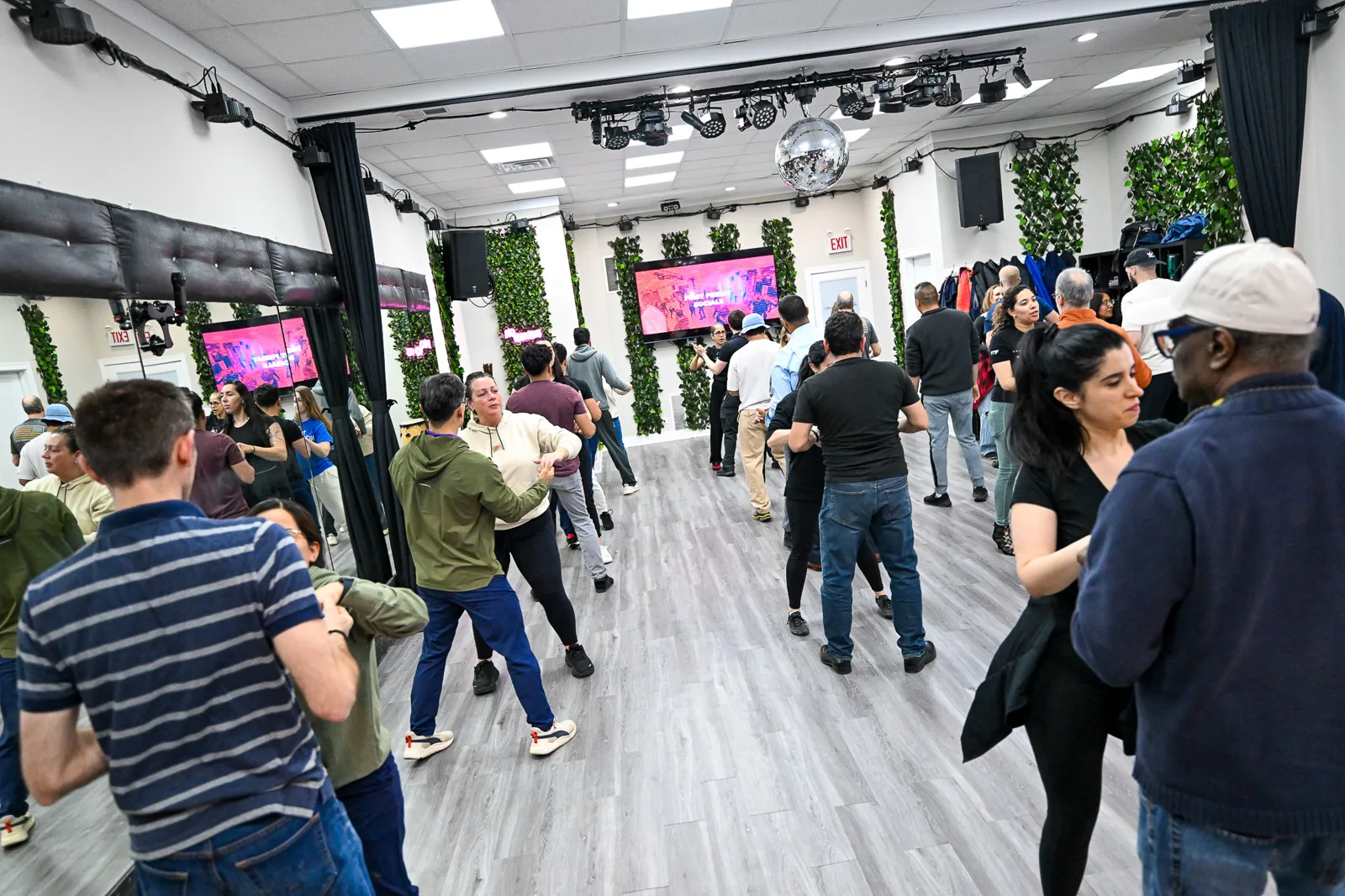
Dennis PaSamba Dance Company teaches authentic Latin dance styles in Chicago. Located at 4820 W. Irving Park Rd. in the Six Corners area of Irving Park, our studio offers free parking and a welcoming environment. Whether you want to master slow Sonidero turns or classic Colombian rhythms, our instructors help you feel the music. Text or call 717-PaSamba to get full details on our upcoming schedule.
Questions people ask
Is Sonidero Cumbia faster or slower than Colombian Cumbia?
Sonidero Cumbia is generally slower than original Colombian Cumbia. Sonidero DJs intentionally pitch down the tracks to create a heavy, relaxed beat. This slower tempo allows dancers to execute complex footwork and smooth turn patterns.
Can I dance Sonidero steps to Colombian Cumbia music?
Yes, you can adapt your steps, but the timing feels different. Colombian music moves faster, so you must speed up your turns and footwork. Most social dancers adjust their styling depending on which style of Cumbia track plays.
Where can I take Cumbia dance lessons in Chicago?
You can take lessons at Dennis PaSamba Dance Company at 4820 W. Irving Park Rd. in Chicago. We are located in Irving Park at Six Corners with free parking available. Text 717-PaSamba to learn more about our schedule and get started today.
Visit the studio
Dennis PaSamba Dance Company
4820 W. Irving Park Rd., Chicago, IL 60641
Six Corners · Portage Park · Irving Park
dennispasamba.com · Text/Call 717-PASAMBA ((717) 727-2622)