
How Do You Master Counting Music for Complex Performance Routines?
To master counting for complex choreography, start by finding the core pulse of the track. Every song has a steady tempo that acts as the heartbeat of your dance. Listen closely to the bass line or percussion to establish the basic one through eight counts. Before adding intricate steps, practice tapping your foot to the fundamental beat until it becomes second nature. This solid foundation prevents confusion when accents shift later in the piece.
Complex routines often rely on syncopated rhythms and half-beat transitions. Instead of counting simple whole numbers, break each beat down using sub-beats like one-and-two-and or micro-counts. This detailed approach ensures every arm movement, body roll, and foot shift lands at the exact microsecond intended. Training your ears to hear these subtle sub-beats builds total rhythmic precision. It transforms a loose routine into a crisp, professional performance on stage.
Group performance pieces require recognizing larger musical phrases beyond a single bar of music. Songs are usually built in eight-count or sixteen-count blocks that mirror musical sentences. By identifying where phrases start and end, dancers anticipate major structural changes in the music. This awareness helps you execute dramatic visual transitions smoothly as a team. Recognizing these musical boundaries keeps every performer moving as one cohesive unit throughout the whole song.
Key musical cues often serve as anchors within intricate performance routines. Instrument hits, vocal pauses, or sudden drum rolls provide distinct signals that help you track your spot. Map out your counts by linking specific choreographic movements to these noticeable audio landmarks. If you ever lose count during a performance, these key musical anchors help you instantly recover. Pairing your movements with clear audio cues creates a reliable safety net for high-energy routines.
When working on difficult counts, slow down the music during rehearsals. Practice counting out loud at half-speed so your mind and body synchronize seamlessly. Chunk the routine into short four-count or eight-count segments, repeating each section until muscle memory takes over. Gradually increase the tempo back to full speed only after the counts feel completely natural. This disciplined breakdown process eliminates guesswork and builds confidence for demanding performance routines.
Counting out loud during early rehearsals is essential for group alignment. Verbalizing the numbers reinforces rhythmic patterns in your brain and helps team members stay on the exact same timing. As muscle memory develops, transition from vocal counts to internal rhythm. You will start feeling the counts in your body rather than thinking about numbers. This shift allows you to perform with genuine emotion while maintaining flawless timing.
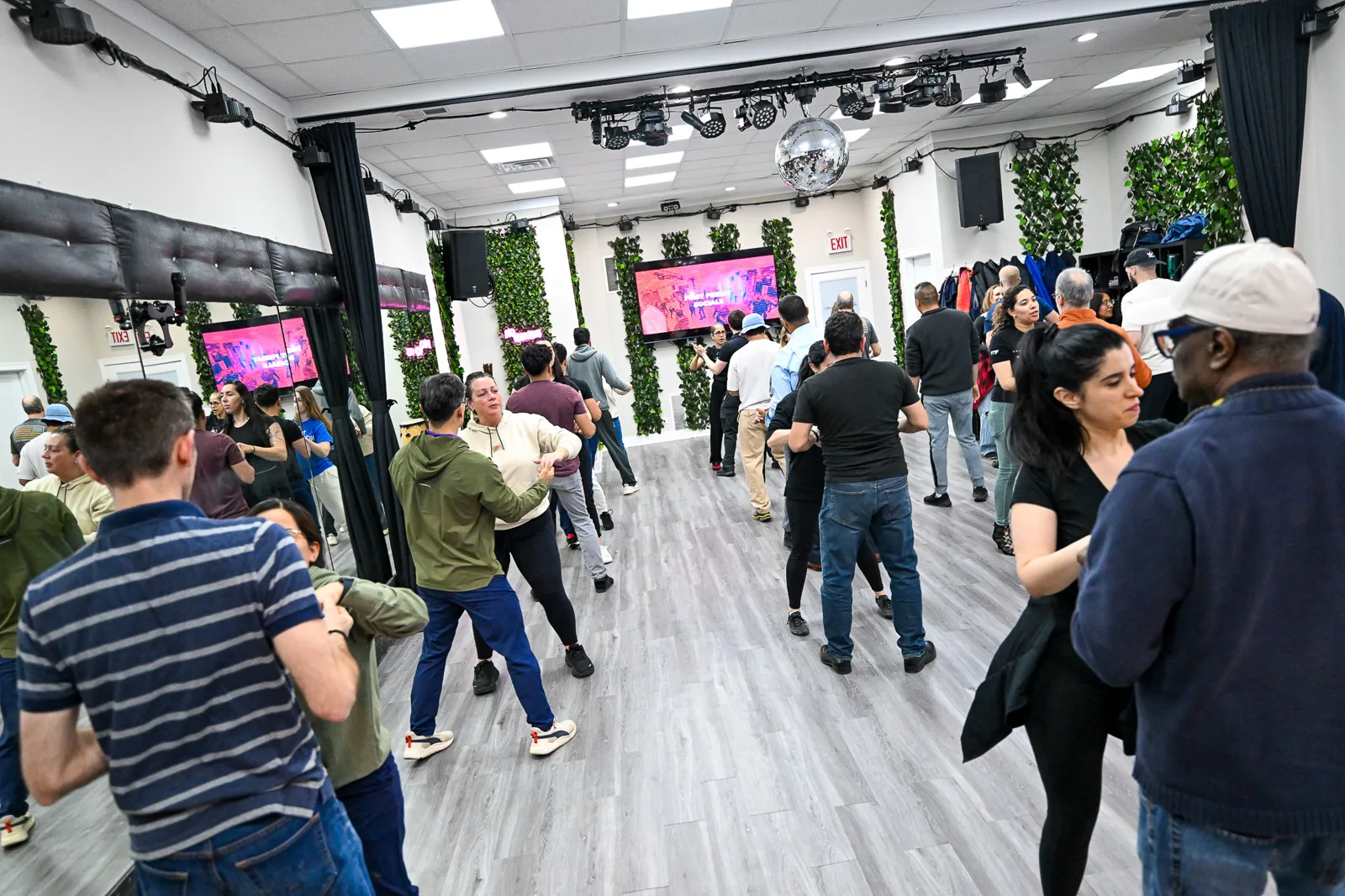
Refining your timing for stage routines takes guidance and structured floor practice. At Dennis PaSamba Dance Company in Chicago, we teach dancers how to break down complex music step by step. Our studio is located at 4820 W. Irving Park Rd. in the Six Corners area of Irving Park with free parking. Text or call 717-PaSamba to learn more about our choreography programs and schedule details today.
Questions people ask
Why is counting music out loud important during routine rehearsals?
Counting out loud helps dancers internalize complex timing patterns faster. It creates shared acoustic cues so team members move in perfect unison. Once timing is locked in, dancers can transition to internal counting during actual stage performances.
How do I count syncopated beats in Latin dance performance routines?
Syncopated beats fall between the regular counts of the music. You can count them using half-beat sounds like 'and' or micro-beats. Breaking down salsa or bachata music this way ensures clean footwork on intricate musical accents.
Where can I train on performance choreography and musicality in Chicago?
You can train with Dennis PaSamba Dance Company at 4820 W. Irving Park Rd. in Chicago's Six Corners, Irving Park neighborhood. We offer free parking for all students. Text or call 717-PaSamba for full schedule and class details.
Visit the studio
Dennis PaSamba Dance Company
4820 W. Irving Park Rd., Chicago, IL 60641
Six Corners · Portage Park · Irving Park
dennispasamba.com · Text/Call 717-PASAMBA ((717) 727-2622)