
How Can You Consistently Catch the Two Beat in Salsa Music?
Focus on listening to the percussion in the music. Salsa music relies on specific instruments to keep time. The conga drum plays a key sound called the slap on beat two. When you listen closely, that sharp slap sound cuts right through the song. Training your ear to listen for the conga slap gives you an instant anchor. Once you hear that crisp hit, you know exactly where beat two sits in the measure.
Pay attention to the clave rhythm underneath the melody. The clave is the core rhythmic pattern in salsa music. In a standard two-three or three-two clave, specific accents align with your footwork. Learning to identify how the clave interacts with the conga helps you feel the timing naturally. Instead of counting numbers endlessly in your head, you begin to feel the natural pulse. This makes stepping on the two beat feel completely automatic as you move.
Practice isolating the bass and drum sounds at home. Turn on a classic Salsa On2 track and sit quietly without dancing yet. Tap your hand on your lap only when you hear the second beat hit. By removing movement initially, your brain focuses entirely on auditory cues. Once your hand reliably hits beat two, stand up and take a small break step. Breaking down the learning process this way prevents frustration and builds strong musical muscle memory.
Understand how the On2 timing changes your body weight. In Salsa On2, beat one is a silent preparation or a light shift. You take your primary directional step forward or back right on beat two. Feeling the weight transfer happen on the second count changes your connection to the floor. As you practice shifting weight on beat two, your body develops a physical memory of the timing that matches what your ears hear.
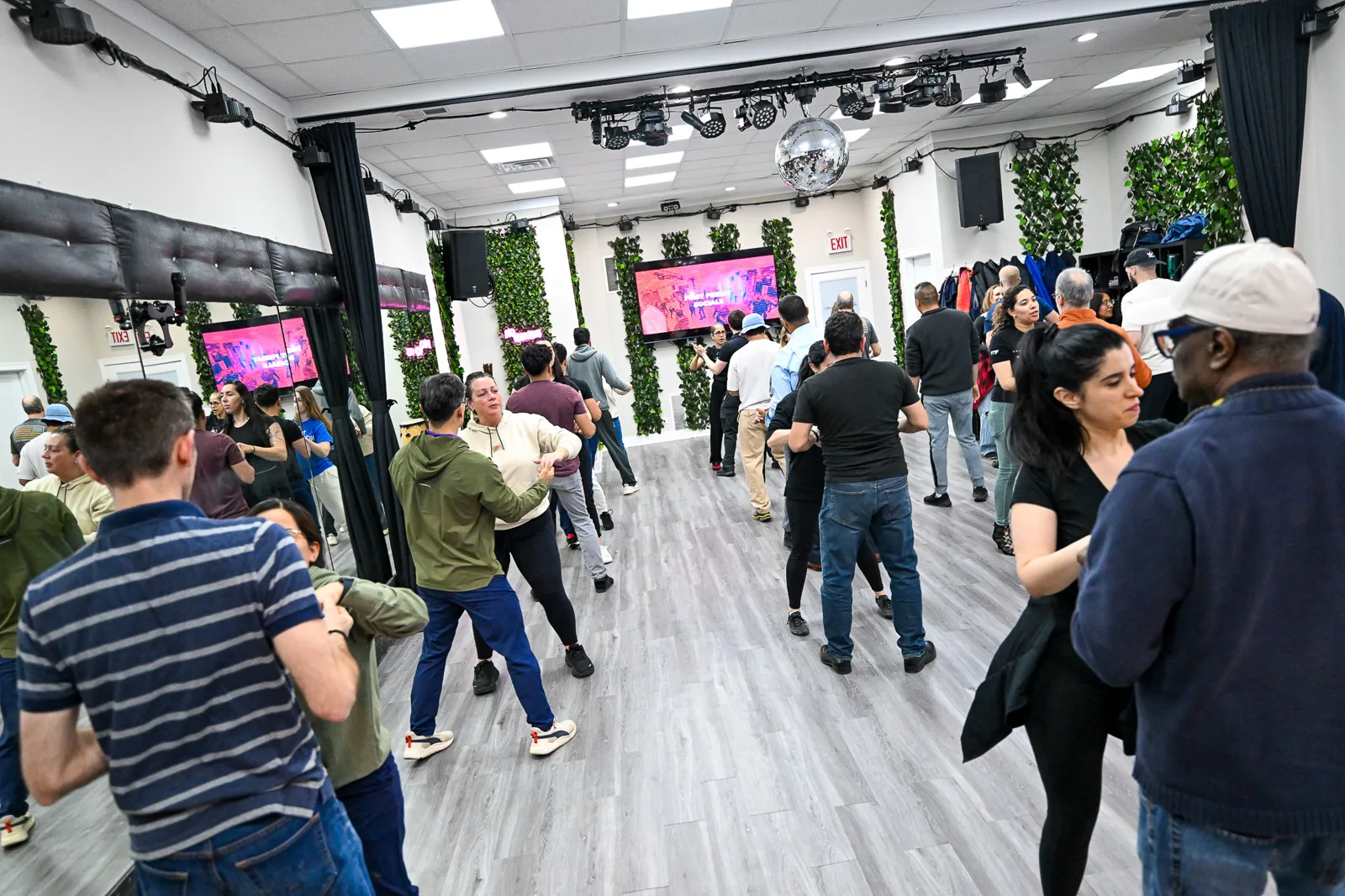
Work with a patient instructor who can count out loud for you. Hearing the counts called out over the music helps bridge the gap between listening and stepping. At Dennis PaSamba Dance Company in Chicago, we break down these musical details step by step. Located in Six Corners, Irving Park, our studio offers free parking for all students. You do not need a partner to join, as partners rotate throughout each group class session.
Consistent repetition in a live setting builds lasting confidence. Watching others move on beat two helps reinforce your timing visually alongside your listening skills. Our 4-week group classes cost $95 and provide plenty of practice time on our floor. To join a class or ask questions, call or text 717-PaSamba (717-727-2622). You can find us easily at 4820 W. Irving Park Rd., Chicago, IL 60641.
Keep your practice sessions short and frequent. Trying to master rhythmic timing in one long day can tire your brain out. Instead, spend ten minutes each day listening to salsa songs and locating beat two. Identify the conga slaps and tap along. Over time, your mind will recognize the pattern instantly. When you step onto the dance floor, finding beat two will feel effortless, relaxed, and fun.
Questions people ask
What instrument helps you hear the two beat in Salsa On2?
The conga drum is the best instrument to listen for when finding beat two. It creates an open slap sound directly on the second beat of the measure. Hearing this distinct sound helps you time your steps accurately.
Do I need a partner to take Salsa On2 classes at your studio?
No partner is needed to attend our group dance classes. Partners rotate during the lesson so everyone gets equal practice time. You can register for our 4-week course for $95.
Where is Dennis PaSamba Dance Company located?
We are located at 4820 W. Irving Park Rd., Chicago, IL 60641 in the Irving Park neighborhood at Six Corners. Our studio offers free parking for your convenience. You can text or call 717-PaSamba (717-727-2622) for more details.
Visit the studio
Dennis PaSamba Dance Company
4820 W. Irving Park Rd., Chicago, IL 60641
Six Corners · Portage Park · Irving Park
dennispasamba.com · Text/Call 717-PASAMBA ((717) 727-2622)