
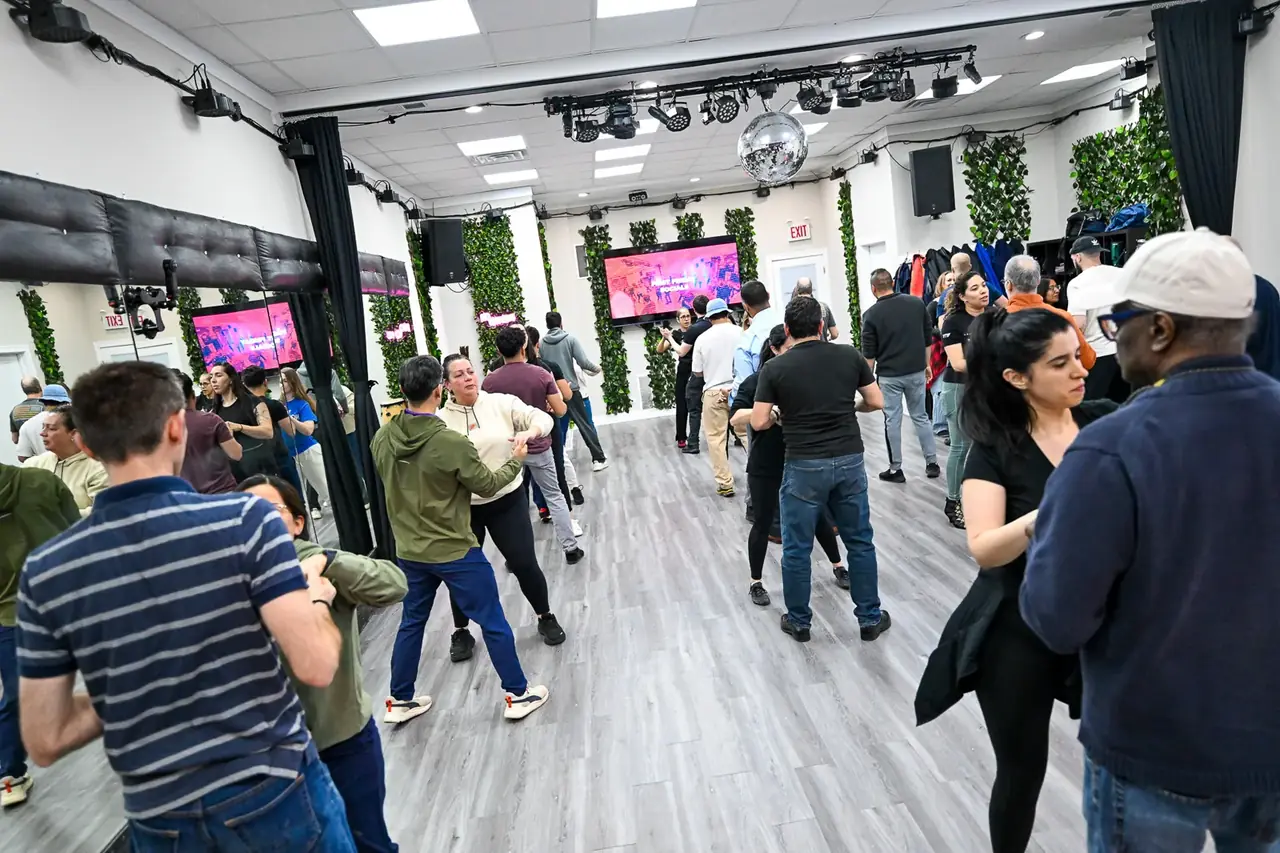
How can you space dance turns apart to limit dizziness?
Start by separating each turn with a short stretch of nonturning movement. Walk forward, step side to side, or mark a basic step while facing one direction. These movements let you keep dancing without adding another rotation right away. There is no single number of counts that works for everyone. Your next turn should come only when your vision feels settled and your balance feels normal, even if that means skipping a turn in the music.
Make the gap between turns easy to repeat. For example, practice one comfortable turn, then spend a full phrase doing a simple basic step before considering another. Treat that phrase as a practice structure, not a deadline for recovery. If you still feel dizzy, keep the movement simple or stop safely. A consistent pattern helps you notice whether the spacing is enough without making you decide what to do after every rotation.
Reduce the amount of rotation while you work on spacing. A quarter turn or half turn may be easier to tolerate than a full turn, especially when several turns appear close together. Follow that smaller rotation with straight or side steps before trying another. Change one thing at a time so you can tell what helps. Adding more turns, faster music, and shorter recovery gaps together makes it harder to find a comfortable rhythm.
Use the space between turns to settle your gaze on a stationary point. Avoid scanning the room or making extra head movements while you recover. Spotting during a turn may help some dancers stay oriented, but it does not guarantee that dizziness will disappear. Keep your head movement comfortable rather than forcing a sharp snap. If looking at a fixed point does not help you feel steady, pause instead of starting the next turn.
When dancing with a partner, agree on the spacing before you begin. Ask for a basic step or another nonturning pattern between turns, and use a clear signal when you need more time. Your partner should not pull you into another rotation while you are recovering. In choreography, replace a repeated turn with a simple step that preserves the timing. Keeping the rhythm does not require completing every rotation, especially when your balance is not ready.
Build toward closer spacing only after your current pattern feels comfortable. On a later attempt, you might shorten the nonturning section slightly while keeping the same turn and music speed. If dizziness returns, restore the longer gap or end the turning practice. Avoid using repeated attempts to push through symptoms. The goal is to find a manageable amount of rotation with enough recovery time, not to train yourself to ignore feeling unsteady or sick.
If dizziness starts, stop turning and move out of the traffic path only if you can do so safely. Sit down if needed, and do not resume until you feel fully steady. Frequent, persistent, or unexplained dizziness deserves medical advice rather than simply longer gaps between turns. For details on practicing turn spacing with Dennis PaSamba Dance Company, text 717-PaSamba. Ask about working on fewer rotations and comfortable pauses rather than trying to fit in more turns.
Questions people ask
How many counts should I leave between dance turns?
There is no fixed count that prevents dizziness for everyone. Start with a generous stretch of basic steps, and wait longer if your balance or vision has not settled. Musical counts can organize practice, but they should not decide when your body is ready.
Should I turn the other way to cancel out dizziness?
Do not rely on an opposite turn to cancel dizziness. Another rotation can add to the sensation rather than relieve it. Use nonturning steps if you feel steady enough, or stop and rest before considering another turn.
Can I keep dancing between turns if I feel dizzy?
Only continue simple steps if you can move safely and feel balanced. If you feel unsteady, stop rather than walking through the dizziness. Resume turning only after symptoms have cleared, and seek medical advice if they persist or keep returning.
Visit the studio
Dennis PaSamba Dance Company
4820 W. Irving Park Rd, Chicago, IL 60641
Six Corners · Portage Park · Irving Park
dennispasamba.com · Text/Call 717-727-2622 (717-727-2622)