
How Do Lead Signals Work in Salsa On2 Partnerwork?
Salsa On2, also known as New York style, relies heavily on precise timing and clear physical tension. The lead signal begins in the core before moving through the arms and hands. A lead is not a pull or push with the arms. Instead, it is a frame shift that invites the follower to move. When leads use their core strength, the follower senses the movement instantly on count two.
Weight shifts serve as fundamental lead signals in On2 partnerwork. Before initiating a turn or a cross body lead, the lead must step clearly on count one. This establishes direction and tempo for the rest of the measure. Followers read this initial direction through gentle hand connections and body positioning. Clear footwork from the lead makes the upcoming signal obvious, preventing confusion and maintaining momentum.
Hand connection plays a major role in sending accurate Salsa On2 signals. Leads maintain a relaxed yet responsive grip, often called a light hook or cup. Tense hands block communication and cause discomfort. By keeping fingertips soft and elbows slightly in front of the body, the lead creates a flexible bridge. This connection transmits direction changes clearly without forcing the follower into place.
Timing is critical when sending lead signals on the On2 count. Signals must be given slightly before the execution count so the follower has time to respond. For example, prepping a right turn usually occurs on counts six and seven. Giving the signal too early or too late throws off the rhythm. Practice helps leads time their preparation touches perfectly with the music.
Tension and compression are key concepts in lead signaling. Tension feels like a light, comfortable pull away, while compression feels like soft resistance towards each other. Leads use these subtle pressure changes to communicate prep steps, stops, and direction shifts. Followers feel these shifts in their frame, allowing them to turn or step smoothly without needing visual cues.
Visual cues complement physical lead signals on the social dance floor. Body alignment, eye contact, and open posture indicate intent before physical contact changes. In On2 partnerwork, a lead might open their shoulders to signal a cross body lead with a turn. Good visual signaling builds trust between partners and makes complex turn patterns feel effortless and fun.
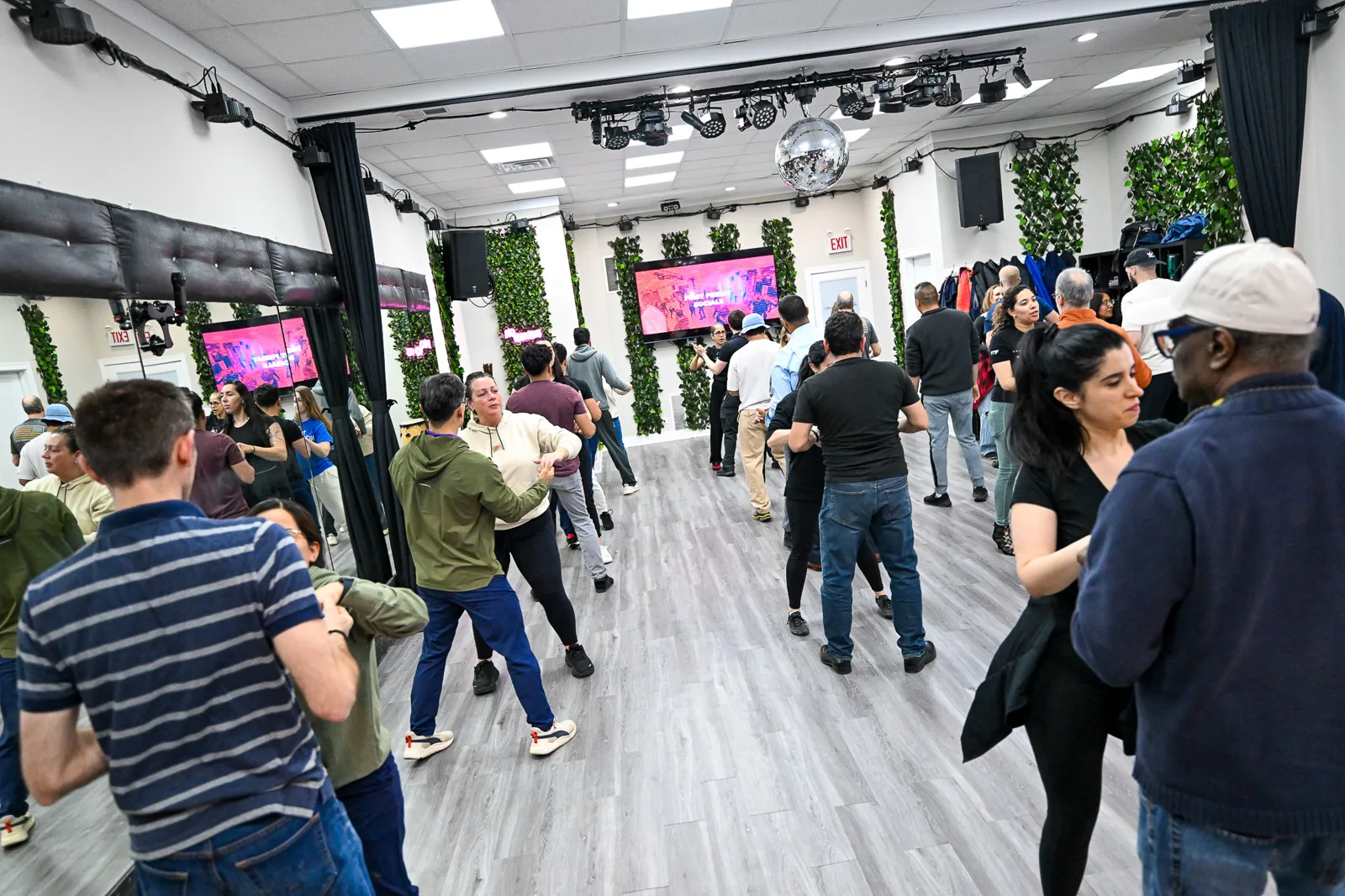
Learning lead signals takes guided instruction and regular partner rotation. In our studio at 4820 W. Irving Park Rd. in Chicago, students practice these techniques in structured group classes. Rotating partners helps leads refine their signals so they work with dancers of any skill level. Located in Six Corners, Irving Park, our studio offers free parking and a friendly environment.
Questions people ask
Why are lead signals different in Salsa On2 compared to On1?
Salsa On2 changes direction on counts two and six, which alters the timing of lead prep signals. Leads must adjust their frame and hand connections to match this breaking count. Practicing On2 signals helps dancers build precise timing and smoother partnerwork transitions.
Do I need to bring a partner to practice lead signals in class?
No partner is needed to join our group classes. Students rotate partners throughout the lesson, which helps leads test their signals with different followers. You can enroll in a 4-week group class session for $95.
How can I contact the studio to sign up for classes?
You can easily reach us by sending a text or calling 717-PaSamba (717-727-2622). Our studio is located at 4820 W. Irving Park Rd. in the Six Corners area of Chicago with free parking available. We welcome new students eager to improve their salsa skills.
Visit the studio
Dennis PaSamba Dance Company
4820 W. Irving Park Rd., Chicago, IL 60641
Six Corners · Portage Park · Irving Park
dennispasamba.com · Text/Call 717-PASAMBA ((717) 727-2622)