
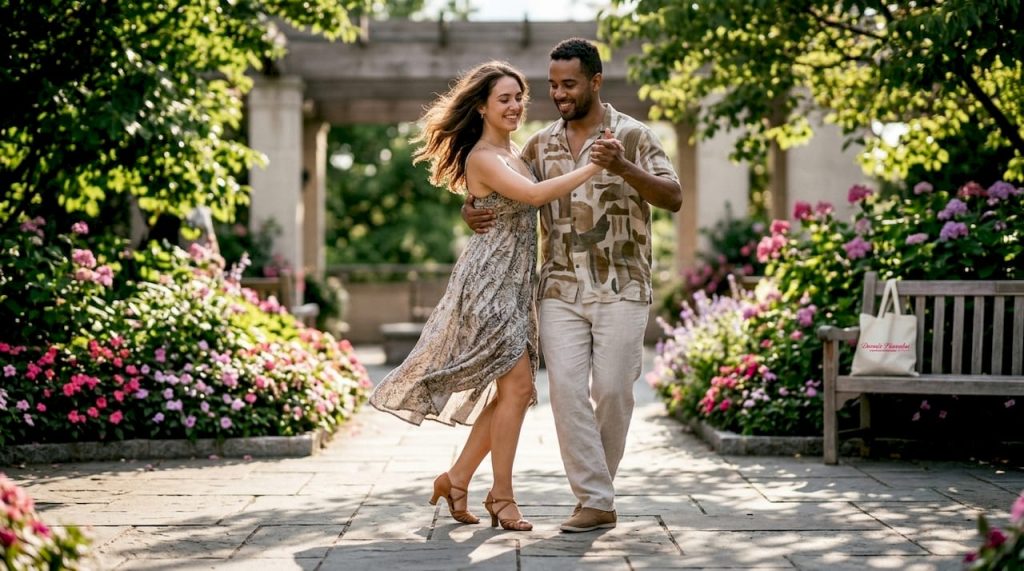
Bachata dance is a social Latin partner dance from the Dominican Republic, built on a simple side-to-side step pattern and a deeply emotional musical tradition. The basic step follows 4/4 time with a count of 1-2-3-tap, repeated across an 8-count cycle. Hip movement is not a performance trick. It is a natural result of shifting your weight with soft knees and small steps. Bachata is one of the most beginner-friendly Latin dances you can learn, and it is danced socially at Latin nights, festivals, and studio events around the world. The music features guitar, bongos, and the metallic scrape of the güira, giving it a sound unlike any other Latin style.
What is the bachata basic step and how do beginners learn it?
The bachata basic step is a side-to-side movement with three steps and a tap on the fourth beat. You step left, together, left, tap. Then right, together, right, tap. That is your full 8-count cycle: 1-2-3-tap, 5-6-7-tap. The pattern repeats throughout the song.
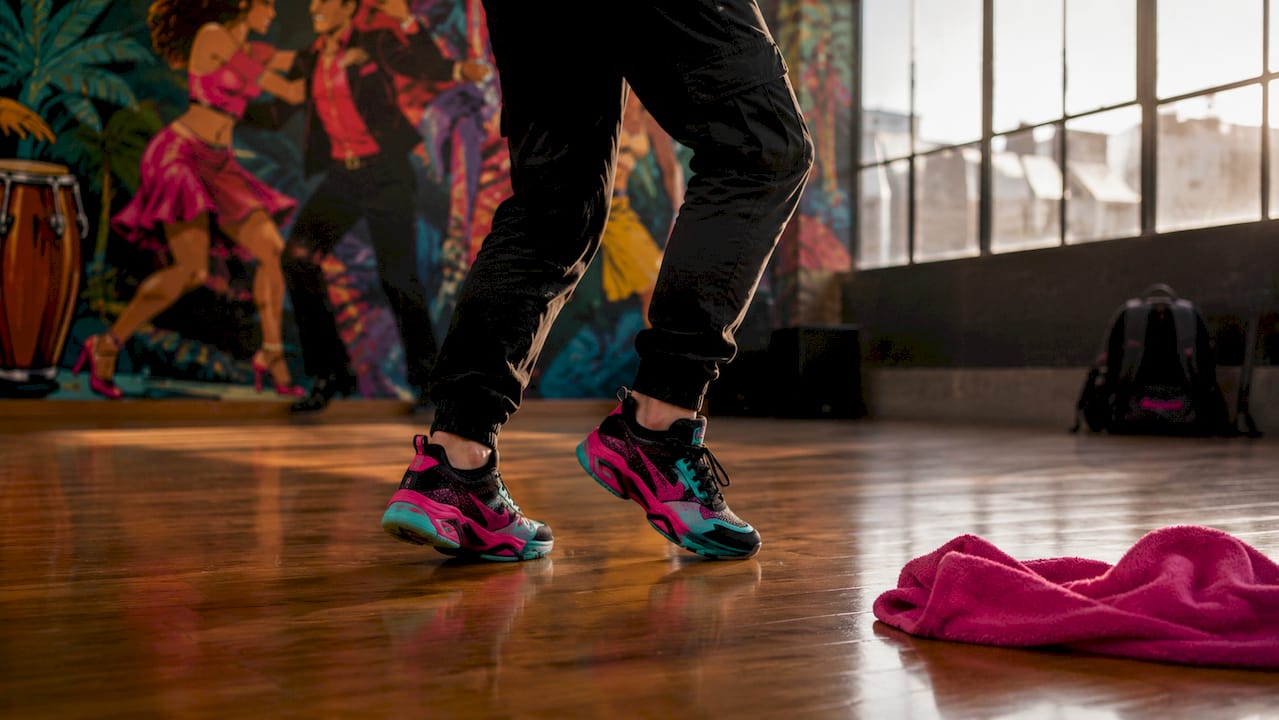
Small steps are the key to doing this well. Keeping your steps underneath your body, rather than wide and reaching, gives you better balance and makes partner connection much easier. Soft knees are equally important. Locking your knees kills the natural bounce that makes Bachata look and feel right.
The tap on beat 4 is where the hip motion happens. Most beginners try to force a hip pop at that moment. That is the wrong approach. Hip movement should be passive, a consequence of your weight shift, not a deliberate push. When you step and transfer your weight fully, the hip on the standing leg naturally rises. That is the motion you want.
- Stand with feet together and soft knees.
- Step left on beat 1, step together on beat 2, step left on beat 3.
- Tap your right foot on beat 4 without transferring weight.
- Repeat to the right: step right on beat 5, together on beat 6, right on beat 7, tap left on beat 8.
- Let your hips respond to the weight shift naturally on each tap.
Most classes at Dennis pasamba welcome singles and couples alike. No partner is required to start. You can practice Bachata solo at home and build your timing before ever stepping onto a social floor.
Pro Tip: Focus on the weight transfer, not the hip. If your knees stay soft and your steps stay small, the hip motion takes care of itself.
How does Bachata music structure influence the dance?
Bachata music is built on four core sections: the Intro, the Verse (called the Derecho), the Chorus (called the Majao), and the Mambo. Each section carries a different energy, and your dancing should reflect that shift. Staying locked into the same footwork and energy level throughout a song is one of the clearest signs of a beginner.
The Intro sets the mood. The Derecho is the verse, typically calmer and more conversational in feel. The Majao is the chorus, where the energy lifts and the music gets fuller. The Mambo section is the most intense, often featuring faster rhythms and accents that invite sharper, more expressive movement. Dancers who anticipate these changes move beyond basic steps and start truly interpreting the music.
The instruments shape how you feel the beat:
- Rhythm guitar (segunda): Provides the harmonic backbone and keeps the groove steady.
- Lead guitar (requinto): Carries the melody and emotional color of the song.
- Bongos: Add rhythmic texture and accent points throughout.
- Güira: A metal scraper that acts as the primary timekeeper. This is the instrument you want to lock onto.
Musicality is the biggest challenge for new Bachata dancers. Most beginners count steps instead of listening to the music. The fix is simple: stop counting and start hearing. The güira plays a consistent, steady rhythm that does not change the way melodic instruments do. It is your most reliable guide for staying on beat.
Understanding how music guides Latin dance is what separates dancers who look natural from those who look mechanical.
Pro Tip: When you lose the beat, find the güira. Its metallic scrape is steady and clear. Lock onto it and you will find your footing every time.
What are the main styles of Bachata dance?
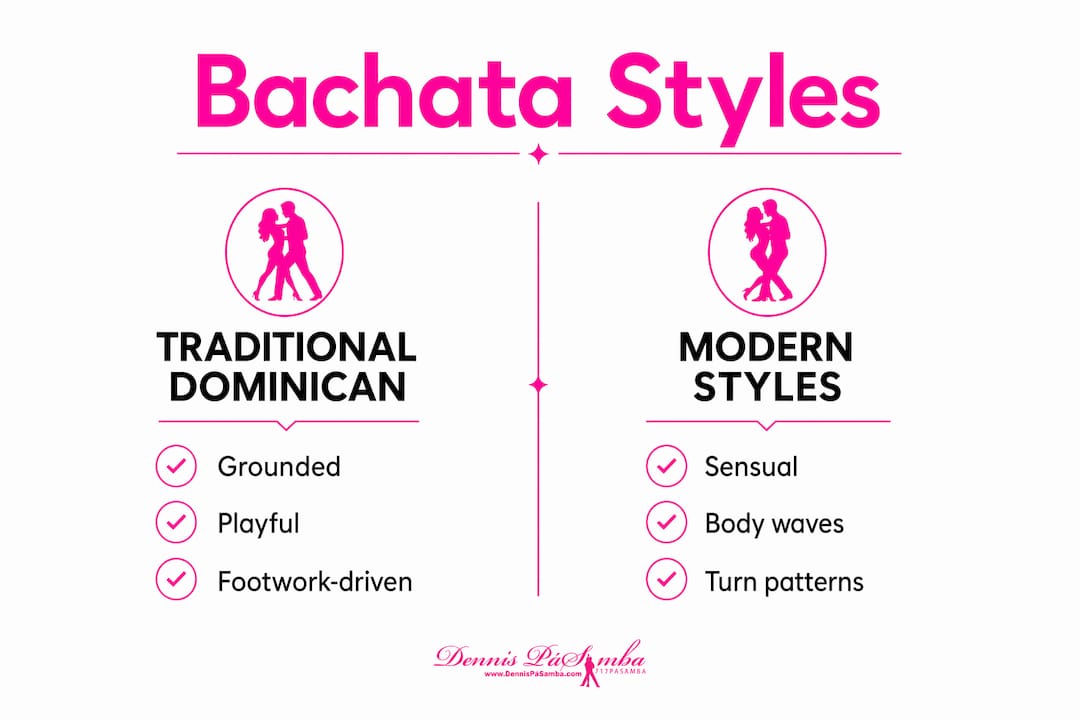
Bachata has three distinct styles: Traditional Dominican, Sensual, and Modern. Each has a different feel, different footwork, and different music preferences. Knowing the difference helps you adapt on any social floor and connect better with your partner.
Traditional Dominican Bachata is the original form. It is grounded, playful, and footwork-driven. Partners maintain a more open frame and engage in a kind of footwork conversation, mirroring and responding to each other. The music tends to be classic guitar-driven Bachata from artists rooted in the Dominican tradition.
Sensual Bachata developed in Spain and became widely popular through social media. It features body waves, head rolls, and close-embrace connection. The music often blends traditional Bachata with R&B, pop, and electronic influences. This is the style most beginners see online, which can create a skewed first impression of what Bachata actually is.
Modern or Urban Bachata borrows turn patterns and combinations from Salsa. It is dynamic and versatile, with a faster pace and more structured choreography. The music often incorporates hip-hop and pop crossover tracks.
| Style | Vibe | Key movement | Typical music |
|---|---|---|---|
| Traditional Dominican | Playful, grounded | Intricate footwork | Classic Dominican guitar Bachata |
| Sensual | Emotional, close | Body waves, head rolls | R&B and pop-influenced Bachata |
| Modern / Urban | Dynamic, energetic | Turns and patterns | Pop, hip-hop crossover Bachata |
Proper social dance practice prioritizes respectful connection over showy moves. If a move feels forced or uncomfortable, it breaks social dance etiquette. This applies especially in Sensual style, where close connection requires clear communication and mutual comfort between partners.
Where and how is Bachata danced socially?
Bachata is danced socially at Latin nights, dance festivals, and studio social events. The emphasis is always on connection over complexity. A dancer with solid timing and a relaxed frame will always be a better social partner than someone with flashy moves and poor rhythm.
Social Bachata etiquette is straightforward:
- Frame: Keep a consistent, comfortable hold. Do not collapse into your partner or hold too rigidly.
- Timing: Stay on the beat. Your partner feels your timing through physical connection.
- Respect: Ask before attempting dips, body waves, or close-embrace moves. Not every partner wants that style.
- Listening: Pay attention to your partner’s comfort and adjust your energy accordingly.
- Floor awareness: Move with the flow of the room. Avoid taking up excessive space during busy social nights.
Bachata nights at studios like Dennis pasamba create a welcoming space for beginners. You do not need a partner to show up. Most events rotate partners, which means you get practice with multiple people and build adaptability fast. That variety is more valuable than drilling the same steps with one person.
The cultural richness of Bachata adds another layer to social dancing. Bachata originated as a heartfelt expression of everyday life and heartbreak in the Dominican Republic. It was once called “música de amargue,” meaning music of bitterness. That emotional depth is still present in the music and the dance. When you understand that history, you bring more intention to how you move and connect.
Finding local events is easy. Search for Latin nights in your city, check studio event calendars, and look for beginner evening classes that include social practice time after the lesson.
Key Takeaways
Bachata dance is a beginner-friendly Dominican social dance defined by a side-to-side 8-count step, natural hip movement from weight shifts, and three distinct styles that each require different musicality and partner connection.
| Point | Details |
|---|---|
| Basic step pattern | Count 1-2-3-tap, 5-6-7-tap in 4/4 time with small steps and soft knees. |
| Natural hip motion | Let hips respond to weight shifts. Never force the pop on the tap beat. |
| Music structure | Learn the four sections (Intro, Derecho, Majao, Mambo) to dance with the song, not just to it. |
| Three distinct styles | Traditional, Sensual, and Modern each have unique footwork, frame, and music preferences. |
| Social dance priority | Timing, frame, and respectful connection matter more than advanced moves on any social floor. |
What I’ve learned after 33 years of teaching Bachata
Most beginners walk in thinking Bachata is all about the hips and the sensual style they saw on social media. That impression is understandable. But it misses the heart of the dance entirely.
The first thing I tell every new student is this: forget the hips for now. Focus on your weight transfer. When you get that right, the hips follow on their own. Chasing the hip motion before you have the footwork is like trying to run before you can walk. It creates tension, kills your timing, and makes partner connection nearly impossible.
The second thing I have learned is that musicality takes longer to develop than footwork. You can teach someone the basic step in one class. Teaching them to hear the Majao coming and shift their energy accordingly takes months of listening and dancing. The students who progress fastest are the ones who listen to Bachata music outside of class, not just during it.
The third thing is about style. I always encourage beginners to spend real time in Traditional Dominican Bachata before moving to Sensual. The footwork conversation in Traditional style builds a foundation that makes every other style better. Students who skip straight to body waves often develop habits that are hard to undo later.
Bachata is one of the most rewarding dances you can learn. The music is emotional, the community is welcoming, and the learning curve is genuinely manageable. Give it consistent practice, stay patient with yourself, and you will feel the difference within weeks.
— Dennis pasamba
Ready to learn Bachata in Chicago?
Dennis pasamba is Chicago’s top-rated Latin dance studio with over 850 five-star Google reviews and 33 years of experience. Beginner Bachata classes are structured for real results, and no partner is required to join.
Whether you prefer group classes or private one-on-one lessons, there is a format that fits your schedule and comfort level. Before you sign up anywhere, use the dance studio checklist for beginners to ask the right questions and find the best fit. You can also check the adult beginner evening class schedule to find a time that works for you. Singles and couples are both welcome. Great vibes are guaranteed.
FAQ
What is bachata dance in simple terms?
Bachata is a social Latin partner dance from the Dominican Republic with a side-to-side basic step counted as 1-2-3-tap in 4/4 time. It is beginner-friendly, emotionally expressive, and danced at Latin nights and studio events worldwide.
Is bachata easy to learn for beginners?
Yes. The basic step is compact and rhythmically simple, making it one of the most accessible Latin dances for adults with no prior experience. Most beginners can follow the basic pattern within their first class.
What is bachata sensual and how is it different?
Bachata Sensual is a style developed in Spain that features body waves, head rolls, and close-embrace partner connection, often danced to R&B-influenced music. It differs from Traditional Dominican Bachata, which focuses on grounded footwork and a more open partner frame.
What is the bachata rhythm?
The bachata rhythm follows a 4/4 time signature with an 8-count cycle. The güira provides the steadiest beat reference, and the tap on beats 4 and 8 is where the natural hip accent occurs.
What is a bachata night?
A bachata night is a social dance event, typically held at a Latin dance studio or nightclub, where dancers practice Bachata in a relaxed group setting. Many bachata nights include a short beginner lesson before open social dancing begins.