
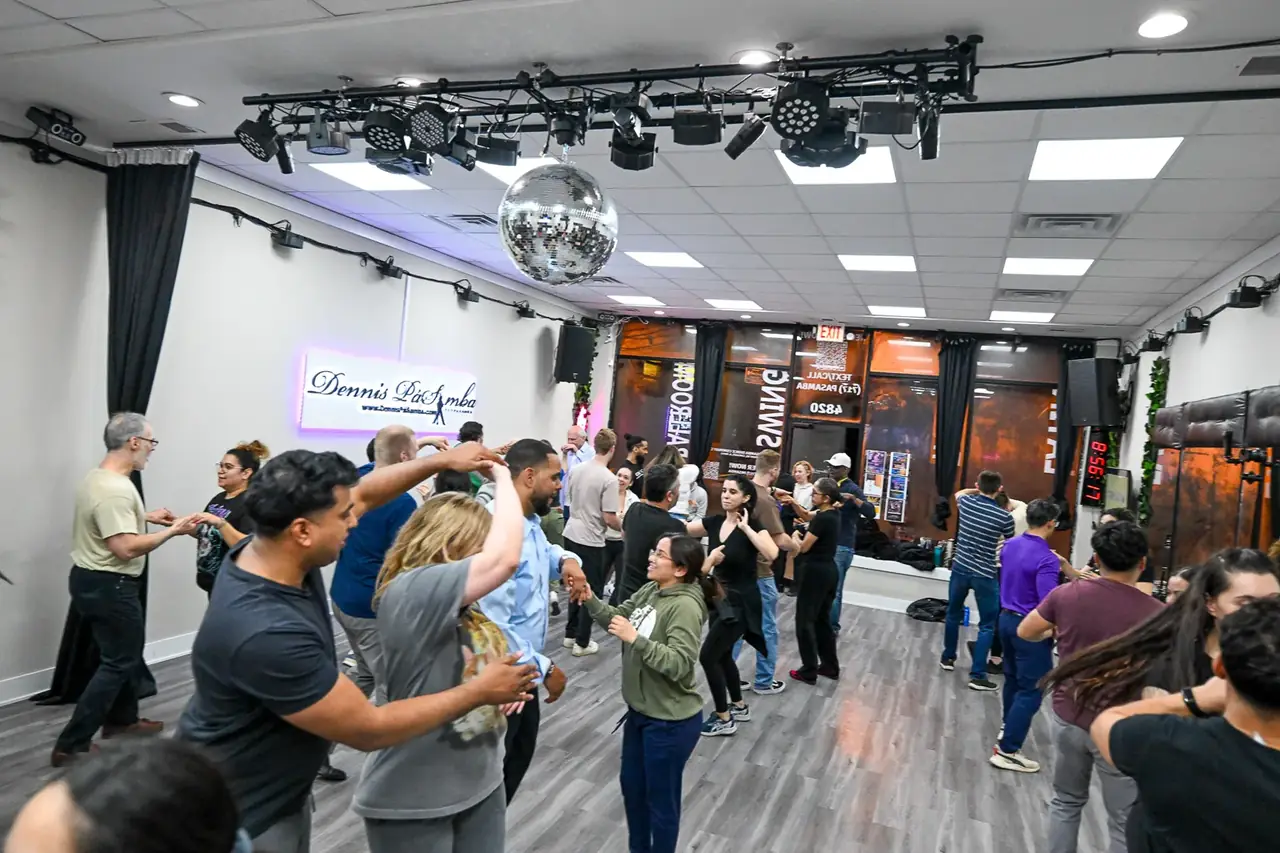
Smooth sole
Leather or suede bottoms slide just enough to pivot. Dress shoes, flats and low dance heels are all good choices.
Skip grippy gym shoes
Running and gym shoes are built to grip. On a dance floor that grip can twist your knee during a turn, so avoid them.
Do you need dance shoes?
Not right away. Many students buy dance shoes after a few sessions once they know they are hooked. For clothing tips, see what to wear.
What makes a good dance shoe?
A good dance shoe offers a smooth sole for effortless turns and pivots. Look for shoes that allow your foot to slide, not stick. Cushioning and support are also important for comfort during longer dance sessions. Flexible construction in the sole helps your foot articulate naturally. This allows for better footwork and connection to the floor. The sole should be durable enough to withstand regular dancing. Many dance shoes also feature a supportive arch. This can help reduce fatigue and improve balance. A secure fit is crucial; your foot should not slide around inside the shoe. Adjustable straps or laces can help achieve a snug fit. Lightweight materials are often preferred to avoid extra strain. Some dance shoes are designed to absorb impact. This can protect your joints over time. Consider the shoe's overall balance and stability too. A wider heel base, for example, can offer more stability. Your comfort is key to enjoying your bachata class experience. Choose shoes that feel good on your feet from the start. They should allow for natural movement without restriction. Remember, the right shoes enhance your dancing. They help you execute steps safely and smoothly. Focus on functionality and comfort above all else.
Specific sole materials to consider
Suede soles are a classic choice for dance shoes. They provide an excellent balance of grip and slide on most studio floors. Suede allows for controlled pivots and quick directional changes. Leather soles offer a similar smooth surface. They tend to be more durable than suede for outdoor or rougher surfaces. However, for indoor dance floors, suede often gives a softer feel. Chrome leather is another option, often used for its smooth, durable qualities. Some shoes feature synthetic soles designed to mimic suede or leather. These can be a good, often more affordable, alternative. They offer similar sliding properties. Avoid rubber soles completely, as they provide too much grip. This can cause injury when attempting turns. The sole material directly impacts how easily you can move. It affects your ability to perform spins and intricate footwork. Choose a sole that supports your smooth, flowing bachata movements. A well-maintained suede sole may occasionally need brushing. This restores its texture and slide. Experiment with different materials if you have the chance. Find what feels best for your dancing style and comfort.
Heel height and style for bachata
For followers, a low to medium heel (1 to 2.5 inches) is common. This height can enhance posture and styling without sacrificing stability. Many bachata dancers prefer a flared or Cuban heel. These offer a wider base for better balance. A stiletto heel, while stylish, can be less stable for beginners. It's often reserved for experienced dancers. Open-toed shoes are popular for their comfort and style. Closed-toe shoes offer more protection for your toes. Both styles are perfectly acceptable for bachata. For leaders, a small, flat heel (around 0.5 to 1 inch) is typical. This provides a slight lift for good posture and weight distribution. Some male dance shoes have a slightly higher, tapered heel. This can aid in specific bachata movements. Ultimately, comfort and stability should guide your heel choice. You want to feel secure and balanced throughout your class. Ensure your chosen heel height allows for comfortable weight transfer. It should not cause strain on your ankles or knees. Practice walking and turning in new shoes at home. This helps you get accustomed to their feel. Choose a heel that complements your personal comfort and dance level.
Questions people ask
Are heels required for follows?
No. Flats are completely fine.
Are heels required for follows?
No. Flats are completely fine.
Where can I buy dance shoes?
Local dancewear stores often carry a selection. Online retailers also specialize in dance shoes. Many bachata dancers also find suitable options in regular dress shoe departments. Look for smooth soles and comfortable fit.
Visit the studio
Dennis PaSamba Dance Company
4820 W. Irving Park Rd., Chicago, IL 60641
Six Corners · Portage Park · Irving Park
dennispasamba.com · Text/Call 717-PASAMBA ((717) 727-2622)