
The rock step
Step forward on 1, rock back onto the other foot on 2, close on 3. Pause on 4. Then step back on 5, rock forward on 6, close on 7. Pause on 8.
Then side
Once the forward-and-back basic is steady, the same count moves side to side. It is a nice change of shape without new timing.
No turns yet
Turns wait until the basic happens without looking at your feet.
The Lead and Follow in Basic
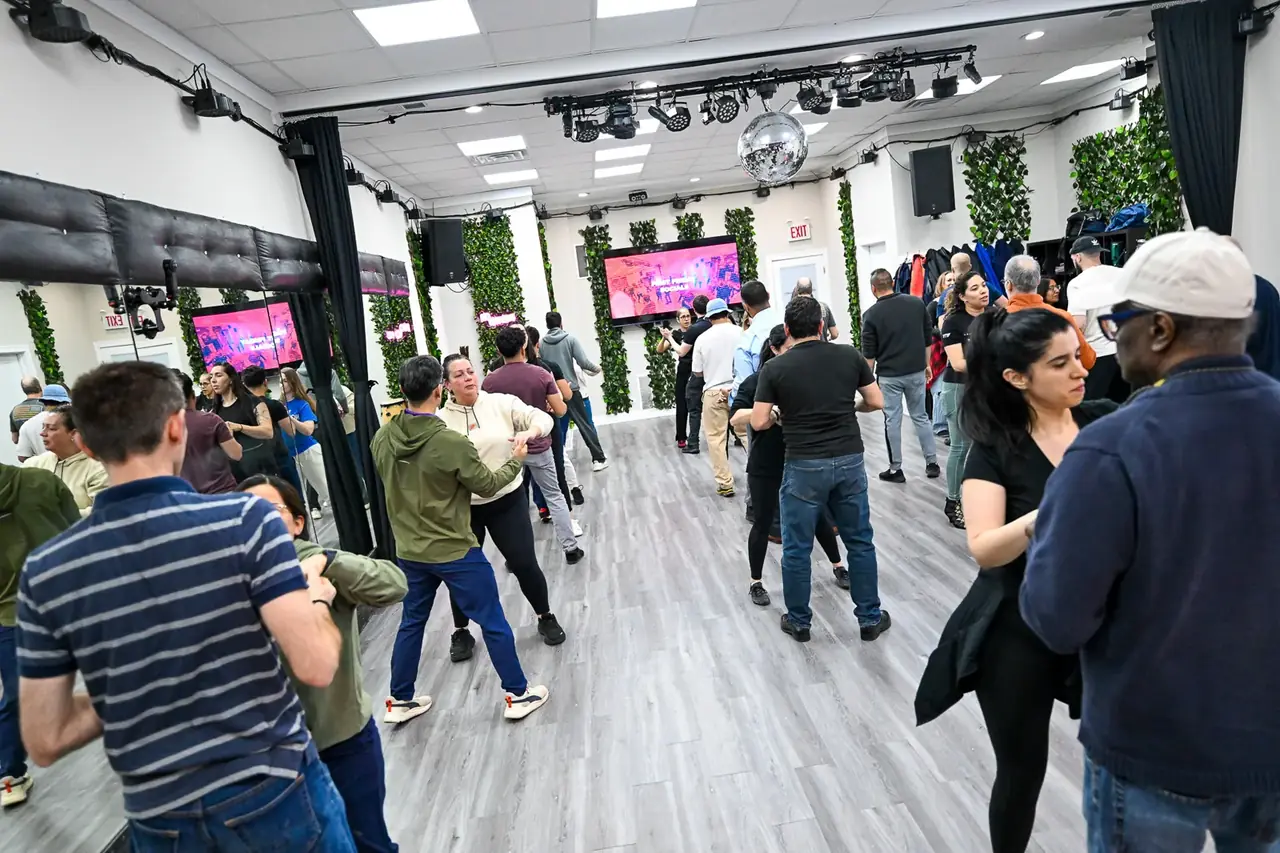
Salsa is a partner dance. One person leads, the other follows. The basic step is the foundation for both roles. For the lead, the step often starts forward with the left foot. For the follow, the step often starts back with the right foot. This creates a natural opposition. It keeps the dancers connected and moving as one. Even in the basic step, there is a subtle conversation. The lead initiates the movement. The follow responds smoothly. This exchange is essential for all partner dancing. Practicing the basic step with different partners helps build this connection. You learn to feel the weight shifts. You understand the subtle cues. This is how you prepare for more complex patterns. The basic step is not just about your feet. It is about your whole body. It is about how you communicate without words. It sets the rhythm and energy for the dance. Both partners move through the 8 counts. They return to a neutral position. This allows for the next movement. The lead and follow roles can be learned by anyone. They are not tied to gender. Anyone can learn to lead or follow. It is all about practicing the steps and communication.
Timing and Musicality
Salsa music has a strong 8-count rhythm. You step on 1, 2, 3, then pause on 4. You step on 5, 6, 7, then pause on 8. This 1-2-3, 5-6-7 rhythm is the heartbeat of salsa. It helps you stay in sync with the music. Listen for the clave rhythm. It often emphasizes the 1 and 5 counts. This gives you a clear starting point. Feel the music in your body, not just your feet. The pauses on 4 and 8 are not empty. They are active moments. They allow you to prepare for the next phrase. They let you feel the music's flow. Your movements should match the music's energy. Sometimes the music is fast. Sometimes it is slower. Your basic step can adapt to these changes. The basic step connects you to the song. It is your first conversation with the music. Different salsa styles might emphasize certain beats. But the 1-2-3, 5-6-7 structure is universal. Finding the downbeat is key. It helps you enter the dance confidently. This musicality develops over time. Consistent practice helps you internalize the rhythm. Soon, you won't need to count. You will feel the beat naturally. The basic step becomes an extension of the music. It allows you to express yourself. It grounds you in the dance.
Posture and Frame
Good posture is vital for the salsa basic step. Stand tall with your shoulders relaxed. Keep your core engaged. Your chest should be slightly lifted. Avoid slouching or hunching. This helps with balance and movement. A strong posture gives you presence. It makes leading and following easier. Your frame is how you hold your arms with a partner. For the basic step, keep a light but firm connection. One hand holds your partner's hand. The other hand rests on their back. Maintain a comfortable distance. This allows for fluid motion. A good frame helps transmit cues. It helps you feel your partner's movements. Avoid a stiff or rigid frame. It restricts movement. A loose frame lacks connection. Find the balance. Your frame should be strong yet flexible. Your arms should not hang limp. They should not be locked. This allows for turns and spins later. Practice the basic step alone to feel your posture. Then practice with a partner to build your frame. Proper posture also helps prevent injuries. It allows you to dance longer and more comfortably. It makes every step more elegant. Your posture and frame are part of your dance language. They add to the overall aesthetics of your salsa.
Questions people ask
Why pause on 4 and 8?
The pause gives your weight time to settle, which keeps you on the beat.
What is 'On1' salsa?
On1 salsa means you break (change weight) on the 1st and 5th beats of the music. It means you start your forward step on the first beat.
Can I learn the basic step alone?
Yes, you can practice the basic step alone. This helps you get comfortable with the footwork and timing. However, partner practice is essential for lead and follow skills.
Visit the studio
Dennis PaSamba Dance Company
4820 W. Irving Park Rd, Chicago, IL 60641
Six Corners · Portage Park · Irving Park
dennispasamba.com · Text/Call 717-727-2622 (717-727-2622)