
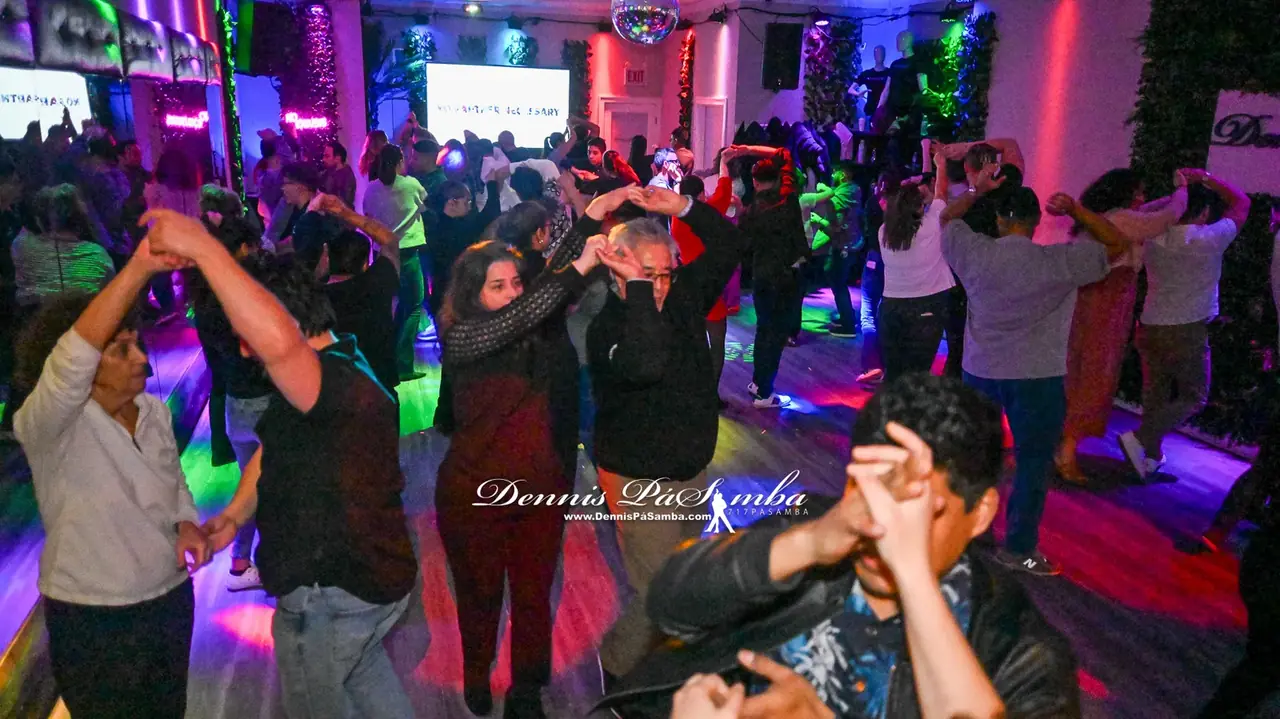
What it is
The lead opens a path, steps out of the way, and guides the follow across to the other side. The two of you trade places on one 8-count.
When we add it
Only once your basic and right turn are steady. It builds on both, so it comes later in the session.
How It Works: Step-by-Step for the Lead
The Cross Body Lead involves specific footwork and timing.
As the lead, you initiate the move after the first four counts of your basic step. On count 5, step forward with your left foot, slightly turning your body to create an opening. Your body faces partially left.
On count 6, shift your weight to your right foot. You are now ready to guide your partner. Extend your left arm, inviting the follow to move.
On count 7, step your left foot back to create space, essentially stepping out of the path. This creates a clear channel for your partner to cross.
On count 8, close your feet, shifting weight to your right foot. You are momentarily facing your partner directly.
On count 1 of the next 8-count, your partner is crossing. You step back with your left foot, completing the pivot. You are now facing the original direction. Your partner has completed their turn.
The lead is responsible for clearly signaling the direction and timing. Your frame and hand connection are key to a smooth execution. Practice keeping a light but firm connection. This allows your partner to feel your intention. It is a dance conversation.
How It Works: Step-by-Step for the Follow
As the follow, your role is to respond to the lead's invitation. After the first four counts of your basic step, you anticipate the lead's direction.
On count 5, the lead steps forward, creating a path. You may feel a slight pull or turning invitation from the lead's left arm. Begin to pivot to your left.
On count 6, continue your pivot as you step forward with your right foot, stepping into the space the lead has created. You are now moving across the line.
On count 7, step forward with your left foot, continuing your momentum across. Your body is now moving fully across the floor.
On count 8, complete your turn, stepping your right foot to meet your left. You are now facing the new direction, having completed the crossing motion. You are facing the lead.
On count 1 of the next 8-count, you will be in position to begin your basic step. The lead has completed their pivot, and you are ready for the next move.
The follow's job is to maintain a responsive frame. Trust the lead to guide you. Allow your body to move smoothly through the turn. A responsive follow makes the move look effortless for both dancers. It's about being connected and letting the lead do their job, and you do yours.
Common Mistakes and How to Fix Them
One common mistake for leads is not stepping far enough out of the way. This blocks the follow's path. To fix this, consciously create more space on count 7. Imagine drawing a clear line for your partner to cross. Make your pivot clear and decisive. Another issue is a weak or unclear connection. Maintain a consistent frame. This helps the follow understand your intention.
For follows, a common mistake is anticipating the turn too early or resisting the lead. This can disrupt the flow. Focus on maintaining a soft connection and waiting for the lead's clear signal. Allow your body to be guided. If you feel resistance, relax your frame slightly. Don't pull away or try to lead yourself. Practice feeling the lead's body language. It's like learning a new language through touch.
Both leads and follows sometimes rush the timing. The Cross Body Lead is an 8-count move. Take your time with each count. Don't rush to the end. Breaking it down and practicing slowly can greatly improve execution. Focus on the feeling of each step. Smoothness comes from patience. A strong basic step is the foundation. If the basic isn't solid, the Cross Body Lead will be harder. We build one skill upon another. Regular practice in our group sessions will help you overcome these challenges. The Friday Socials are a great way to put what you learn into practice in a relaxed environment. You can ask questions and get feedback from instructors and fellow dancers. This move will become second nature.
Questions people ask
Is it hard?
It takes a few tries to feel the timing. Then it becomes your home base.
Do I need special shoes?
Comfortable shoes with non-grippy soles are best. Avoid sneakers or rubber-soled shoes, which can stick to the floor. Leather soles or dance shoes are ideal.
What if I forget the steps?
It's normal to forget! Our instructors are there to help. We review steps in class, and you can practice during our Friday Socials. Repetition builds muscle memory.
Visit the studio
Dennis PaSamba Dance Company
4820 W. Irving Park Rd, Chicago, IL 60641
Six Corners · Portage Park · Irving Park
dennispasamba.com · Text/Call 717-727-2622 (717-727-2622)