
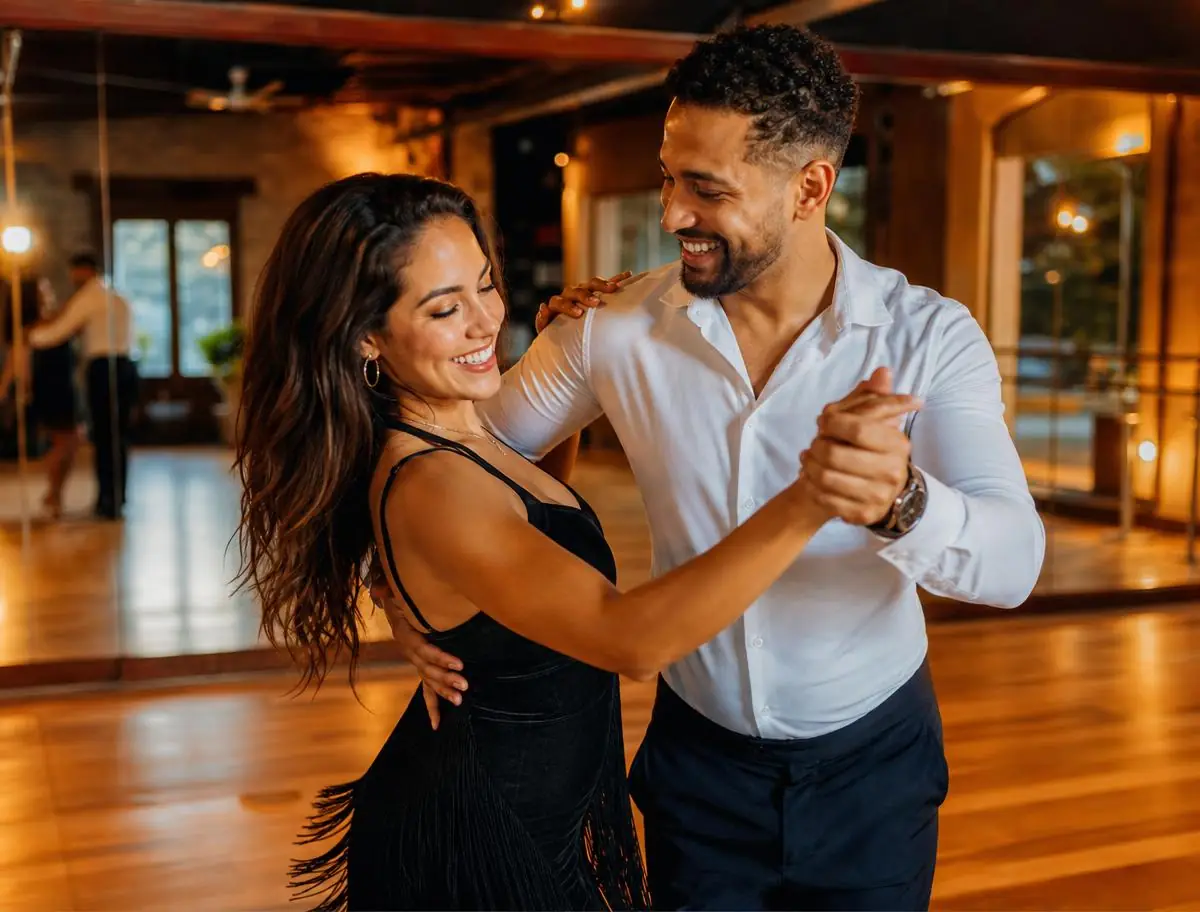
The schedule
A typical plan for the 3-lesson package:
- Week 1: lesson 1, song and entrance. Practice the walk-in and hold.
- Week 2: run the entrance twice a day, 10 minutes total.
- Week 3: lesson 2, turn and middle. Practice the turn slowly.
- Week 4: full run-through at home in your shoes.
- Week 5: lesson 3, dip and finish.
- Final week: two run-throughs, then rest the day before.
How to use 10 minutes
Play the song once without dancing, then dance it twice. Stop there. Short, regular practice beats one long session the night before.
Planning Your Practice Space
Setting up a dedicated practice space at home can make your ten-minute sessions more effective. You don't need much room, just enough to move comfortably together. Clear a small area in your living room or a spare space where you won't be interrupted. Consider where you'll place your phone or a small speaker to play your song.
Ensure the floor is safe and free of tripping hazards. If you plan to wear your wedding shoes during practice, make sure your practice area can accommodate them without causing damage or slips. A smooth, even surface is ideal. Having a mirror nearby, if possible, can be helpful for checking your posture and connection, but it's not essential. The most important thing is a consistent, comfortable spot that encourages you to practice regularly without much effort to set up each time. This small preparation can remove barriers to getting your short practices done.
Maximizing Your Practice Quality
Quality over quantity is key for home practice. When you have your ten minutes, focus on the specific elements from your last lesson. If you practiced your entrance, concentrate on smooth walking and a confident hold. Don't try to learn new steps or fix everything at once. Your instructor will guide you on what to work on between lessons.
Pay attention to your posture and how you connect with your partner. Are you both standing tall? Are your arms relaxed but firm? These small details make a big difference in how your dance looks and feels. If something feels awkward, make a note of it and ask your instructor at your next lesson. Sometimes, a subtle adjustment can unlock a comfortable movement.
Listen to your song during practice, even when you're just walking through steps. This helps you internalize its rhythm and timing, making your dance flow more naturally on your big day. The goal is to make your movements feel intuitive and connected to the music, rather than just memorized steps. Remember, these short, focused sessions build confidence and muscle memory without overwhelming you.
Common Practice Challenges and Solutions
It's normal to encounter small challenges during home practice. One common issue is finding the motivation for daily short practices. To overcome this, try to make practice a part of your daily routine, like brushing your teeth or having coffee. Pick a consistent time that works for both of you, perhaps right after dinner or before bed. Even if you only do it three times a week, consistency is key.
Another challenge can be forgetting specific steps or details between lessons. This is where filming a short video at the end of each lesson becomes incredibly valuable. Refer to the video if you feel stuck. It's a quick reminder that clarifies any uncertainties and keeps your practice on track. Don't hesitate to pause the video, re-watch sections, and try to replicate the movements.
Sometimes one partner might feel more comfortable or pick up steps faster than the other. This is perfectly fine and expected. The goal is to work together as a team. Encourage each other, be patient, and remember that your instructor at Dennis PaSamba Dance Company is there to help both of you progress at your own pace. Your wedding dance is a shared experience, and practice should be a fun, bonding activity, not a source of stress.
Questions people ask
Can we film the lesson?
Yes. A short video at the end of each lesson makes home practice much easier.
Should we practice in our wedding shoes?
Practicing in shoes similar to your wedding shoes, especially for the final weeks, can help you get comfortable with how they feel and move.
What if we forget a step during home practice?
If you forget a step, refer to the video you filmed at the end of your last lesson. This will help refresh your memory and keep your practice consistent.
Visit the studio
Dennis PaSamba Dance Company
4820 W. Irving Park Rd., Chicago, IL 60641
Six Corners · Portage Park · Irving Park
dennispasamba.com · Text/Call 717-PASAMBA ((717) 727-2622)