
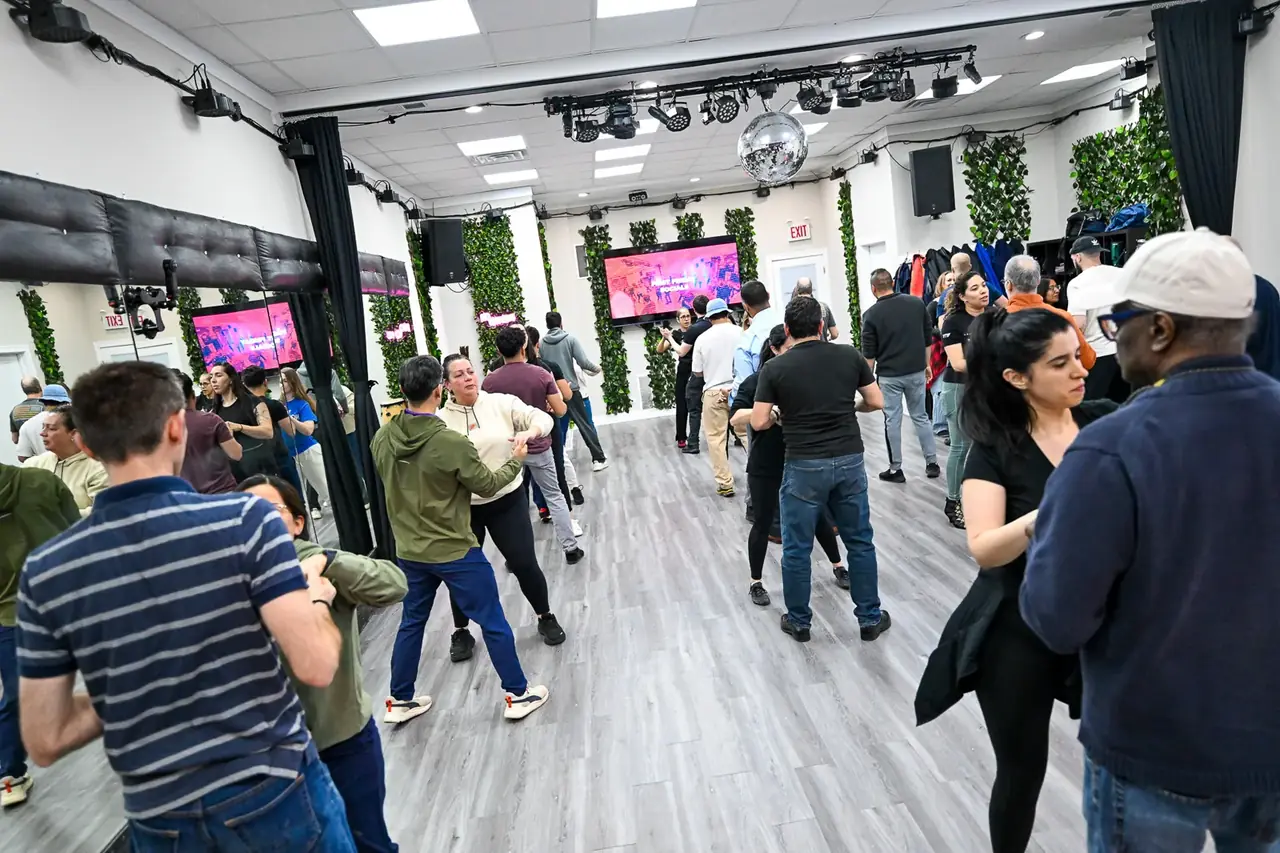
The routine
Ten minutes is plenty.
- Put on one cumbia song
- Do the basic the whole song
- Repeat once more
No turns yet
Do not add turns at home until class teaches them. Practicing a turn wrong is harder to fix than not practicing it.
Mastering the Basic Step
The cumbia basic step is the foundation for all other moves. Focus on the rhythm and the gentle swaying motion. Think of it as a walking step that shifts your weight smoothly. You'll step forward, then bring your other foot to meet it. Then step backward, meeting your feet again. This creates a natural, easy flow. Keep your knees soft, never locked. This helps with the bounce and fluidity of the dance. Your body should feel relaxed, not stiff. Let your arms hang naturally or hold them gently at your sides. The goal is to move in time with the music without overthinking. Consistency in this basic step builds muscle memory. The more you practice, the more automatic it becomes. This frees your mind to enjoy the music and eventually learn more complex patterns. Don't rush this stage. A solid basic step makes everything else easier to learn later on. It’s like learning to walk before you run. Your practice at home strengthens this core movement. This preparation helps you feel confident in class. You will pick up new variations much faster. Enjoy the simple pleasure of moving to the cumbia beat. This dedicated practice time makes a big difference in your progress. It's an investment in your dance journey. You'll feel the music more deeply. Your body will connect with the rhythm effortlessly. This quiet practice is very rewarding. It builds a strong base for your cumbia skills.
Finding the Cumbia Rhythm
Cumbia music has a distinct rhythm. It often has a strong, driving beat. Listen for the percussion instruments like drums and guiros. These instruments define the cumbia sound. Count 'one, two, three, four' in your head. Or, even better, feel the pulse of the music. The basic step usually aligns with a specific count. Some people count 'one and two and three and four'. Others feel it as 'quick, quick, slow'. Don't worry too much about a perfect count at first. Just let your body respond to the music. Notice the tempo of different songs. Some cumbias are faster, others are slower. Adapt your basic step to match the song's pace. This adaptability is key to becoming a versatile dancer. Try practicing with various cumbia tracks. Explore different artists and styles. This exposes you to the wide range of cumbia music. You'll start to recognize common rhythms and melodies. This makes it easier to dance spontaneously. Your ear for the music will improve with each practice session. This deepens your connection to the dance. It's not just about steps; it's about feeling the music. The music guides your movement. The more you listen, the more naturally you will move. This immersion is a joyful part of learning cumbia. Embrace the unique energy of cumbia music. Let it inspire your practice. The rhythm will become second nature.
Practicing Body Movement
Cumbia is more than just footwork. It includes a relaxed, flowing body movement. As you step, let your hips sway gently. This natural movement adds authenticity to your dance. Don't force it; let it happen organically. Your upper body should also be relaxed. Avoid stiff shoulders or arms. Imagine your body is like a wave, flowing with the music. A slight bounce in your step is also characteristic. This comes from bending and straightening your knees softly. It adds life and energy to your basic step. Practice in front of a mirror if you like. This helps you see your posture and movement. You can adjust small details as you go. Focus on looking graceful and comfortable. The goal is to look like you are enjoying the dance. This relaxed attitude is part of cumbia's charm. Your hands can also be part of the movement. They can gently swing with your body. Or they can be held lightly. Avoid clenching your fists. Soft hands enhance the overall flow. Remember, cumbia is a social dance. It's about expressing joy and connection. Your solo practice helps you embody this feeling. When you combine the steps with natural body movement, it looks effortless. This holistic approach to practice is very beneficial. It prepares you for dancing with others. You'll feel more confident and expressive. Enjoy moving your whole body to the music. This makes your cumbia truly come alive.
Questions people ask
Do I need a partner at home?
No. Practice the basic on your own.
How often should I practice at home?
Even short, regular practice sessions are very effective. Aim for 10-15 minutes a few times a week.
Where can I find cumbia music for practice?
You can find cumbia music on popular streaming services. Look for playlists or search for cumbia artists.
Visit the studio
Dennis PaSamba Dance Company
4820 W. Irving Park Rd., Chicago, IL 60641
Six Corners · Portage Park · Irving Park
dennispasamba.com · Text/Call 717-PASAMBA ((717) 727-2622)