
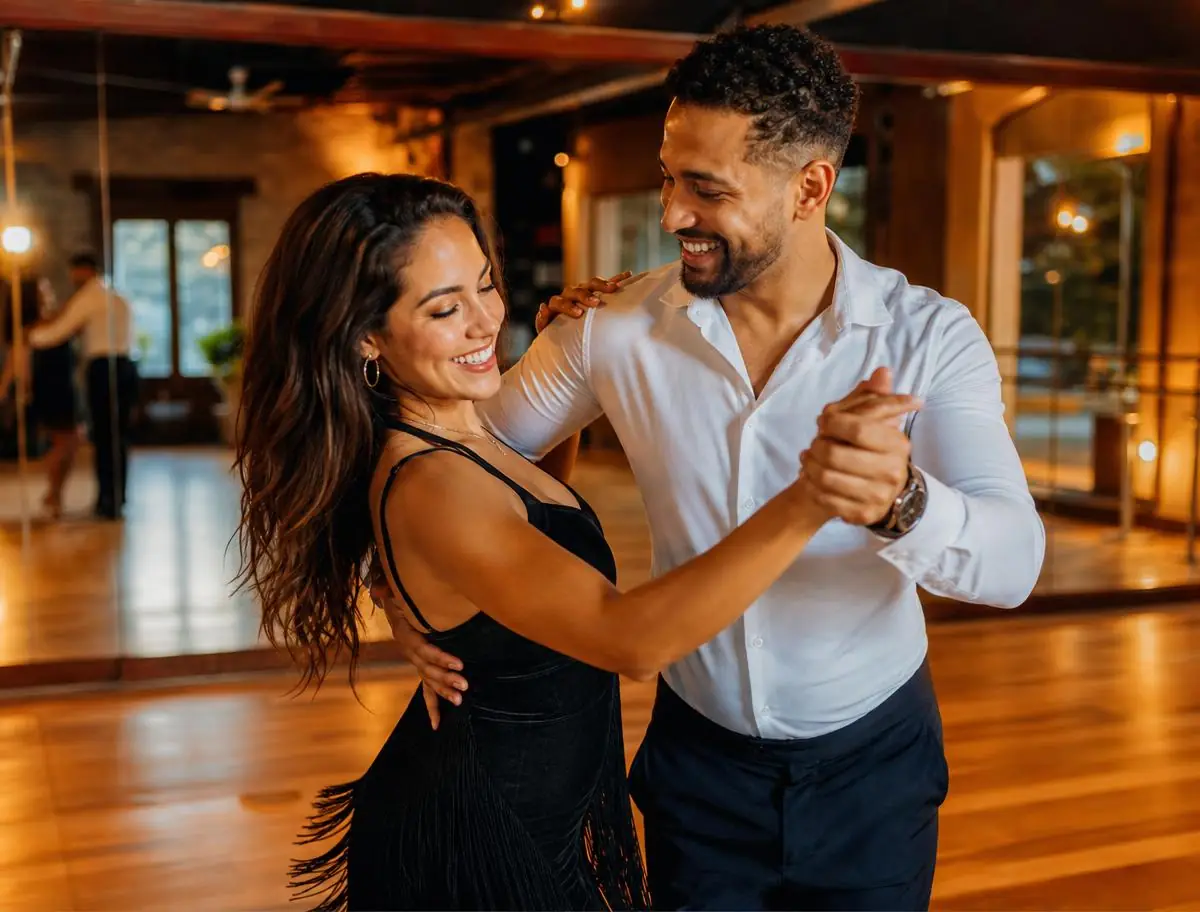
The 10-minute routine
Clear a space the size of your venue floor if you can.
- 10 minutes, a few times a week
- Wear the same shoes you will wear at the reception
- Film one rep and watch it once
- Do not add moves
Why no new moves
Moves found on video often do not fit your song or your counts. Adding them at home creates confusion in the next lesson. Bring ideas to the studio instead.
Dance Posture Matters
Good posture is essential for a beautiful first dance. It makes you look elegant and helps you execute moves more smoothly. Practice standing tall with your shoulders back and down. Imagine a string pulling the top of your head towards the ceiling.
Your dance frame is how you hold each other. Your instructor will teach you the correct frame. Practice holding this frame even without music. It's important for connection and leading/following. A consistent frame helps you feel each other's movements.
When practicing, pay attention to how you carry your weight. It should be balanced. Avoid slumping or leaning on your partner. This will improve your balance and make you feel more confident. Proper posture prevents wobbles and makes every step look intentional.
Musicality and Your Song
Your first dance song is special. Listen to it often, even when you're not practicing. Pay attention to its tempo, rhythm, and any instrumental breaks. Understanding your song helps you dance to its unique feel.
When you practice, try to match your steps to the beat. Don't rush or drag. Even if you're just walking through your steps, do it to the music. This builds muscle memory for timing. Your instructor plans your choreography to fit the music's structure.
Identify key moments in your song, like a chorus or a specific instrumental part. Your instructor will likely choreograph special moves for these sections. Knowing where these moments are helps you anticipate the next steps. This makes your dance look more natural and expressive.
Sing or hum along to your song as you practice. This helps you internalize the timing and flow. The more familiar you are with the music, the more seamlessly your dance will connect with it. Your dance should tell the story of your song.
Handling Mistakes and Nerves
It's normal to make mistakes while practicing. Don't let them discourage you. The purpose of practice is to refine your movements. When you make a mistake, pause, reset, and try that section again. Learning happens in repetition.
On your wedding day, nerves might be present. Practicing at home helps build confidence. The more you repeat your dance, the more automatic it becomes. This reduces anxiety. Remember, your guests want to see you happy and enjoying your moment.
If you stumble during practice, laugh it off. It's part of the process. Focus on completing the entire dance, even with small errors. This builds stamina and familiarity. The most important thing is to enjoy the journey together.
Remember, your first dance is a celebration. It doesn't have to be perfect, just heartfelt. Embrace the moment, and trust the skills you've built. Practice helps you feel prepared, so you can truly enjoy your special dance together.
Questions people ask
What if we have no space at home?
A hallway works for the basic. Save the turn and dip for the studio.
Should we practice every day?
Short, focused practice sessions a few times a week are more effective than long, infrequent ones. Consistency is key.
What if my partner and I disagree on practice methods?
Talk it out calmly. Remember you are a team. Find a rhythm that works for both of you. Your shared goal is a beautiful first dance.
Visit the studio
Dennis PaSamba Dance Company
4820 W. Irving Park Rd., Chicago, IL 60641
Six Corners · Portage Park · Irving Park
dennispasamba.com · Text/Call 717-PASAMBA ((717) 727-2622)