
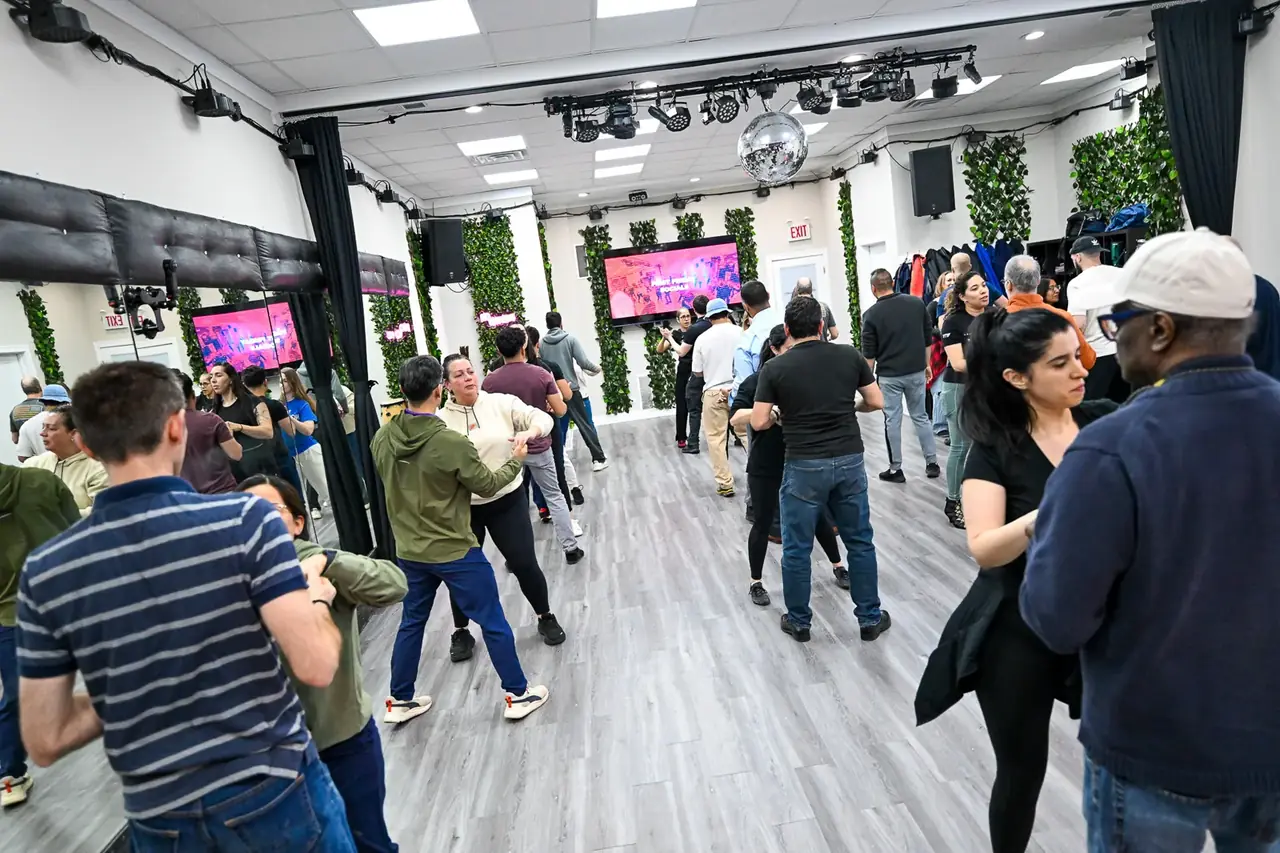
Cumbia
Slower and simpler, with a relaxed basic that repeats every bar.
Salsa
Quicker footwork and more turns, with tighter timing on the 1.
Going from one to the other
Dancers who start with cumbia often pick up salsa faster, because they already hear the beat and know how to rotate partners.
Understanding the Music: Salsa Rhythms
Salsa music is known for its energetic and complex rhythms. The foundational rhythm is often described as 'quick-quick-slow'. This rhythm helps dancers find the '1' count, which is crucial for timing in salsa. Instruments like congas, timbales, and cowbells drive the beat. The clave rhythm is also very important. It provides the rhythmic backbone for salsa music. Listening for these elements helps you understand the music's structure. You will hear variations in tempo, but the core rhythm stays similar. Each instrument adds a layer to the overall sound. This layered sound gives salsa its vibrant feel.
Understanding the Music: Cumbia Rhythms
Cumbia music has a more straightforward, grounded rhythm. It often has a 'one-two-three-four' feel, with emphasis on the downbeats. This makes it easier for beginners to find the beat and step in time. The basic cumbia rhythm is often described as a 'march' or a 'shuffle'. Accordion, guacharaca, and drums are common instruments in cumbia. The guacharaca is a scraper instrument that gives cumbia its distinctive sound. Cumbia music often encourages a relaxed, swaying movement. The rhythm is consistent and less syncopated than salsa. This steady beat is why many people find cumbia easier to pick up first. It allows for a natural, flowing movement across the dance floor.
Movement and Style: Salsa
Salsa dancing involves quick weight shifts and sharp turns. Partners connect more closely and often execute complex patterns. The dance uses a 'break step' where one foot steps back or forward. This movement creates dynamic turns and spins. Leading and following are key skills in salsa. The leader guides the follower through various moves and patterns. Salsa styles, like New York or LA style, have specific footwork. These styles often feature cross-body leads and elaborate shine steps. The dance is characterized by its playful and energetic interaction. Dancers stay light on their feet. The goal is to move smoothly while keeping time with the fast music. There's a strong emphasis on improvisation and flair. Each dancer can add their own style to the basic steps.
Movement and Style: Cumbia
Cumbia dancing features a more circular, shuffling movement. The steps are generally simpler and more repetitive. Dancers often maintain a more open embrace. This allows for individual expression while still moving together. The basic cumbia step resembles a walk or a gentle march. It emphasizes a grounded, rhythmic sway. Cumbia can be danced in a circle, in lines, or with a partner. The focus is on a smooth, continuous flow rather than sharp turns. Traditional cumbia often includes a 'skirt work' for followers. This adds a beautiful visual element to the dance. The steps are less about intricate patterns and more about steady rhythm. It's a very social dance, encouraging connection and enjoyment of the music. The relaxed pace makes it accessible to everyone. It is perfect for simply swaying and enjoying the rhythm. You will find yourself moving to the beat with ease. The simplicity of the steps makes it easy to learn.
Questions people ask
Is salsa harder?
A little faster, yes. Level 1 starts slowly.
What is the main difference in timing?
Salsa emphasizes counting on the '1' beat with quicker steps. Cumbia often has a more relaxed 'one-two-three-four' feel, making it easier to find the rhythm.
Do I need a partner for cumbia classes?
No partner is needed for any group classes. You will rotate partners, just like in salsa classes.
Visit the studio
Dennis PaSamba Dance Company
4820 W. Irving Park Rd, Chicago, IL 60641
Six Corners · Portage Park · Irving Park
dennispasamba.com · Text/Call 717-727-2622 (717-727-2622)