
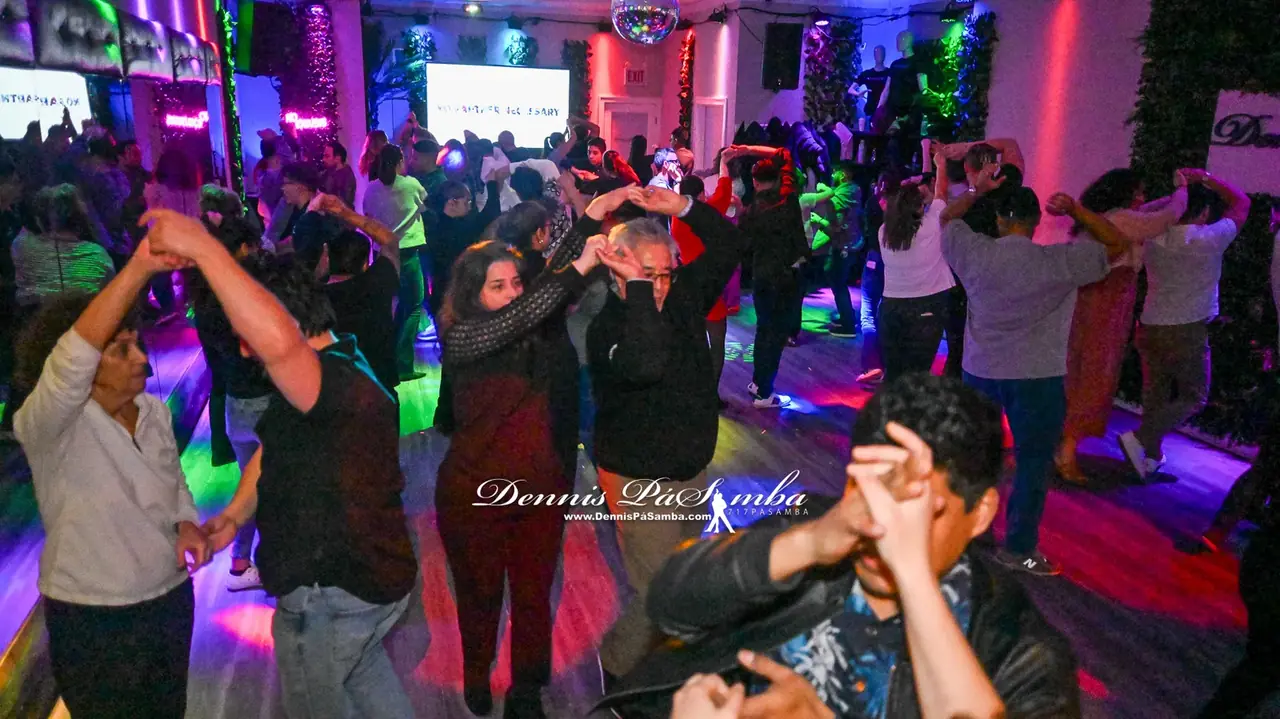
Bachata stays in place
Bachata is a side step, three steps and a tap, usually to a slow, romantic song. Couples stay close and mostly in one spot.
Cumbia travels
Cumbia steps back and forward and moves around the floor, often in a circle. It fits upbeat party songs.
Bachata music has a distinct sound
Bachata music comes from the Dominican Republic. It has a recognizable sound with a lead guitar. The guitar often has a bright, melodic tone. You will also hear a rhythm guitar and bass. The bongos and güira provide the rhythmic foundation. These instruments create the genre's signature feel. Early bachata was often sad. Modern bachata can be more upbeat. Many popular artists perform bachata. Romeo Santos, Prince Royce, and Aventura are well-known. Their songs are popular for dancing. This music makes you want to move. It's perfect for close dancing with a partner. Look for bachata in many Latin music playlists. It's a staple at social dances. The music helps guide your steps. It sets the mood for a romantic dance. Pay attention to the guitar for cues. The tempo can vary, but the feel is consistent.
Cumbia has diverse musical roots
Cumbia music originated in Colombia. It has grown into many different styles. You will often hear drums, percussion, and wind instruments. Accordions and guitars are also common. The percussion provides a strong, driving beat. This beat makes Cumbia very danceable. Cumbia has many regional variations. Colombian cumbia is traditional. Mexican cumbia is very popular. Cumbia villera from Argentina is another style. Each style has its own flavor. The music can range from slow to very fast. It's often lively and festive. It is common at parties and celebrations. You might hear artists like La Sonora Dinamita or Los Ángeles Azules. These bands bring energy to the dance floor. The music encourages group dancing. It often has a joyful, communal feel. Listening to cumbia makes you feel happy. The rhythms are infectious and fun. It's great for an energetic social dance. The diverse sounds offer something for everyone. You can easily find Cumbia music online. Look for playlists for parties. It will get your feet moving.
Footwork and partnership differences
Bachata footwork is typically simple. It involves a basic side-to-side pattern. The three steps and a tap are key. This allows for close partner connection. The lead guides the follow with subtle movements. The focus is on the connection. Partners often hold each other close. This creates an intimate dance experience. The steps are small and contained. You don't cover much ground. This makes it perfect for crowded dance floors. Learning the basic step is quick. Mastering the connection takes practice. Cumbia footwork often uses a step-back motion. This creates forward and backward movement. It also incorporates turns and rotations. Cumbia partners may hold hands or be further apart. The dance allows for more personal expression. You can travel around the dance floor. This gives it a more free-flowing feel. The steps are often bigger. There is more emphasis on individual style. The energy is vibrant and expressive. Both dances can be social and fun. Bachata emphasizes closeness. Cumbia emphasizes movement. They offer different dancing experiences. Try both to see which you enjoy more.
Questions people ask
Which is easier?
Both are beginner friendly. Pick the music you like more.
What is the typical tempo for each?
Bachata is generally slow to medium tempo. Cumbia can range from slow to fast. Both have a steady, rhythmic beat.
Are there group classes for Bachata and Cumbia?
Yes, we teach both Bachata and Cumbia in our group classes. These are 4-week sessions, $95, no partner needed, and partners rotate. Adults are welcome.
Visit the studio
Dennis PaSamba Dance Company
4820 W. Irving Park Rd., Chicago, IL 60641
Six Corners · Portage Park · Irving Park
dennispasamba.com · Text/Call 717-PASAMBA ((717) 727-2622)